
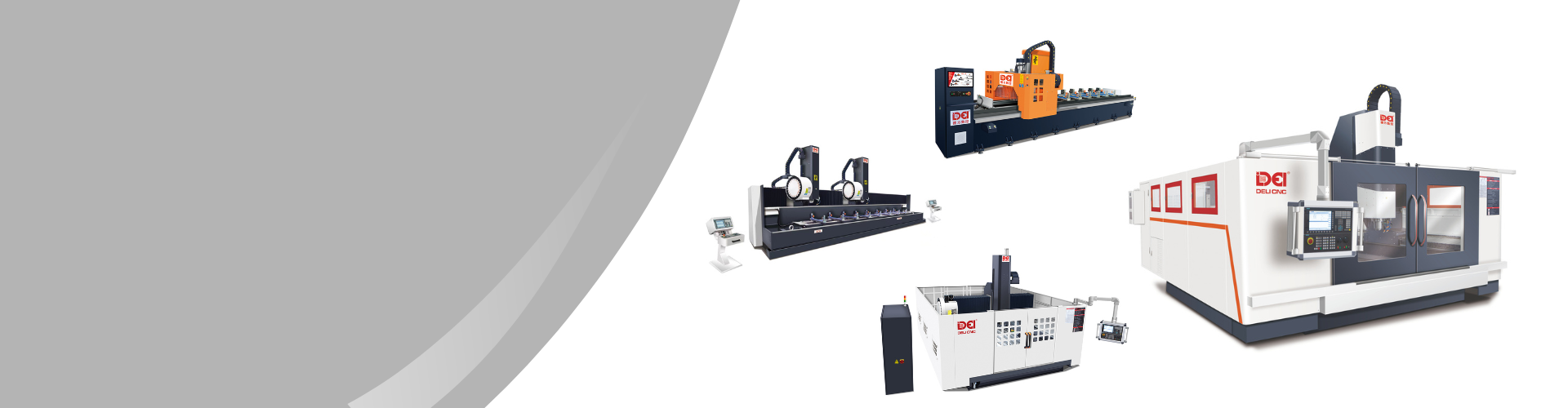
5-axis machining changes how a part is held. On a 3-axis machine the spindle mostly comes from above, so a tall vise and a few clamps are usually enough. On a 5-axis center the tool can approach the part from almost any angle, which means the workholding that worked fine before can suddenly block the cutter, lift the part, or take up so much room that you lose the access you bought the machine for. If you run a DELICNC 5-axis machining center, or you are planning to buy one, the workholding decision deserves the same attention you gave the machine itself.
Why 5-axis workholding is different
The short answer is access. A 5-axis machine tilts and rotates the part so the spindle can reach five faces, sometimes all faces, in a single setup. That single-setup advantage is the whole point: it removes the re-fixturing steps that add cumulative error and eat setup time. But the moment you rotate a part freely, every block of steel and every clamp jaw becomes a potential collision.
Three problems show up again and again on 5-axis jobs:
Tool interference. Standard 3-axis vises are tall and boxy. When the table rotates, that height sweeps into the path the tool needs, so what cleared on a 3-axis job now crashes or forces you to shrink the tool and slow the feed.
Jaw lift. A part held only by parallel jaws can lift when the cutting force pushes from an odd direction. On a 5-axis cut the force direction keeps changing, so the old "it held on the VMC" logic stops applying.
Lost access. If the workholding covers the top or one side of the part, you have defeated the fifth axis and you end up flipping the part by hand anyway.
Good 5-axis workholding is low, rigid, repeatable, and shaped so the tool can reach the features you need to cut. The rest of this guide walks through the main options and how to pick among them.

Main 5-axis workholding options
Shops rarely use one solution for everything. The right setup depends on the part shape, the material, the batch size, and how the part sits on the table.
Self-centering vises built for 5-axis
A standard machine vise grips from two sides and sits high. A 5-axis self-centering vise is different: it is short, pulls the part down as it clamps from the sides, and keeps the top and most of the sides clear. The pull-down action is what stops jaw lift when cutting forces change direction.
For DELICNC customers making automotive brackets, small structural parts, or precision aluminum components, a low-profile self-centering vise is often the first workhorse. It centers the part automatically, which helps when you run mixed batches, and it leaves the upper faces open for the tilted spindle. These vises are third-party accessories, not DELICNC products, but they mount directly to the T-slots or zero-point base on a DELICNC 5-axis table.
Dovetail fixtures
A dovetail fixture holds the part by a machined dovetail on the workpiece edge. The grip is low and extremely rigid, and almost the entire part stays exposed. That makes dovetail workholding a strong choice for prismatic aluminum parts where you need to reach five faces without the fixture getting in the way.
The trade-off is preparation: the part (or a pre-machined blank) needs a dovetail feature cut first. For high-volume runs of the same component, that one-time prep pays back fast because loading is quick and repeatable. For one-off parts it is usually not worth it.
Zero-point clamping systems
A zero-point clamping system uses a standardized base and a matching receiver so a fixture or part can be swapped onto the machine in seconds and land in exactly the same position. For a shop running many different parts, this is how you protect the 5-axis advantage: the machine stays cutting instead of waiting for an operator to indicate and re-zero a fresh setup.
On a DELICNC 5-axis center, a zero-point base can sit on the rotary table or the fixed table, depending on the configuration. The benefit is the same either way: setup moves off the machine and onto a bench, so spindle uptime goes up. Many shops combine a zero-point base with soft jaws or a dovetail block so each job has its own dedicated, pre-set fixture.
Tombstones and pyramids for 4+1 work
When the machine runs in a 4+1 mode (four linear-rotary axes plus indexed positioning), a tombstone or pyramid fixture lets you load parts on multiple faces at once. A tombstone is a vertical block with fixtures on several sides; a pyramid does the same with angled faces. Both multiply how many parts run per cycle without raising the fixture height into the tool path.
This approach suits batch production of similar parts, such as rail-transit brackets or furniture hardware, where several identical pieces can share one indexed setup. It does require planning the table rotation so the block itself never enters the cutting zone.
Soft jaws and custom fixtures
Soft jaws are machined to match a specific part, then bolt into a standard vise. For irregular shapes that a flat jaw cannot grip safely, soft jaws are the practical answer. Custom fixtures go further for dedicated production: a fixture built around one part family can hold it lower and more securely than any off-the-shelf vise.
DELICNC works with mold and precision-parts manufacturers who often need exactly this kind of dedicated fixturing. The machine matters here because a rigid, high-accuracy table and a dependable rotary axis are what let a custom fixture deliver consistent results batch after batch.

How to choose the right workholding
Pick workholding the same way you picked the machine: start from the part, not the catalog.
Start from the part shape. Flat prismatic parts favor dovetail or low vises. Round or odd parts favor soft jaws or custom fixtures. Tall parts need a setup that keeps the center of gravity low.
Watch the material. Aluminum dents easily, so over-clamping distorts the part and the finished dimensions. Steel needs more clamp force but the same care about deformation. A pull-down vise helps on both because it seats the part instead of squeezing it.
Match the batch size. One prototype does not justify a dovetail prep or a dedicated tombstone. A run of 500 identical brackets does. Spend on fixturing in proportion to volume.
Check the tolerance. Tight-tolerance work demands repeatable locating, which points toward zero-point systems and dovetails rather than hand-indicated setups.
Know the machine configuration. A trunnion-style rotary table has different clearance and load limits than a bridge or crane-type table. What fits one may not fit the other, so make the choice with the specific 5-axis model in mind.
For a broader look at how 3-axis, 4-axis, and 5-axis centers compare, DELICNC has published a breakdown of that helps explain why the axis layout changes your fixturing options.
Common mistakes to avoid
Shops new to 5-axis workholding tend to repeat a short list of errors. Avoiding them is usually cheaper than buying a better machine.
Carrying over a 3-axis vise. The tall body that was fine on a VMC becomes a collision risk the instant the table rotates. Measure the fixture height against the tool path before the first cut.
Ignoring jaw lift. Cutting from below or the side can lift a part held only by parallel jaws. Use pull-down clamping or a dovetail so the part cannot move.
Over-clamping aluminum. Squeezing aluminum too hard bends it, and the distortion springs back after you release the clamp, so the measured part is wrong. Clamp just enough to hold against the cut.
Skipping quick-change. If every new part means re-indicating on the machine, you lose the productivity you bought a 5-axis center for. A zero-point base moves that work off the spindle.
Covering the faces you need to cut. Any fixture that blocks an upper or side face removes the benefit of the fifth axis. Keep the workholding low and to the sides.
For shops building a full fixturing program rather than a single job, DELICNC also offers a that covers the wider process of choosing and documenting workholding across a production floor.
Matching workholding to DELICNC 5-axis models
DELICNC builds two 5-axis machining centers that matter for this discussion. The uses a bridge structure suited to stable, high-rigidity cutting of medium and large parts. The extends the envelope for larger structural components. Both accept standard T-slot and zero-point bases, so the workholding options above apply to either machine.
The practical point is simple: the table size, rotary clearance, and load capacity of the machine set the ceiling on what fixtures you can use. A tombstone that fits the HK3020 may be too large for a smaller cell, and a fixture that clears the HK4025 table may interfere on a tighter rotary. DELICNC engineers can review your part drawings, material, and batch size and suggest a workholding approach that matches the specific model you run.
DELICNC machines are built with control and motion components from partners such as MITSUBISHI, SIEMENS, FANUC, NSK, THK, Schneider Electric, and SMC. That supplier base supports the positioning accuracy and repeatability that good workholding depends on, because a fixture is only as useful as the machine's ability to return to the same point every cycle.
A quick buyer checklist
Before you commit to a workholding setup for a 5-axis cell, run through this list:
Does the fixture height clear the tool path through the full rotation range?
Is the part pulled down, not just squeezed, to prevent lift?
Are the faces you must cut left exposed?
Is the locating method repeatable enough for your tolerance?
Can the setup be changed off the machine with a zero-point base?
Does the fixture fit the specific DELICNC model's table and rotary clearance?
Is the clamp force right for the material, especially aluminum?
If you can answer yes to all seven, the setup is probably sound. If any answer is no, fix that item before the first production run rather than after the first scrap bin.
FAQs
Do I need special workholding for 5-axis, or can I use my 3-axis vises?
You can use some 3-axis vises, but tall ones will likely interfere when the table rotates. Low-profile, pull-down 5-axis vises, dovetails, and zero-point systems are safer and protect the access that makes 5-axis worthwhile.
Is a zero-point system worth the cost for a small shop?
If you change parts often, yes. The payback is in spindle uptime: setup moves to a bench, and the machine keeps cutting. For a shop running one long campaign, the urgency is lower.
Can DELICNC supply the vises and clamps?
DELICNC manufactures 5-axis machining centers, not workholding accessories. The company can advise on workholding that fits its machines and can discuss fixture approaches during a technical consultation, but the clamps and vises themselves come from specialized workholding suppliers.
What workholding is best for aluminum auto parts?
Low-profile self-centering vises with pull-down action are a common starting point because they hold aluminum without over-clamping. Dovetail fixtures help on higher-volume prismatic parts where you need full access to the upper faces.
How does workholding affect accuracy on a 5-axis center?
A fixture that locates repeatably and holds the part steady lets the machine's positioning accuracy show up in the part. Poor locating or part movement introduces error that no amount of machine precision can remove.