
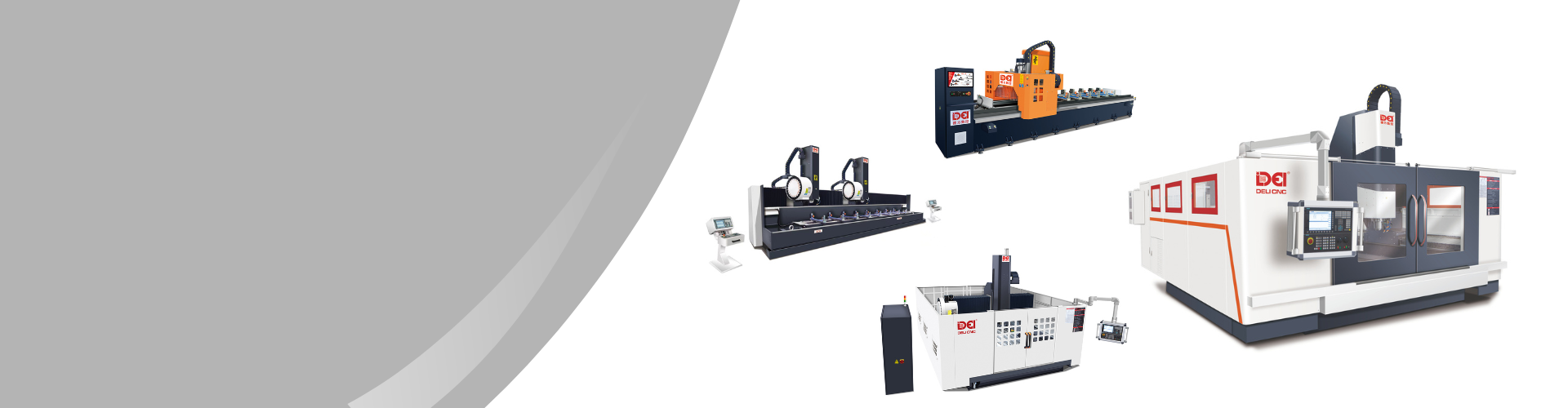
When procurement teams and plant managers search "automobile machinery," they usually are not looking for finished vehicles. In a production context, automobile machinery means the equipment that turns raw metal into the components inside every car, truck, and EV. For automotive parts manufacturers, the core of that machinery is CNC equipment: computer-controlled machining centers that cut, drill, mill, and saw metal with repeatable accuracy, shift after shift.
DELICNC focuses heavily on aluminum machining because cars and EVs keep shifting toward more aluminum content. As vehicles use more extruded and cast aluminum to cut weight, parts makers need machinery that holds tight tolerances on thin-walled sections without distortion. DELICNC designs its machining centers around that requirement, with rigid frames and spindles suited to aluminum auto parts.
This article walks through five CNC machine types that cover most automobile parts production. The aim is straightforward: match a machine class to the parts you run, rather than buying a spec sheet you cannot use.
1. CNC Vertical Machining Center: the workhorse for prismatic auto parts
The CNC vertical machining center, or VMC, is the most common machine on an automotive parts floor. The spindle sits vertically and the table moves beneath it, which keeps loading and fixturing simple for flat or prismatic parts. If your shop makes brackets, valve bodies, brake calipers, mounting plates, pump housings, or small structural parts, a VMC is usually the first machine you need.
A VMC fits because it is flexible. One machine can run a few hundred mounting brackets in the morning and switch to a different housing in the afternoon with a fixture change and a new program. For auto parts suppliers serving multiple vehicle programs, that flexibility matters more than peak output on a single part.
When DELICNC specifies a VMC for automotive work, rigidity comes first. Thin-walled aluminum brackets distort easily under an aggressive cut, so the machine needs a stiff cast structure and quality linear guides from partners like THK or NSK to hold position through the pass. A generous tool magazine keeps common end mills, drills, and taps ready without manual swaps, which shortens cycle time on mixed batches.
DELICNC configures its VMCs around the same checkpoints, so automotive buyers get a machine matched to their part size and material instead of a fixed off-the-shelf build.
A few points to check before you buy:
Work envelope versus your largest part. Measure the fixture, not just the raw blank.
Spindle type. Aluminum runs well at higher speed; steel and cast iron need more torque at lower speed.
Control system. MITSUBISHI, SIEMENS, and FANUC controls all support the CAD/CAM workflows automotive programmers already use.
Probing and tool setting. In-machine probing cuts setup time and catches fixture error before the first cutting pass.
You can review a production-grade option on the product page, which shows how DELICNC packages a VMC for repetitive automotive component work.
2. CNC Gantry Machining Center: for large automotive structurals
Some auto parts are too large or too long for a standard VMC. Battery tray structures, subframes, side rails, and body structural panels stretch past a vertical machine's envelope. That is the job a CNC gantry machining center is built for. The gantry design puts the spindle on a bridge that spans the worktable, so the machine can cover a long or wide part without losing stiffness.
Rigidity is the reason to choose a gantry over a large VMC. A double-column structure resists the cutting forces that would twist a single-column frame, and that stiffness protects flatness and position on big thin-walled parts. For electric vehicle battery trays especially, holding geometry across a large aluminum panel decides whether a part fits or warps.
DELICNC builds gantry machining centers for exactly these parts. The larger work envelope handles long profiles and wide structural panels, and the rigid frame supports the deep cuts needed on extruded and cast aluminum sections. When a part is too big for a VMC or needs machining on a wide face, a gantry is the better fit. DELICNC gantry centers are a common choice for suppliers moving into EV battery tray production, where panel size and flatness decide whether the part assembles cleanly.
Look at the category to see how DELICNC sizes these machines for structural auto components, from battery tray frames to long side members.
3. 5-Axis Machining Center: complex contours in one setup
Many automobile parts are not flat. Suspension arms, steering knuckles, complex housing features, and contoured mounting surfaces need cuts from angles a 3-axis machine cannot reach. A 5-axis machining center adds two rotary axes so the tool or the part can tilt, letting you machine difficult features without unclamping and re-fixturing.
The payoff is fewer setups. Every time an operator removes a part, repositions it, and clamps it again, a small error creeps in. Stack three or four setups and the accumulated tolerance error can push a critical feature out of spec. A 5-axis machine completes more of the part in one clamping, which protects accuracy on parts where fit matters.
DELICNC offers 5-axis machining centers, including bridge-type and crane-type designs, for complex automotive geometries. The bridge-type 5-axis center suits larger contoured parts that still need multi-angle access, while smaller complex components get the same simultaneous-motion capability in a tighter footprint. For suppliers moving from prototype to low-volume production of complex parts, a 5-axis center removes the re-fixturing step that slows conventional machining. Parts makers use DELICNC 5-axis centers to hold complex geometry without adding fixtures and setups.
See the product page for a DELICNC bridge-type model built for multi-angle automotive work.
4. CNC Double-Head Saw: cutting aluminum profiles to length and angle
Not every auto part needs milling. Long aluminum extrusions used in battery tray frames, body structures, and trim members start as straight profiles that must be cut to length and often to a compound angle. A CNC double-head saw cuts both ends of a profile in a single cycle, with the two saw heads positioned and angled by program.
The double-head design matters for accuracy. Cutting both ends at once keeps the overall length and end angles consistent part to part, which is hard to hold when you flip a long profile between separate cuts. For automotive structurals where dozens of identical frame members go into one assembly, that consistency directly affects how cleanly the parts come together on the line.
DELICNC builds double-head sawing machines with programmable head positions and compound angle cutting. The rotary and swing-out variants handle different profile shapes and angle ranges, so a parts maker can match the saw to the extrusions it runs most. When the job is cutting aluminum sections rather than shaping a solid block, a double-head saw is faster and cheaper per cut than a machining center.
Browse the category to compare DELICNC saw configurations for automotive profile cutting.
5. Profile CNC Machining Center: milling and drilling aluminum extrusions
A profile machining center takes the aluminum extrusion one step further than a saw. Where the saw cuts length and angle, the profile center mills, drills, taps, and notches along the length of the section. For auto frame members, battery tray rails, and structural profiles that need hole patterns, end milling, and shaped cutouts, this machine adds the features a saw cannot.
The difference is worth spelling out. A double-head saw answers "how long and at what angle." A profile machining center answers "what features does this profile need along its length." Many automotive aluminum structures need both, so shops often pair the two: saw the blanks, then machine the features.
DELICNC developed its profile machining centers for high-volume aluminum extrusion work, and the same capability that serves curtain wall and window frames serves auto structurals. The 4-axis configuration indexes the profile and machines multiple faces without manual repositioning, which keeps feature location consistent across long parts. For suppliers building aluminum frame members in volume, a profile center turns a raw extrusion into a finished component in one handling cycle. DELICNC profile centers handle the high-volume extrusion work that auto frame lines demand, keeping feature location consistent across long runs.
Comparison at a glance
DELICNC offers a machine in every class below, so a parts maker can build a complete line from one supplier. The table summarizes where each type fits.
| Machine type | Best for | Part examples | Key strength |
|---|---|---|---|
| CNC Vertical Machining Center | Prismatic parts, mixed batches | Brackets, housings, brake calipers | Flexibility, fast changeover |
| CNC Gantry Machining Center | Large, long, or wide structurals | Battery trays, subframes, side rails | Stiffness over a big envelope |
| 5-Axis Machining Center | Complex multi-angle geometry | Knuckles, suspension arms, contoured features | Fewer setups, tighter accuracy |
| CNC Double-Head Saw | Cutting profiles to length and angle | Frame members, structural extrusions | Consistent end cuts, high throughput |
| Profile CNC Machining Center | Milling and drilling along extrusions | Frame rails, notched structurals | Features added in one handling |
How to choose the right mix
Most automotive parts shops do not need all five machines on day one. A common path is to start with the parts you run today and add capacity as volume and part variety grow.
Start with a VMC if your work is mostly prismatic brackets and housings. Add a gantry when parts grow too large for the VMC envelope. Bring in a 5-axis center when re-fixturing errors or complex angles slow you down. Add a double-head saw and a profile center together when aluminum extrusion structures become a regular order, since the two handle different operations on the same raw material.
DELICNC can help map machine classes to your actual parts. The useful inputs are simple: material, part size, tolerance, batch size, and which vehicle program the part feeds. With those, a sensible equipment list comes together quickly, and you avoid paying for axes or envelope you will not use. DELICNC engineers usually open the conversation with a part review rather than a price list, because the right mix depends on what you ship.
FAQs
What CNC machine is best for auto parts?
There is no single best machine. Prismatic parts suit a VMC, large structurals suit a gantry, complex angles suit a 5-axis center, and aluminum extrusions suit a saw plus a profile center. Match the machine to the parts, not the other way around. DELICNC supplies machines across all these classes, so the question is simply which ones your parts require first.
Do I need a 5-axis machine for automotive production?
Only for parts with features that a 3-axis or 4-axis machine cannot reach without re-fixturing. If re-clamping errors or long setup chains hurt your accuracy or throughput, a 5-axis center pays for itself. For flat prismatic parts, a VMC is enough.
Can one CNC machine handle both aluminum and steel auto parts?
Many machining centers switch between aluminum and steel by changing cutting parameters, tooling, and fixturing. Aluminum wants higher spindle speed, while steel and cast iron need more torque. Confirm the spindle and rigidity suit both before you commit.
How do I choose between a VMC and a gantry for auto components?
Use a VMC for parts that fit its table with room for the fixture. Choose a gantry when the part is too long, too wide, or too stiffening-sensitive for a vertical machine, especially large thin-walled aluminum structurals.
Build your automobile machinery plan with DELICNC
Picking automobile machinery comes down to matching machine classes to the parts you ship, not to buying the most advanced center. A VMC, a gantry, a 5-axis center, a double-head saw, and a profile center together cover almost the full range of automotive component work, from a small bracket to a large battery tray frame.