
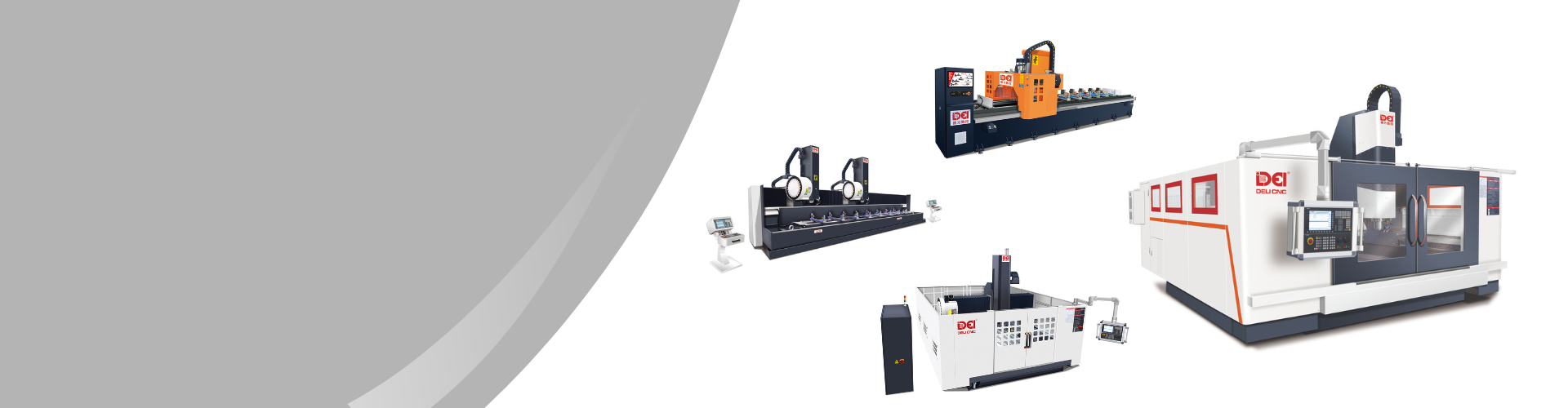
3-Axis Vs 4-Axis Vs 5-Axis Vertical Machining Center
A vertical machining center (VMC) is a CNC milling machine with a vertically oriented spindle.
A 3-axis VMC uses three linear axes: X, Y, and Z. It is suitable for prismatic parts, pockets, slots, drilling, tapping, and surfaces accessible from one main direction.
A 4-axis VMC adds one rotary axis, commonly an A-axis rotary table, although B- or C-axis configurations can also be used depending on machine design.
A 5-axis machine adds two rotary axes and can use either 3+2 positional machining or simultaneous 5-axis machining for complex surfaces and multi-sided parts.
More axes can reduce setups and improve feature-to-feature accuracy, but final accuracy still depends on machine calibration, workholding, tooling, programming, and inspection.
The best choice depends on part geometry, tolerance requirements, production volume, operator skill, budget, and future expansion plans.
Introduction
In CNC machining, the number of machine axes determines how the cutting tool can move relative to the workpiece. This affects part complexity, setup time, surface finish, programming difficulty, and production cost.
For workshops comparing 3-axis, 4-axis, and 5-axis vertical machining centers, the goal is not simply to buy the machine with the highest axis count. The right choice is the one that matches your parts, tolerances, production volume, and available technical capability. This guide explains the differences clearly so you can choose a practical and cost-effective VMC configuration.
What Is a Vertical Machining Center?
A vertical machining center, or VMC, is a CNC milling machine in which the spindle is oriented vertically. The cutting tool is held in the spindle and removes material from a workpiece clamped to the table or fixture.
Depending on the machine design, the spindle, table, or both may move. What matters is the relative movement between the cutting tool and the workpiece. VMCs are widely used for drilling, tapping, pocketing, contouring, mold work, and precision milling in general manufacturing.
Basic Structure of a VMC
A typical VMC includes:
Machine frame and column: Provides rigidity and supports the moving axes.
Spindle: Holds and rotates the cutting tool.
Worktable or fixture system: Holds the workpiece securely.
Tool magazine and tool changer: Allows automatic tool changes.
CNC control system: Coordinates motion, spindle speed, tool changes, coolant, and machining programs.
The basic 3-axis VMC uses three linear axes: X, Y, and Z. Higher-axis machines add rotary movement so the workpiece or tool can be positioned from additional angles.
Linear Axes and Rotary Axes Explained
CNC machine movement is described using linear and rotary axes.
Linear axes:
X-axis: Left-right movement.
Y-axis: Front-back movement.
Z-axis: Up-down movement, usually aligned with the spindle direction on a VMC.
Rotary axes:
A-axis: Rotation around or parallel to the X-axis.
B-axis: Rotation around or parallel to the Y-axis.
C-axis: Rotation around or parallel to the Z-axis.
A 4-axis machine adds one rotary axis. Many VMCs use an A-axis rotary table, but some applications may use a B- or C-axis configuration. A 5-axis machine adds two rotary axes, allowing the tool orientation or workpiece position to change more flexibly.
Why Axis Configuration Matters
Axis configuration affects how many sides of a part can be machined in one setup, how easily angled features can be reached, and whether complex freeform surfaces can be produced efficiently.
More axes can offer major benefits:
Fewer setups: Less manual re-clamping and repositioning.
Better feature-to-feature consistency: Reduced tolerance stack-up from repeated setups.
Improved access: Easier machining of angled faces, undercuts, and complex surfaces.
Shorter tools in some cases: Better rigidity and surface finish when the tool can approach from a better angle.
However, more axes also mean higher machine cost, more complex programming, greater collision risk, and higher training requirements.
3-Axis vs 4-Axis vs 5-Axis VMC: Quick Comparison
| Feature | 3-Axis VMC | 4-Axis VMC | 5-Axis VMC |
|---|---|---|---|
| Axes of Movement | X, Y, Z linear axes | X, Y, Z + one rotary axis | X, Y, Z + two rotary axes |
| Typical Use | Simple prismatic parts and single-face machining | Multi-side indexing and wrapped/cylindrical features | Complex surfaces, angled features, impellers, molds, medical and aerospace parts |
| Setup Requirement | Multiple setups for multi-sided parts | Fewer setups for indexed faces | Often one setup for many complex parts, depending on geometry |
| Programming Difficulty | Lower | Moderate | High, especially for simultaneous 5-axis machining |
| Cost | Lowest | Medium | Highest |
| Main Advantage | Simplicity and affordability | Multi-side machining efficiency | Access, flexibility, and complex geometry capability |
Understanding 3-Axis Vertical Machining Centers
A 3-axis VMC positions the cutting tool relative to the workpiece along X, Y, and Z. In many VMC designs, the table carries the workpiece in X and Y while the spindle moves in Z, but the exact mechanical layout varies.
The key limitation is that the tool generally approaches the workpiece from one main direction. This makes 3-axis machining ideal for many parts, but less efficient for components requiring machining on several sides.
Typical 3-Axis Applications
3-axis VMCs are widely used for:
Brackets, plates, and simple housings.
Pockets, slots, and flat surfaces.
Drilling and tapping holes perpendicular to the main surface.
Simple fixtures and tooling.
Prototypes and general machining work.
Advantages of 3-Axis VMCs
The main advantages are simplicity, cost control, and ease of operation. A 3-axis machine is usually less expensive to buy, program, maintain, and train operators on.
For simple parts, a 3-axis VMC can be highly productive. It may also be the best ROI choice if your work does not require frequent multi-side access or complex surface machining.
Limitations of 3-Axis Machining
The main limitation is access. If a part has features on multiple sides, the operator often needs to stop the machine, remove the part, reposition it, and clamp it again. Each additional setup adds time and introduces the risk of alignment error.
3-axis machining is also less suitable for undercuts, compound-angle features, deep cavities requiring optimized tool angles, and freeform surfaces that need continuous tool orientation control.
Exploring 4-Axis Vertical Machining Centers
A 4-axis VMC adds one rotary axis to the three linear axes. This rotary axis may index the workpiece to fixed angles or rotate continuously during cutting.
The 4th axis is often implemented as a rotary table or rotary chuck. It is especially useful for parts with features around a shaft, on multiple faces, or at repeated angular positions.
How the Rotary Axis Works
In a common 4-axis setup, the workpiece is mounted on a rotary table or chuck. The CNC program coordinates X, Y, Z movement with rotary positioning.
There are two common ways to use the 4th axis:
Indexing, or 3+1 machining: The rotary axis turns the part to a defined angle and locks it. The machine then cuts as a 3-axis machine on that face.
Continuous 4-axis machining: The rotary axis moves while cutting, allowing features that wrap around a cylindrical part.
4-Axis Indexing vs Continuous 4-Axis Machining
Indexing is useful when a part has holes, slots, pockets, or faces at several fixed angles. It reduces manual setups and improves consistency.
Continuous 4-axis machining is useful for cylindrical or wrapped features, such as:
Helical grooves.
Worm gear features.
Spiral slots.
Cam profiles.
Holes or slots around shafts and tubes.
Complex propeller blades, turbine blades, and highly twisted freeform surfaces are usually better suited to 5-axis machining or specialized equipment rather than being treated as typical 4-axis work.
Advantages in Multi-Side Part Production
The main benefit of 4-axis machining is reducing setups. By rotating the part, the machine can access multiple sides without manual re-clamping.
This improves:
Setup efficiency: Less time spent repositioning parts.
Consistency: Fewer chances for alignment error.
Throughput: More cutting time and less manual handling.
Capability: Better access to cylindrical and multi-sided parts.
Common 4-Axis Applications
4-axis VMCs are often used for:
Shaft features and cylindrical parts.
Indexed holes or slots around a component.
Cam profiles and selected camshaft features.
Multi-sided housings.
Helical grooves, augers, and worm gear features.
The main limitation is that a single rotary axis cannot fully control tool tilt in all directions. For complex undercuts, deep cavities, or freeform surfaces, 5-axis machining may be more practical.
Introduction to 5-Axis Vertical Machining Centers
A 5-axis machining center adds two rotary axes to the three linear axes. This makes it one of the most capable CNC configurations for complex, multi-sided parts.
A 5-axis machine can position the tool or workpiece from many more angles within the limits of machine travel, fixture clearance, rotary-axis range, and collision avoidance. This flexibility is valuable for complex geometry, but it also requires advanced programming, simulation, and skilled operation.
How Dual Rotary Axes Improve Flexibility
The two rotary axes may be built into a tilting/rotary table, a swiveling spindle head, or a combination of table and head movement.
This flexibility allows the machine to:
Reach angled features without special fixtures.
Use shorter, more rigid tools in deep areas.
Maintain better tool orientation relative to the surface.
Reduce re-clamping and tolerance stack-up.
Improve surface finish on complex contours when properly programmed.
5-axis capability can improve feature-to-feature accuracy by reducing setups, but accuracy is not guaranteed by axis count alone. Rotary-axis calibration, thermal stability, tool length, workholding, probing, and inspection remain critical.
3+2 Machining vs Simultaneous 5-Axis Machining
There are two common ways to use a 5-axis machine.
3+2 machining, also called positional 5-axis machining, uses the rotary axes to tilt the part or tool into a fixed orientation. The machine then cuts using X, Y, and Z movement. This is often easier to program and works well for parts with several angled faces.
Simultaneous 5-axis machining moves all five axes together. This is required for smooth freeform surfaces and complex tool orientation control, such as machining impellers, turbine blades, blisks, and complex molds.
Benefits for Complex Geometry and Precision
5-axis machining is often the most efficient or practical option for parts such as:
Impellers and blisks.
Turbine blades and airfoil surfaces.
Complex molds and dies.
Orthopedic implants and surgical instruments.
Aerospace structural components with angled or multi-sided features.
The key benefits include:
Reduced setups: More features can be machined in one clamping.
Improved relative accuracy: Less error from repeated re-fixturing.
Better access: Easier machining of undercuts, angled holes, and deep cavities.
Improved surface finish: Better tool orientation and use of shorter tools in suitable applications.
Limitations of 5-Axis Machining
5-axis machining is powerful, but it is not always the best choice. Limitations include:
Higher machine purchase cost.
Advanced CAM software requirements.
More complex post-processing.
Greater collision risk.
Higher operator and programmer skill requirements.
More demanding workholding and inspection.
For simple flat parts, a 3-axis VMC may be faster, cheaper, and easier to manage.
Workflow, Programming, and Setup Differences
As axis count increases, the machining workflow becomes more advanced. The machine can do more in one setup, but the planning, programming, and verification become more important.
Fixturing and Workholding Requirements
Good workholding is essential for all CNC machining. With 3-axis work, a vise, clamps, or simple fixture may be enough. With 4-axis and 5-axis machining, the fixture must hold the part rigidly while leaving enough clearance for tool movement and rotary motion.
For 5-axis work, fixtures often need to elevate the part and expose as many sides as possible. The fixture must also avoid interference with the spindle, tool holder, rotary table, and workpiece.
CAM Programming Complexity
3-axis programming is usually more straightforward. Toolpaths are generated for linear movements and common features.
4-axis and 5-axis programming require more advanced CAM functions, including rotary-axis control, collision checking, machine simulation, and machine-specific post-processors. The post-processor is especially important because each machine and control system may interpret rotary movement differently.
Operator Skill and Training
A beginner can learn to operate a 5-axis VMC under structured training, proven programs, simulation, and supervision. However, independent 5-axis setup, programming, collision avoidance, and troubleshooting generally require experienced operators or CAM programmers.
For workshops upgrading from 3-axis to 5-axis machining, training should be part of the investment plan. Without skilled people and reliable processes, the additional axes may not deliver the expected productivity gains.
Inspection and Quality Control
Complex parts require more advanced inspection. Simple 3-axis parts may be checked with calipers, micrometers, gauges, or height tools. Complex 5-axis parts may require:
Coordinate measuring machines (CMMs).
3D scanners.
In-process probing.
First-article inspection.
Documented process control.
The single-setup advantage of 5-axis machining can improve consistency, but measurement is still required to confirm that the part meets specifications.
Cost Considerations and ROI
Machine price is only one part of the total investment. A higher-axis machine may cost more upfront, but it can reduce cost per part when it eliminates setups, improves yield, and enables higher-value work.
Machine Purchase Cost
A 3-axis VMC is usually the most affordable option. A 4-axis configuration costs more because it adds rotary hardware, control capability, and workholding needs. A 5-axis machine requires more complex mechanics, controls, software, and calibration, so it has the highest initial cost.
Tooling, Fixtures, and Software Costs
Higher-axis machining often requires additional investment in:
Advanced CAM software.
Machine simulation and collision checking.
Special fixtures and workholding.
High-quality tool holders.
Probing systems.
Operator and programmer training.
These costs should be included when calculating ROI.
Labor, Setup Time, and Scrap Reduction
The strongest ROI case for 4-axis or 5-axis machining often comes from reducing manual setups. Every manual setup takes labor time and creates a risk of misalignment.
If a part requires multiple operations on several faces, a higher-axis machine can reduce total production time and scrap. This is especially valuable when tolerances are tight or the material is expensive.
When Higher-Axis Machining Pays Off
A 4-axis or 5-axis machine is more likely to pay off when:
Parts require frequent multi-side machining.
Tolerances depend on feature-to-feature accuracy.
Complex surfaces are common.
Production volume is high enough to justify the investment.
Labor and setup time are major cost drivers.
Customers require parts that cannot be produced efficiently on 3-axis equipment.
Industry Applications
Different industries use different axis configurations depending on part complexity and production requirements.
General Manufacturing
3-axis VMCs are common in job shops and general manufacturing. They are suitable for brackets, plates, enclosures, simple molds, fixtures, and prototypes.
Automotive Parts
Automotive manufacturing may use all three configurations. 3-axis machines can produce brackets and simple components. 4-axis machines are useful for shaft features, indexed holes, and multi-sided housings. 5-axis machines are valuable for complex prototypes, intake components, molds, and high-performance parts.
Aerospace Components
Aerospace parts often require high precision, complex geometry, and difficult materials. 5-axis machining is commonly used for turbine blades, impellers, blisks, wing ribs, structural components, brackets, and other complex aerospace parts. It is not accurate to describe entire fuselages as typical VMC parts; aerospace applications usually involve specific machined components.
Medical Devices
Medical devices often require complex shapes and excellent surface quality. 5-axis machining is widely used for orthopedic implants, surgical instruments, dental components, and custom prosthetic parts.
Mold and Die Manufacturing
Mold and die work benefits from 3-axis, 3+2, and simultaneous 5-axis machining depending on cavity depth and surface complexity. 5-axis machining can improve access to deep cavities and reduce the need for long tools, which can improve rigidity and surface finish.
How to Choose the Right Axis Configuration
Part Geometry and Tolerance Requirements
If your parts are mostly flat or prismatic, a 3-axis VMC may be enough. If your parts need features on several sides, a 4-axis VMC can reduce setups. If your parts include complex freeform surfaces, angled features, or deep cavities, 5-axis machining may be the better choice.
Production Volume and Batch Size
For low-volume simple parts, 3-axis machining may offer the best value. For repeated multi-side parts, 4-axis machining can improve efficiency. For high-value complex parts, 5-axis machining can reduce cycle time, improve consistency, and open new business opportunities.
Budget and Floor Space
Higher-axis machines require more investment, not only in the machine itself but also in software, workholding, tooling, training, and inspection. Floor space, power, air, coolant, chip management, and maintenance access should also be considered.
Operator Skill Level
Do not underestimate the training requirement. A 5-axis machine can produce excellent results only when the team can program, simulate, set up, and inspect the process correctly.
Future Expansion Needs
If your business plans to move into aerospace, medical, electric vehicle, mold, or complex aluminum component work, a higher-axis machine may support future growth. If your current and future workload is mainly simple parts, a reliable 3-axis or 4-axis machine may be the smarter investment.
Common Mistakes When Selecting a Machining Center
Buying More Axes Than Needed
More axes are not automatically better. If your parts do not require complex access or reduced setups, a higher-axis machine may add cost without improving profitability.
Ignoring CAM and Training Costs
Advanced machines require advanced software and trained people. CAM, post-processing, simulation, and operator training should be included in the budget.
Underestimating Workholding Requirements
A machine cannot deliver accurate parts if the workholding is weak, obstructive, or unsafe. Fixture planning is especially important for 4-axis and 5-axis machining.
Focusing Only on Machine Price
The lowest machine price may not deliver the lowest cost per part. Reliability, service support, spindle performance, control capability, accuracy, tooling, and application fit all affect long-term value.
Conclusion
The difference between 3-axis, 4-axis, and 5-axis vertical machining centers is not only the number of axes. It is the difference in access, setup strategy, programming complexity, part capability, and total production economics.
A 3-axis VMC is ideal for simple and cost-effective machining. A 4-axis VMC improves efficiency for multi-sided and cylindrical parts. A 5-axis machine provides the flexibility needed for complex surfaces, angled features, and high-value precision components.
For manufacturers evaluating new equipment, the best decision comes from matching machine capability to real production needs. DELI provides CNC machining center solutions for applications such as automotive, aerospace, electric vehicles, and industrial manufacturing. When selecting a machine, review your part drawings, tolerances, production volumes, training needs, and ROI before choosing the axis configuration.
FAQs
What is the best axis configuration for my workshop?
It depends on your parts. Use 3-axis for simple prismatic parts, 4-axis for multi-sided or cylindrical features, and 5-axis for complex surfaces, angled features, and high-value precision components.
Is a 5-axis VMC always better than a 3-axis VMC?
No. A 5-axis VMC is more capable, but it is also more expensive and complex. For simple parts, a 3-axis VMC may be faster, easier, and more cost-effective.
What is the difference between 4-axis and 5-axis machining?
4-axis machining adds one rotary axis to the X, Y, and Z linear axes. 5-axis machining adds two rotary axes, giving more control over tool orientation and making it better suited for complex surfaces and angled features.
Can beginners operate a 5-axis vertical machining center?
Beginners can learn under structured training and supervision, especially when using proven programs and simulation. However, independent 5-axis setup and programming usually require experienced personnel.