
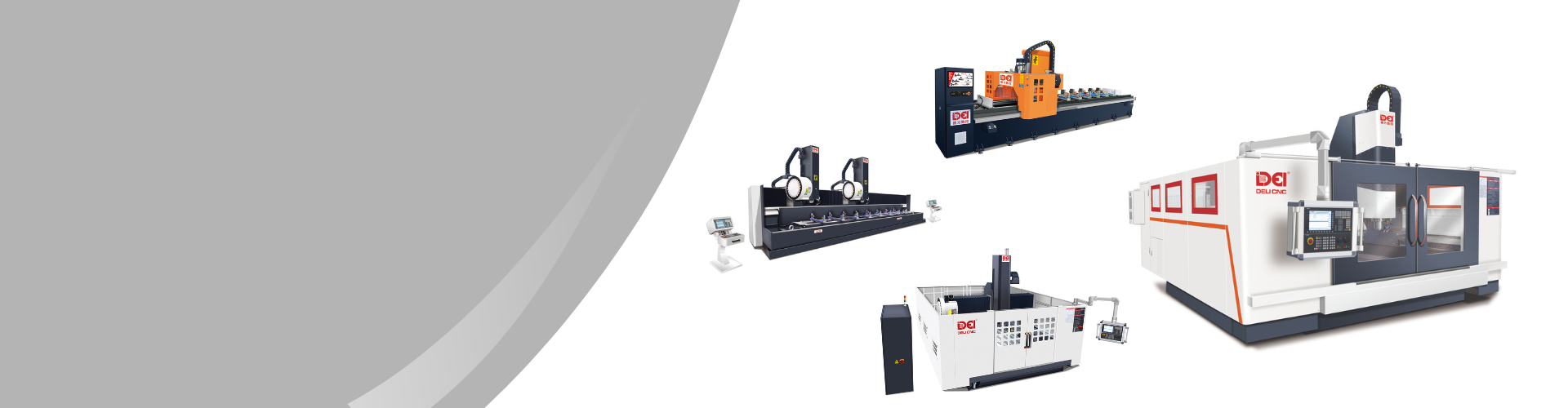
What Can I Do with a CNC Machine? B2B Guide
has engineered and built these machines since 2008, turning raw stock into the complex parts that industries depend on.
This guide lays out what modern CNC milling and profile processing equipment actually does on the floor, and where the efficiency gains come from. Whether you're buying your first machining center or adding to a line, get these capabilities straight before you start tuning the operation.

Industrial CNC machine applications
A CNC machine earns its keep by cutting complex geometries with repeatability you can bank on. Modern machines are built for high-volume runs and tight tolerances.
CNC machining for automotive manufacturing
The sector, and the EV supply chain in particular, runs on precision cutting and milling. , structural die-cast parts, transmission housings, and engine blocks all get made on CNC.
Machining big aluminum battery trays takes a machine with a large work envelope and stiff kinematics to keep chatter down during heavy roughing. builds its heavy-duty centers to hold geometry even under the cutting forces automotive structural parts demand, so every part meets the IATF 16949 standard.

High-speed aluminum profile machining
Extruded aluminum is its own discipline. You need high-speed profile machining for , structural framing, heat sinks, and automotive trim.
Unlike block machining, profiles need dedicated fixturing and long beds. 's runs high-RPM spindles (often 12,000 to 24,000 RPM) tuned for sharp carbide, plus aggressive chip evacuation that stops recutting, the usual reason aluminum finishes turn out rough.
Aerospace and medical device components
Aerospace and medical parts sit at the top of the precision ladder. Titanium turbine blades, stainless orthopedic implants, and aluminum avionics housings need flawless finishes and tolerances you measure in microns.
These parts need machines with real thermal stability and damping. uses linear scales for closed-loop feedback and thermally symmetric spindles to hold thermal growth in check, holding tolerances within ±0.01mm even on long unattended runs.

Custom parts for OEMs and contract manufacturers
For OEMs and contract shops, flexibility matters as much as raw cutting power. Customized machining setups let a job shop switch between part families fast. Add rapid fixturing, macro programming, and versatile tooling, and setup times drop enough that high-mix, low-volume work runs about as profitably as mass production.
CNC machining center capabilities
To really understand what a machining center can do, ignore the brochure specs and look at the engineering that drives actual performance.
Understanding axis configuration: 3-axis, 4-axis, and 5-axis
Picking the right axis setup is foundational to how you produce:
is the industrial workhorse: prismatic parts, face milling, drilling, tapping. It covers roughly 80% of general manufacturing efficiently.
4-axis adds a rotary (A or B). You need it for cylindrical parts, camshafts, or anything that has to be indexed. One setup machines multiple sides, which cuts cycle time a lot.
moves all five at once. That's what complex aerodynamic shapes, impellers, and implants require. You drop the multiple setups, gain positional accuracy, and can run shorter, stiffer tools.
: from aluminum to hard-to-machine alloys
What a machine can cut comes down to spindle speed and torque.
Aluminum alloys (6061, 7075): high spindle speed (10,000+ RPM) and high feed for finish and chip clearance.
Steel and cast iron: high torque at lower RPM, usually a to take the heavy cuts and keep the tool from pulling out.
Hard-to-machine alloys (titanium, Inconel): they throw off huge heat and work-harden fast, so you need serious rigidity, through-spindle high-pressure coolant, and low-speed, high-torque spindles.
Precision and tolerance capabilities
Precision isn't only the controller; it's the machine's mechanical architecture. High-end machines use precision-ground ballscrews, preloaded linear guideways, and heavy to soak up vibration. On top of that, software thermal compensation and volumetric error mapping keep geometry accurate through years of running.
Automation features for unattended production
To push Overall Equipment Effectiveness (OEE) up, modern machines lean on automation. An automatic tool changer (ATC) holding 24 to 40+ tools finishes complex parts with no operator in the loop. Add Renishaw or Blum touch probes for in-process measurement and break detection, and you get real "lights-out" machining that runs safely through the night.
Vertical machining center vs gantry machining center
Picking a machine architecture is one of the bigger calls in facility planning. or comes down to part geometry, weight, and floor space.
When to choose a vertical machining center (VMC)
A standard has a stationary spindle and a moving table (X and Y axes).
Best for: small to medium parts, usually under 1,000mm.
Advantages: lower up-front cost, smaller footprint, and gravity does the chip evacuation for you.
Typical work: high-mix, medium-volume automotive brackets, valve bodies, mold bases.
When to choose a gantry machining center
A has a moving bridge (the spindle head travels across a fixed beam) while the table stays put or moves on one axis only.
Best for: long, heavy, or wide parts where a moving table would blow past the load or floor-space limit.
Advantages: rigid enough for heavy interrupted cuts, huge work envelopes (often 3 to 6 meters), and you can load with an overhead crane without flexing the table.
Typical work: aerospace structural beams, large molds, long aluminum extrusions.
Side-by-side comparison: key decision factors
| Decision factor | Vertical machining center (VMC) | Gantry machining center |
|---|---|---|
| Part size & weight | Small to medium (table moves) | Large & heavy (table fixed/limited) |
| Floor space | Compact footprint | Needs more length, saves width |
| Structural rigidity | Excellent for standard cuts | Superior for heavy, interrupted cuts |
| Capital investment | Lower to moderate | Moderate to high |
| Loading method | Manual or standard hoist | Overhead crane (no table load limit) |
How to increase production efficiency with CNC machining
Buying the equipment is only half of it. The point is using CNC machining to lift production efficiency and actually make money.
Reducing manufacturing costs with automated CNC solutions
Automated CNC solutions cut cost by fixing the labor-to-machine ratio. Pallet changers, robotic loaders, or multi-pallet pools let one operator run three or four machines. The labor model moves from "one operator per machine" to "one technician per cell," and the direct labor cost per part drops hard.
From outsourcing to in-house production
Plenty of shops outsource to dodge capital spend, but that bleeds margin and control. Bringing work in-house captures the supplier's margin (often 30-50%), pulls lead times from weeks to hours, and keeps IP in-house. When you weigh the switch, total up the real cost of outsourcing (shipping, rejection rates, comms lag) and set it against the amortized cost of a new center.
Scaling production without proportional labor increases
The skills gap makes hiring good machinists tough. CNC automation breaks the link between scaling output and adding headcount. Standardize tooling, add presetters, lock in work-holding, and you scale by adding machine hours instead of people.
How to choose a CNC machine for aluminum profile processing
If extrusions are your main game, choosing a CNC machine comes down to a few specific criteria:
Bed length vs. travel: the bed has to fit your longest profile, and use dedicated profile clamps (pneumatic), not standard vises.
Spindle: high-speed (12,000+ RPM) with to cut tool overhang and lift surface finish.
Chip handling: aluminum makes long, stringy chips, so you need high-volume, high-pressure coolant and a wide conveyor to stop re-welding.
Frequently asked questions about CNC machine capabilities
What is the ROI of a CNC machining center?
A CNC machining center usually pays back in 18 to 36 months. You get there by setting its monthly depreciation and operating cost against the savings from dropping outsourcing, lower scrap, and the gross margin on capacity you now run in-house.
Can a CNC machine be customized for specific production needs?
Yes. builds custom setups regularly. That can mean a longer table, dedicated pneumatic fixturing, a different ATC capacity, or a specific controller to match your line.
How long does a CNC machine last in industrial production?
With decent preventive maintenance, a solid industrial CNC machine runs 15 to 20 years or more. Life depends mostly on casting quality, way-cover precision, and how strictly the daily maintenance gets done. builds on industrial-grade parts meant for decades of heavy use.
What's the difference between a CNC milling machine and a machining center?
A basic CNC mill usually has no ATC and may leave the workspace open. A machining center has a fully enclosed workspace, an ATC, and a capable controller, so complex multi-tool jobs finish in one setup with no manual step.
Do I need experienced CNC programmers to operate these machines?
Experienced programmers squeeze cycle times, but modern machines are easy to pick up. A lot of machines have conversational programming right on the controller, so a skilled machinist can program at the machine. Modern CAM also automates most toolpath work, which lowers the bar for new operators.
Evaluate your production capabilities
Knowing what a CNC machine can do is just the start. The real win is matching the right architecture to your actual part geometry and volume.
If you're upgrading the floor or pulling outsourced work back in-house, 's