
Vertical Machining Center: Selection, Configuration & Application for Precision Manufacturers
In precision manufacturing, the vertical machining center (VMC) remains the workhorse of component production — from mold cavities and automotive brackets to aerospace fixtures and medical enclosures. For production directors, engineering managers, and procurement teams evaluating CNC equipment, understanding how a VMC differs from a gantry or horizontal machining center, which axis configuration fits the part, and how to assess total cost of ownership is the difference between a profitable cell and a stranded asset.
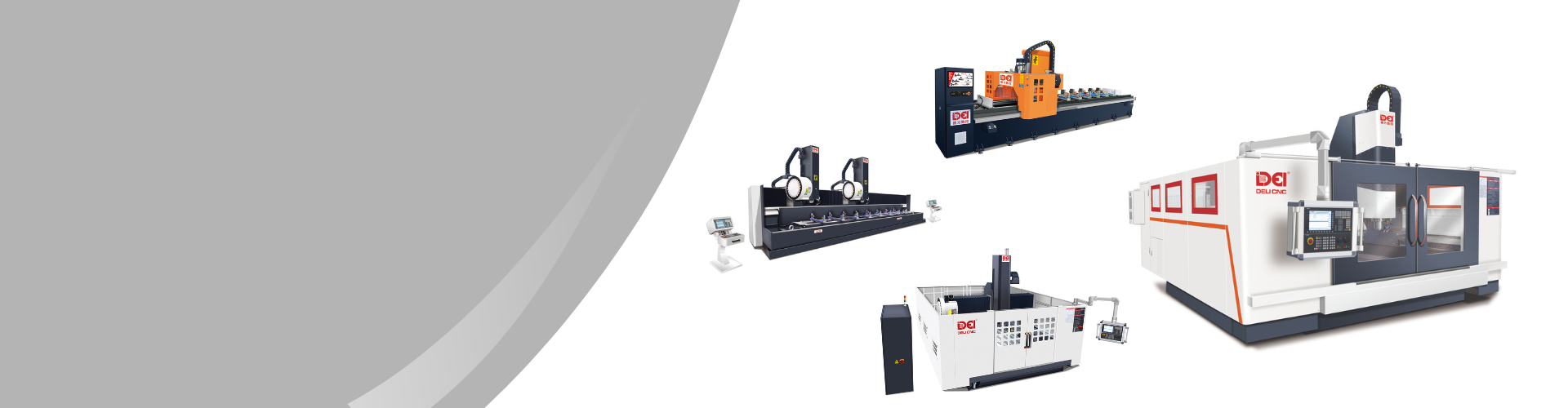
This guide consolidates more than 14 years of CNC machining center engineering practice. It draws on DELICNC’s experience supplying , gantry machining centers, and 5-axis profile machining centers to automotive, EV battery tray, aerospace, rail transit, 5G communications, and curtain wall manufacturers worldwide.

What Is a Vertical Machining Center
A vertical machining center is a CNC milling machine where the spindle axis is vertically oriented, with the cutting tool moving up and down perpendicular to a horizontally fixed worktable. The workpiece is clamped to the table, which moves in X and Y; the spindle head moves in Z. This geometry makes the VMC exceptionally well suited to flat, plate-like, and prismatic parts, because gravity assists clamping and chips fall away from the cutting zone rather than accumulating on the work surface.
Unlike a manual milling machine, a VMC executes multi-step toolpaths automatically through a CNC controller — commonly Fanuc, Siemens, or Mitsubishi in industrial installations — with an automatic tool changer (ATC), through-spindle coolant, and enclosed guarding as standard. A modern VMC is less a "machine" than a production cell: it integrates tool management, thermal control, and part probing into a single controlled process.
How accurate is a VMC? A well-built vertical machining center delivers positioning accuracy in the range of ±0.005–0.01 mm and repeatability of ±0.003–0.005 mm when fitted with precision ball screws, linear guideways, and thermal compensation. Micron-level consistency depends far more on structural rigidity and thermal stability than on the controller brand alone. In practice, the machine that holds tolerance on Monday morning and Friday afternoon is the one engineered for thermal symmetry, not the one with the highest catalog specification.
Vertical Machining Center vs Gantry & Horizontal: How to Choose
The most common evaluation error is treating all CNC machining centers as interchangeable. The right architecture follows the workpiece geometry, not the budget. The table below sets out the practical decision boundaries that DELICNC application engineers use when scoping a project.
Criterion Vertical Machining Center Gantry Machining Center Horizontal Machining Center Workpiece size Small–medium (≤1,500 mm) Large (1,500 mm+) Medium, cubic Best for Prismatic, mold, precision parts Large aluminum profiles, EV trays Boxes, multi-face, high volume Floor footprint Compact Large Large Chip evacuation Good (gravity) Excellent Moderate 5-axis option Limited (rotary/tilt) Native 5-axis gantry 4/5-axis common Cost per part Lowest for small parts Lowest for large parts Medium–high
A vertical machining center vs gantry machining center decision is straightforward in practice: if your part exceeds roughly 1,500 mm, or is a long aluminum extrusion such as a curtain wall mullion, rail transit profile, or EV battery tray, the moving-column structure provides the rigidity and reach a single-column VMC cannot. For mold making, precision fixtures, and small-to-medium prismatic parts, the VMC wins on cost-per-part and floor-space efficiency.
Against a horizontal machining center, the VMC trades multi-face automation for simpler setup, better chip evacuation on flat parts, and a lower entry price. Choose the HMC only when cubic parts need four or more faces machined in one cycle at high volume.
3-Axis, 4-Axis, and 5-Axis VMC: Configuration Guide
Axis count is the single biggest driver of both capability and cost. The configuration should match the part’s geometric complexity, not the marketing headline.
3-axis VMC: X/Y/Z linear motion. The default for pockets, profiles, and holes. Highest rigidity and lowest cost; still the right answer for the majority of prismatic work.
4-axis VMC: adds a rotary (A or B) axis — typically a rotary table integrated on the worktable — for machining on multiple sides without re-clamping. Ideal for valve bodies, manifolds, and cylindrical features.
5-axis VMC: adds a tilting rotary (A+B or trunnion table). Enables simultaneous five-sided machining of complex geometry in a single setup, eliminating tolerance stack-up between operations.
For most B2B parts manufacturers, the real question is 3-axis vs 5-axis vertical machining center. Choose 5-axis only when the part has compound angles, deep cavities, or freeform surfaces such as turbine blades, impellers, or aerospace brackets. Otherwise, a 4-axis configuration captures most of the benefit — fewer setups, better accuracy — at a fraction of the cost and programming complexity. A 5-axis machine poorly applied is simply an expensive 3-axis machine with a heavier service bill.
Key Technical Specifications That Determine Performance
When evaluating a VMC, the spec-sheet numbers that actually predict shop-floor performance are few but decisive:
Spindle: a high-speed electrospindle (BT40 or BT50 taper) rated 8,000–15,000 rpm handles aluminum and general steel; a heavier BT50 at lower rpm suits hardened steel and roughing. Spindle thermal growth is the leading cause of drift — look for a cooled spindle and thermal compensation in the controller, not just a high rpm number.
Ball screw & guideway: C3-grade ball screws with pre-tensioning resist backlash. Linear guideways (THK-, NSK-class) deliver speed; box ways deliver load capacity. Match the way system to the cut, not the brochure.
Rigidity: single-column VMCs are sufficient for most work, but double-column (bridge) VMCs add Y-axis symmetry, halving deflection on wide parts. For long parts, the moving-column gantry is the structural answer.
Positioning accuracy & repeatability: the headline numbers — verify they are measured per ISO 230-2, not vendor claims.
Rapid feed & acceleration: determines non-cutting time; matters more in high-mix, low-volume cells than in dedicated runs.
DELICNC machines are built on components from NSK, THK, Mitsubishi, Siemens, Fanuc, Schneider Electric, and SMC — a supply chain chosen specifically so that the structural, motion, and control subsystems are matched rather than merely assembled.
Matching Your VMC to the Right Material
Aluminum: high spindle speed (10,000+ rpm), polished flutes, through-spindle coolant, and aggressive feed rates. Aluminum generates long, stringy chips — programmed chip breaking and air blast prevent re-cutting. DELICNC’s aluminum-focused VMCs and profile machining centers are tuned for exactly this behavior.
Steel / stainless: lower rpm, higher torque, rigid clamping. Watch heat and work-hardening on 304/316 grades; flood coolant and sharp inserts are non-negotiable.
Titanium: low surface speed, flood coolant, sharp tools — a thermal and cutting-force challenge best handled on a rigid VMC, not a light gantry.
Cast iron: abrasive dust; sealed guideways and effective chip containment matter more than speed. Plan filtration before you plan cycle time.
For a material-by-material breakdown of cutting speeds, feeds, and tooling strategy, see our guide on .
Industry Applications: Automotive, Aerospace, Mold & More
The VMC is rarely the only machine in a precision plant, but it is usually the highest-utilization one. Representative applications:
Automotive & EV battery trays: structural aluminum parts and battery-tray subframes demand flatness and hole-pattern accuracy. For large trays, a 5-axis gantry machining center eliminates deformation in a single setup; for smaller brackets, a VMC with a 4th axis is the efficient choice. DELICNC supplies both, so the recommendation follows the part, not the catalog.
Aerospace: tight-tolerance fixtures and brackets — favor a 5-axis VMC with thermal compensation and documented, traceable accuracy.
Mold & die: the classic VMC domain. High rigidity, fine surface-finish capability, and a stable spindle are decisive. Surface finish in mold work is a rigidity problem before it is a tooling problem.
Rail transit & curtain wall: long aluminum profiles are processed on profile machining centers and double-head sawing machines (compound-angle cutting for mullions/transoms), not VMCs. Knowing this boundary prevents mis-specification and protects the buyer’s budget.
For a broader look at CNC machine applications across automotive, aerospace, and beyond, see our B2B guide on .

Selecting a Manufacturer & Evaluating Total Cost of Ownership
Purchase price is the smallest line in the real cost of a VMC. A disciplined evaluation covers:
Standard vs custom sizing: off-the-shelf VMCs ship faster and cheaper; custom spans or 4th-axis integration add lead time and engineering risk. Specify only what the part requires.
Lead time: large gantry machines can run 8–16 weeks; plan the production line, foundation, and operator training around that, not after it.
Installation & commissioning: foundation, power capacity, and operator training are often under-budgeted. A machine that arrives before the floor is ready is a machine that is not earning.
Integration: does the controller interface with your MES/ERP? Does the ATC accept your existing tooling? Open interfaces reduce lock-in.
Total cost of ownership: energy, tooling wear, service intervals, and spindle life over 5–10 years outweigh the purchase price. A manufacturer with a global service network and documented component traceability (NSK, THK, Mitsubishi, Siemens, Fanuc, Schneider, SMC) reduces long-term operational risk.
Rigidity & Maintenance: Avoiding Common Accuracy Problems
The top field issues are predictable, and so are their fixes:
Thermal drift → spindle and ball-screw cooling plus controller-side thermal compensation. The cheapest accuracy you will ever buy is thermal management.
Vibration / chatter → verify rigidity, reduce tool overhang, and tune spindle speed away from the resonance band of the tool-holder-structure system.
Taper / roundness errors → spindle bearing condition and ATC calibration; a worn taper destroys every dimension downstream.
Chip re-cutting → coolant direction and a functioning chip conveyor; re-cut chips are the silent killer of surface finish.
A practical maintenance checklist protects the micron-level investment: daily lubrication and way-wipe, weekly guideway inspection, monthly spindle test, and quarterly accuracy verification against a master. Maintenance discipline, not specification, is what keeps a VMC accurate across its service life. When a spindle does fail, our guide to walks through the rebuild-or-replace decision.
Buyer Checklist: Scoping a VMC Project by Industry
A structured scoping checklist prevents the two most expensive mistakes in CNC procurement — over-specifying a machine you do not need, and under-specifying one that cannot hold the tolerance. Use the following as a starting point before requesting a quotation.
Automotive & EV battery tray programs:
Define part envelope and flatness requirement — above ~1,500 mm or a full tray, move the discussion to a 5-axis gantry machining center.
Confirm hole-pattern positional tolerance and whether a 4th axis eliminates a second operation.
Plan for aluminum chip management: through-spindle coolant, air blast, and a chip conveyor sized for volume.
Aerospace fixture & bracket programs:
Require documented ISO 230-2 accuracy and thermal compensation as a contract condition, not a brochure claim.
Specify material range (aluminum to titanium) so rigidity and spindle torque are matched, not guessed.
Confirm controller traceability and post-process inspection integration for audit readiness.
Curtain wall & long-profile programs:
Recognize that long extrusions belong on a profile machining center and double-head sawing machine, not a VMC — scope the right architecture from the start.
Verify compound-angle cutting accuracy for mullion/transom joints and the saw’s multi-angle repeatability.
Check integration with unitized-curtain-wall assembly flow to avoid a bottleneck at the next station.
FAQs
What is a vertical machining center?
A CNC milling machine with a vertically oriented spindle; the table moves in X/Y and the head in Z. It is ideal for flat and prismatic parts where gravity aids clamping and chip evacuation.
What can you make with a VMC?
Mold cavities, automotive brackets, aerospace fixtures, medical enclosures, electronics housings, and general precision parts across metals and engineered plastics.
VMC vs HMC — which should I choose?
Choose a VMC for flat/prismatic parts with better chip evacuation at lower cost; choose an HMC for cubic parts needing multi-face machining at high volume.
How much does a vertical machining center cost?
It varies widely by size, axis count, and configuration. Focus on total cost of ownership — energy, tooling, service, and spindle life — over the sticker price.
How accurate is a VMC?
Positioning accuracy of ±0.005–0.01 mm and repeatability of ±0.003–0.005 mm on a well-built machine with precision ball screws, linear guideways, and thermal compensation.
What size VMC do I need?
Match the table to your largest part plus fixture allowance. Once parts exceed roughly 1,500 mm or are long aluminum profiles, evaluate a gantry machining center instead.
DELICNC Vertical Machining Centers: Engineered for Precision
Since 2008, DELICNC has engineered CNC vertical machining centers, gantry machining centers, , double-head sawing machines, and 5-axis profile machining centers for high-precision, high-efficiency, and high-stability processing. Trusted by CATL and SUNGROW, and built on components from NSK, THK, Mitsubishi, Siemens, Fanuc, Schneider Electric, and SMC, DELICNC positions itself as a technical partner for intelligent-manufacturing transformation — not just an equipment vendor.
For buyers specifying a new line, the recommendation is consistent: start from the workpiece (material, dimensions, tolerance, batch size, target industry), then let the architecture follow. That is how a VMC, a gantry, or a profile machining center becomes a profitable production cell rather than a stranded capital cost.