
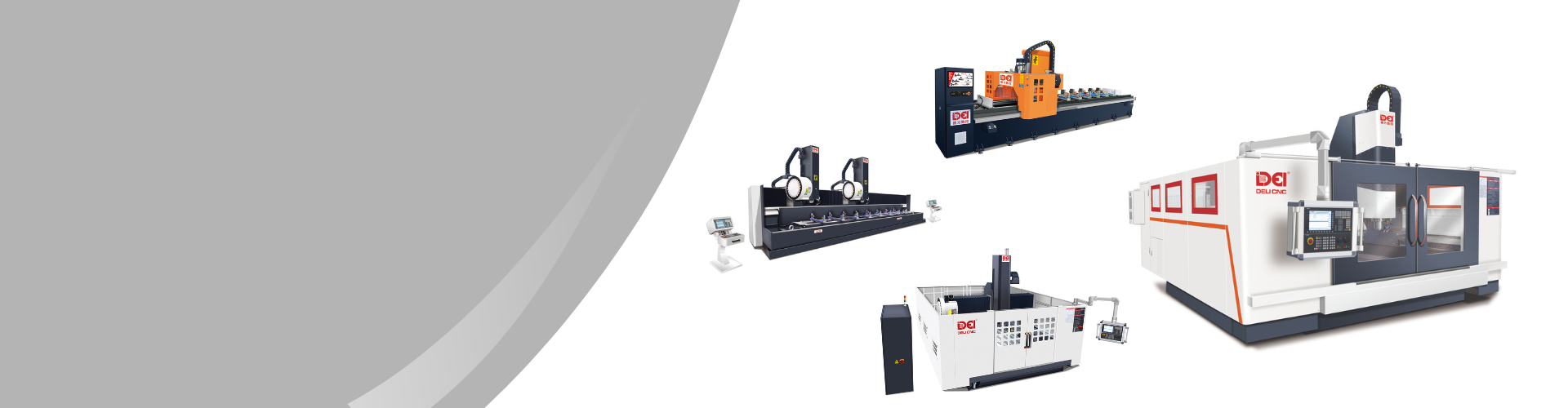
Unitized Curtain Wall Fabrication: Streamlining Production with Advanced CNC Centers
The architectural facade industry has changed a lot in recent years. Construction schedules keep getting tighter, energy codes stricter, and aesthetic demands higher. The result: the market has moved from traditional stick-built systems to prefabricated unitized curtain walls.
For manufacturing facilities, this is not just a product design change. The production method has to change with it. Unitized curtain wall fabrication requires a level of precision, speed, and consistency that manual or semi-automated processes struggle to deliver. This article covers how CNC machining centers help unitized curtain wall production, and what to look at when selecting equipment so the investment actually pays off.

The Role of CNC Machining Centers in Modern Curtain Wall Production
To understand what equipment you need, you first have to understand what changed in the manufacturing process. Moving to unitized systems changes both the tolerance stack-up and the assembly logic of a building envelope.
From Stick-Built to Unitized: Why Automation is Essential
In a traditional stick-built facade, mullions and transoms are installed piece-by-piece on the building exterior. If a hole is drilled a millimeter off-center, a worker can file it or use a slightly oversized bolt to compensate on-site.
Unitized curtain wall fabrication does not work that way. Entire panels, often spanning multiple stories, are assembled horizontally in a factory and then hoisted into place. The panels join using interlocking mullions (male/female legs), with continuous gaskets handling water and air tightness. There is almost no room to adjust anything on-site.
Precision Requirements for Unitized Panel Assembly
For unitized curtain wall fabrication done well, the industry standard is machining tolerances of ±0.01mm to ±0.02mm. This precision is what allows silicone gaskets to compress evenly, keeps the building weathertight, and lets structural anchors line up with the concrete or steel framework. Holding this across hundreds of panels requires a CNC machining center built with high-rigidity castings, precision linear guides, and a thermally stable structure.
In unitized systems, the tolerance for error moves from the construction site to the factory floor. If a machining center produces a mullion with a 0.5mm deviation, that error multiplies across a 10-story building, and the panels will not mate. Fully automated, high-precision CNC centers are not optional here; they are the baseline.
Key Challenges in Architectural Aluminum Profile Machining
Machining architectural aluminum profiles comes with a few stubborn challenges:
Extrusion Tolerances: Aluminum extrusions are not perfectly straight or uniform. A CNC machine has to compensate for slight bowing or twisting in the raw material without giving up precision on the machined features.
Long, Flexible Parts: Profiles can reach 6 meters. Clamping them securely without inducing stress, which causes spring-back and ruined tolerances once unclamped, requires well-engineered fixturing.
Material Behavior: Aluminum is soft and gummy. It produces long, stringy chips that tangle around tooling and ruin surface finishes if not managed.
Gantry vs Vertical Machining Center for Curtain Wall: Making the Right Choice
When a facade manufacturer buys equipment, one of the biggest decisions is machine architecture. The choice usually comes down to a CNC gantry machining center for aluminum profiles versus a standard CNC vertical machining center (VMC).
High-Precision Gantry CNC for Large Curtain Wall Units
For unitized curtain wall fabrication, the gantry machining center is the workhorse. In a gantry design, the workpiece (the long aluminum profile) sits stationary on a bed while the machining bridge (the gantry) moves over it along the X-axis.
This configuration is built for long, heavy extrusions. It allows multi-sided machining, drilling and milling the top, front, and back of a profile, in a single setup. Since the part does not move during X-axis travel, the risk of deflection and vibration drops considerably, and the high-precision gantry CNC holds tight tolerances from one end to the other.
When a Vertical Machining Center Makes Sense
Gantry machines dominate profile machining, but vertical machining centers still have a place in a complete curtain wall production line. VMCs are good for smaller, complex components such as:
Corner brackets and cleats
Anchor plates and structural nodes
Small insert blocks
If your facility has tight floor space or only produces small, standard-sized window units (under 1.5 meters), a high-end VMC might be enough. But for real unitized panel production, the VMC's limited Y-axis travel makes it impractical for full-length mullions and transoms.
Work Envelope, Rigidity, and Multi-Axis Capabilities Compared
When evaluating machine architectures, do not default to a 5-axis machine just because it sounds advanced. If 95% of your unitized profiles only need drilling and pocketing on three sides, a high-speed 3-axis or 4-axis gantry center will pay back much faster. Save 5-axis capability for the genuinely complex, multi-angled structural nodes.
| Feature | Gantry Machining Center | Vertical Machining Center (VMC) |
|---|---|---|
| Primary Application | Long aluminum profiles (mullions, transoms) | Small brackets, cleats, anchor plates |
| Work Envelope (X-Axis) | 4,000mm to 7,000mm+ | Typically 800mm to 1,500mm |
| Part Movement | Part is stationary; spindle moves | Part moves on X/Y table; spindle moves in Z |
| Rigidity for Long Parts | Good (bed supports full length) | Poor (long parts overhang and vibrate) |
| Multi-Sided Machining | Yes (with specialized 5-axis heads) | Limited (requires manual flipping) |
| Floor Space Efficiency | High (long but narrow footprint) | Moderate (requires clearance for table movement) |
Automated CNC Solutions for Curtain Wall Factories
Buying a CNC machine is the first step. The real gains come from integrating it into a smooth, automated workflow. Automated CNC solutions for curtain wall factories focus on cutting non-cutting time and reducing manual handling.
Automated Drilling and Milling for Curtain Wall Frames
Modern gantry centers come with multi-spindle heads and specialized angle heads that allow automated drilling and milling on multiple faces of curtain wall frames. Instead of an operator manually flipping a 6-meter mullion to drill the front and back, the machine's CNC-controlled angle heads pivot on their own. Setup time drops from minutes to seconds, and human error in part orientation goes away.
Automatic Tool Changer (ATC) Systems for Unattended Operation
A unitized panel requires dozens of different hole sizes, pocket depths, and thread tapping operations. An Automatic Tool Changer (ATC) with 24 to 32 tools lets the machine run complex programs without an operator standing over it.
Paired with tool-breakage detection sensors, the ATC makes sure a worn or broken end mill does not scrap an expensive, fully extruded aluminum profile. This level of automation is what makes true "lights-out" or unattended machining possible on second and third shifts.
Chip Conveyor and Coolant Systems for Aluminum Machining
Aluminum machining produces high volumes of long, stringy chips. If those chips are not evacuated right away, they get recut, which ruins the surface finish and can damage the tool. When specifying a machine, do not overlook the chip conveyor. For aluminum, a hinge-belt conveyor is the better choice because it stops long chips from wrapping around the drive sprockets, a common failure point with standard scraper conveyors.
High-pressure flood coolant does two jobs: it cools the tool and flushes chips out of deep pockets and blind holes in the aluminum profiles. Both matter.
Integrating CNC Centers into Complete Production Lines
Efficient plants do not treat the CNC machine as an island. Automated CNC solutions for curtain wall factories connect the machining center to automated material handling: motorized roller conveyors for loading raw extrusions, automated part catchers, and RFID tracking systems that read the barcode on the aluminum profile, call up the right CNC program, and adjust the machine's fixtures.
Maximizing ROI: Reducing Machining Time and Material Waste
For production directors and plant managers, justifying a new CNC center comes down to the numbers. Advanced machinery reduces machining time and material waste through a few concrete mechanisms.
Cycle Time Reduction Through High-Speed Machining
Cycle time shrinks in two ways: faster cutting speeds and less non-cutting time. Modern linear guide way CNC machines offer rapid traverse rates up to 60-80 meters per minute. Add in high-speed spindles and fast ATC tool-change times (often under 3 seconds), and non-cutting time nearly disappears.
Optimizing Nesting and Material Utilization
The machine cuts the part, but the CAM software decides how efficiently raw material is used. Good nesting algorithms group multiple parts from different curtain wall projects onto a single long extrusion, minimizing the "drop" or scrap length at the end of the bar. Cutting material waste by even 5% in a high-volume factory adds up to tens of thousands of dollars in saved aluminum per year.
Machining Thermal Break Aluminum Profiles Without Compromise
Modern energy codes require thermal break profiles: two aluminum extrusions separated by a polyamide (nylon) insulating strip. The tricky part of machining these is that you are cutting hard aluminum and soft polyamide at the same time.
With thermal break profiles, the different cutting forces can cause the polyamide strip to delaminate or melt. Use specialized, highly polished end mills with a positive rake angle to reduce cutting forces. When the tool transitions into the polyamide section, switch to a "peck milling" strategy or reduce the feed rate to prevent heat buildup and keep the edge clean and burr-free.
First-Pass Yield Improvement and Rework Reduction
Every time a panel fails a quality check and needs rework, you lose money twice. High-precision CNC centers protect first-pass yield by holding tight tolerances consistently. When the male and female mullion legs are machined right, the panels slide together smoothly, the gaskets compress evenly, and the factory avoids the costly work of disassembling and re-machining rejected units.
Technical Specifications That Matter for Curtain Wall Fabrication
When evaluating equipment, it is easy to get lost in brochure numbers. Here are the specs that actually affect what you can produce.
Spindle Power and Speed Requirements for Aluminum
For architectural aluminum, you want high RPMs, not massive torque. A spindle speed of 18,000 to 24,000 RPM is right for getting good surface finishes with small-diameter end mills. Spindle power in the 12kW to 15kW range (continuous duty) is plenty rigid for aluminum profiling. Multi-spindle CNC setups (an independent 5-axis head alongside a standard 3-axis head, for example) can further push throughput on complex profiles.
Axis Configuration: 3-Axis vs. 5-Axis for Complex Facades
3-Axis (with angle heads): Handles 90% of standard unitized mullions and transoms. Cost-effective and rigid.
4-Axis: Adds a rotary axis, good for curved or radiused facade elements.
5-Axis: Needed for complex, multi-angled structural nodes and bespoke architectural features. It lets the tool approach the workpiece from any direction, removing the need for multiple setups.
Control Systems: Siemens, Fanuc, and Programmability
The CNC controller is the machine's brain. Industry-standard controllers like Siemens (Sinumerik) or Fanuc are the safe pick. They process complex 3D toolpaths fast, they are reliable, and there is a large pool of programmers who already know how to run them. Avoid proprietary or obscure controllers; they make hiring skilled operators harder and limit your access to post-processor support from CAM software vendors.
Quality Assurance: CE Certification and ISO Standards
Do not cut corners on safety and quality standards. A CE certified CNC machinery manufacturer means the machine meets European safety, health, and environmental protection requirements. CE-certified machines are built with better electrical components, better safety interlocks, and better guarding, which protects your operators and reduces liability.
Why Choose DELICNC as Your CNC Machinery Manufacturer
There are a lot of options in the global market. Picking the right partner matters as much as picking the right machine.
15+ Years of CNC Machine Building Expertise Since 2008
DELICNC is a dedicated CNC machine builder. Since 2008, we have designed, engineered, and manufactured our own machining centers. We do not outsource core manufacturing, and we do not operate as a trading company. When you need a technical modification or a spare part, you deal directly with the engineers who built the machine.
Customized Solutions for Your Specific Production Needs
No two curtain wall factories are identical. We offer customized CNC solutions tailored to your profile sizes, production volumes, and factory layout. Whether you need an extended X-axis travel for oversized panels or a specialized fixturing system for a unique thermal break profile, our application engineering team designs to your actual requirements.
Global Support: Installation, Training, and After-Sales Service
Buying a machine is the start of a partnership. DELICNC provides global support, including on-site installation, rigorous commissioning, and operator and programmer training. Our machines come with remote diagnostics, so our engineers can troubleshoot software issues in real time and keep downtime low.
Competitive Investment with European-Level Performance
DELICNC delivers European-level performance, precision, and reliability at a competitive total cost of ownership. By optimizing our supply chain and manufacturing processes, we typically land an ROI timeline of 18 to 36 months, which makes the capital expenditure a reasonable one.

Conclusion
Unitized curtain wall fabrication demands a level of precision and efficiency that only advanced CNC machining centers can provide. Moving from manual processes to automated, high-precision gantry or vertical machining centers lets fabricators cut cycle times, reduce material waste, and get complex building envelopes to fit together cleanly.
As you evaluate your production capabilities, remember that the right machine is only half the equation. Working with an experienced CNC machine builder that actually sits down with you to understand your engineering goals is what gets the equipment aligned with what you are trying to do.
If you are looking to optimize your curtain wall production line, send your most complex aluminum profile drawings to our application engineering team. We will show you how a customized DELICNC machining center can clean up your fabrication process and what kind of measurable return it brings.
Frequently Asked Questions (FAQ)
Q: What CAD/CAM software integrates best with these CNC centers?
A: DELICNC machining centers are compatible with the common industry-standard CAD/CAM software used in architectural aluminum fabrication. For 3D modeling and complex 5-axis toolpath generation, SolidWorks, AutoCAD, and Inventor are widely used on the CAD side. On the CAM side, specialized software such as OrgaCAD, Logikal, or F CAM is optimized for curtain wall profiles and integrates with our Siemens and Fanuc controllers via standard G-code or proprietary post-processors. We suggest picking a CAM software with built-in libraries for architectural aluminum extrusions; it cuts programming time noticeably.
Q: How long does it take to install and commission a gantry machining center?
A: Installation and commissioning of a large gantry machining center typically takes 7 to 14 days, depending on machine size and automation level (such as integrated material handling conveyors).
Days 1-3: Physical placement, leveling, and anchoring of the machine bed and gantry.
Days 4-5: Electrical and pneumatic connections, and initial power-up.
Days 6-9: Laser calibration of the axes, spindle runout checks, and geometric accuracy verification.
Days 10-14: