
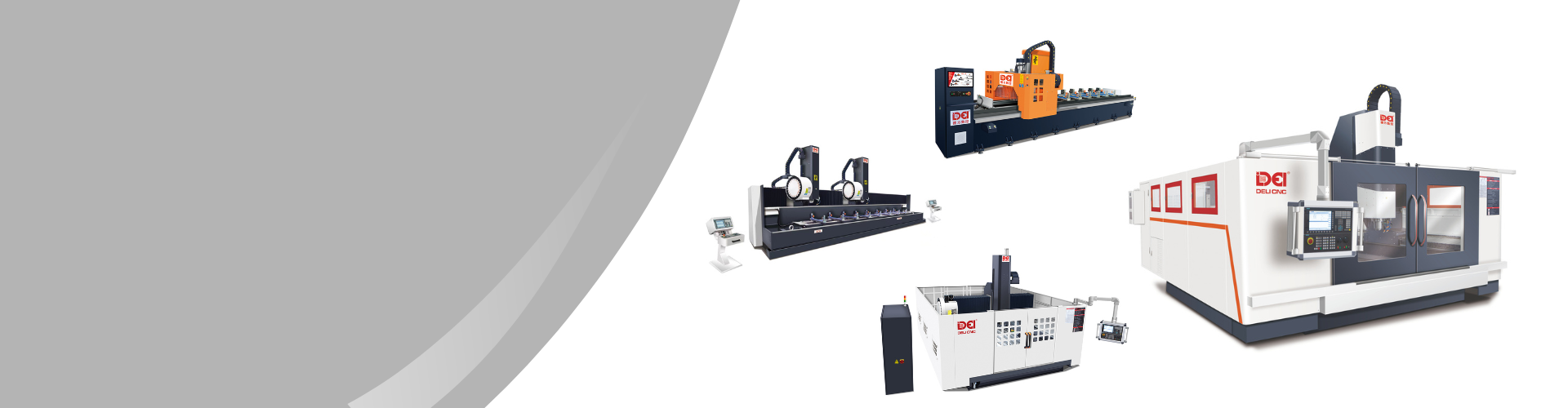
Sizing a large gantry CNC works differently when the workpieces are long aluminum profiles instead of wide plates or bulky castings. Length-dominant parts such as rail transit extrusions, curtain wall mullions, PV bracket rails, and long structural beams bring a problem short parts never face: deflection, sag, and inconsistent accuracy along the length. A gantry that holds tight tolerance at the ends can drift badly in the middle when it was sized from a catalog travel number alone.
DELICNC builds gantry and profile machining centers for exactly these jobs, and the sizing method below is how our engineering team starts a new line. The aim is straightforward: size the machine from the profile outward so the gantry you buy fits the parts you run every day, not the ones pictured in a brochure.
Start with profile length, not the catalog travel
The most common mistake buyers make is reading the X-axis travel and assuming it equals the longest profile they can machine. It does not. You need clearance at both ends for fixturing, tool approach, and a safe retract path. A practical rule is to add 150 to 300 mm to the maximum profile length to get the minimum required X travel. If your longest extrusion is 6,000 mm, plan for at least 6,300 to 6,400 mm of usable X stroke before you shortlist a machine.
DELICNC engineers usually start a sizing conversation from the customer's longest and heaviest profile drawing, then work outward to travel, table, and rigidity. That order avoids two traps: paying for table length you never use, or buying short and creating a loading and accuracy bottleneck at the ends of every shift. Get the X travel right first and every downstream choice stays honest.
Single zone versus multi-zone for very long profiles
When profiles run roughly 6 to 8 meters or more, a single work zone gets awkward to load and unload. Clamping and clearing time eats into spindle time, and operators spend more minutes per part than the cutting itself takes. A multi-zone or moving-column layout lets one zone load while another is in the cut, so the spindle keeps working instead of waiting.
DELICNC long-travel moving-column profile machining centers were built for this pattern: continuous, multi-area processing of long extrusions where throughput depends on keeping the spindle running. If your volume is high enough that loading time matters, treat multi-zone capability as a sizing input, not an upgrade you bolt on later. DELICNC reviews your daily part count early so the layout matches your real flow instead of a generic standard cell.
Common sizing mistakes DELICNC sees
Most failed gantry purchases for long profiles trace back to a few repeat errors. First, buying to the brochure travel and forgetting end clearance, so the real longest part no longer fits. Second, ignoring support pitch and finding mid-length sag only after the first batch. Third, treating the profile like a flat plate and under-sizing Z, then watching the standing section hit the spindle.
DELICNC works through these in the proposal stage, not after delivery. When a customer sends a drawing, the engineering team checks length, cross-section, wall thickness, tolerance at the midpoint, and daily volume before recommending a structure. That review is what separates a gantry that only looks large from one that holds tolerance across its full span.
Width, height, and Z clearance for extrusions
Aluminum profiles are not flat plates, and treating them like plates is where many gantry specs go wrong. A curtain wall mullion or a structural T-section has standing height that must clear the spindle nose and the fixture base. If you size only from the footprint, you find the profile hitting the spindle before you reach the required cut.
Cross-section height and Z clearance
Size the Z axis so the tallest cross-section, plus the fixture base, plus the tool length, sits below the spindle with margin to spare. Do not size Z to the plate thickness of a similar part. Size it to the standing profile height, because that is what takes up the vertical space during a 5-axis or angled cut. DELICNC application engineers confirm the Z envelope against your tallest section so the chosen head and tool holder leave room for the real part, not an idealized one.
Y width for nesting multiple profiles
If you machine several profiles side by side, the Y width decides how many you can nest per cycle. More nests per setup means fewer clamp changes and better throughput, which is why high-volume curtain wall and rail lines watch Y as closely as X. Balance the Y width against your floor space and the rigidity you can hold across that span. A wider table that deflects is worse than a narrower one that stays straight, so size Y to the parts rather than to the building.
Table load and support spacing: stopping sag in long thin aluminum
This is where long aluminum profiles diverge most from steel plates. Aluminum is light, but the profiles are often thin-walled and long, so they sag between supports and shift under clamping force. Accuracy at the midpoint of a 7-meter profile can drift well outside tolerance if the table only supports the two ends.
Distributed load and support pitch
Check the table's distributed load rating, not just its point load. For long profiles, support pitch, the distance between support points, drives flatness far more than the headline load number. Tighter pitch reduces sag but adds fixtures and cycle time. DELICNC sizing reviews the profile's own stiffness and recommends a support pitch that keeps deflection inside your tolerance band, then matches the table structure to that pitch so the two are designed as one system.
Vacuum and clamp support for thin walls
Thin-wall extrusions can crush or warp under a hard point clamp. Distributed vacuum or soft-jaw clamping spreads the force so the section holds its shape through the cut. Pair the support strategy with the machine size so the table and fixtures arrive as one matched system, not a gantry bought first with fixtures improvised afterward. DELICNC supplies the table and the work-holding together, so the support pitch in the quote is the same one the part meets in production.
Rigidity and spindle choices for volume profile milling
Gantry rigidity for long beams
A long gantry beam must stay straight under cutting load across its full span. Double-column or bridge designs resist twist better than a cantilevered head, which matters most when you side-mill a thick profile along its entire length. For heavy side milling of structural aluminum, prioritize column stiffness and linear guide size over top spindle speed. A rigid frame is what keeps the cut consistent from one end to the other.
Spindle speed for aluminum
Aluminum cuts cleanly at high speed, so for profile milling and drilling a high-RPM electrospindle with the right tooling keeps cycle times down. Match the RPM and power to the cut you run, not to the largest number on the brochure. An oversized spindle adds cost and mass but rarely speeds up a thin-wall pass. DELICNC configures spindle and tool interface together so the speed you buy shows up in the cycle time you planned for.
Axis count: when 4-axis or 5-axis pays off for long profiles
A 3-axis gantry covers most long-profile milling, but two cases push you to more axes. One is any compound angle along the length, where a 4-axis or 5-axis head reaches the feature without repositioning the part. The other is complex cross-section machining, where flipping the profile would add a second setup and a second source of error.
DELICNC offers bridge and crane-type 5-axis centers such as the HK3020 and HK4025 for parts that need that access across a large area. Buy the axis count the geometry needs, not the most on the floor. If a 3-axis or 4-axis pass gets the part done, that leaner setup usually costs less and runs faster.
When a profile machining center beats a full gantry
Not every long aluminum job needs a large gantry. If the work is mostly end-milling, hole patterns, and angle cuts on standardized extrusions, a 4-axis or 5-axis profile machining center does it faster and on a smaller footprint. DELICNC builds for high-precision profile work where the part stays within a manageable cross-section.
Use the large gantry when the part is too wide, too heavy, or needs 5-axis access across an area a profile center cannot reach. Otherwise a profile machining center is the leaner choice, and sizing it correctly frees floor space and capital you could put toward a second station.
Floor space, power, and installation planning
A large gantry is a fixed asset with real footprint and utility needs, so size it with the install in mind. Confirm the machine envelope including service clearance, not just the table, and check that your floor can carry the distributed load across the full span. Specify power, coolant, and chip handling alongside travel and rigidity. A gantry that arrives but cannot be powered or serviced is not a working cell yet.
DELICNC includes installation and commissioning in the project plan, so the sized machine drops into the available space with the right utilities and support. This is where the drawing-based sizing meets the building, and getting it right early prevents costly rework after delivery.
Sizing checklist for buyers
Work through this list before you request a quote, because each line changes the machine envelope:
Longest profile length and maximum cross-section height
Total weight and how that weight is distributed along the length
Required number of profiles per cycle for Y-axis nesting
Tolerance you must hold at the midpoint of the longest part
Support and clamp method for thin walls
Whether 4-axis or 5-axis access is required
Floor space and the loading flow into the cell
Daily volume and your target cycle time per profile
If you want to compare the two machine families side by side, our guide on explains which structure fits which workpiece shape. For long, thin sections specifically, the support and sag points above are the ones most buyers miss.
How DELICNC approaches a gantry sizing project
DELICNC is a state-level high-tech enterprise with more than a decade of experience in CNC machining centers and intelligent fabrication equipment. Our gantry range covers 3-axis models such as the HCK and MD series for large workpieces, plus bridge and crane-type 5-axis centers such as the HK3020 and HK4025 for complex aluminum parts. When a customer brings a long-profile application, the engineering team starts from the drawing and the tolerance, not from a standard machine, and proposes a table, support pitch, and spindle combination sized to that part.
You can review the full to see which structure matches your workpiece. For rail transit, curtain wall, PV bracket, and industrial aluminum profile lines, the right gantry is the one whose X travel, support pitch, and Z clearance all trace back to your longest and thinnest profile. DELICNC treats that traceability as the basis for every sizing proposal.
Managing thin-wall deformation during the cut
Even a perfectly sized gantry can produce scrap if the cutting strategy fights the material. Long thin aluminum wants gentle, consistent engagement rather than aggressive passes that let the wall flex. Our deeper guide on covers clamp sequencing, support placement, and pass planning that keep a long section straight through the whole operation. DELICNC pairs the machine specification with this process guidance so the finished part holds tolerance, and the machine was specified to make that possible.
FAQs
What size gantry do I need for a 6 meter aluminum profile?
Plan for roughly 6,300 to 6,500 mm of usable X travel after adding end clearance for fixtures and tool approach. Then confirm the support pitch keeps the midpoint within tolerance, because travel alone does not guarantee straightness on a long thin part.
Can a gantry machine thin-wall extrusions without warping them?
Yes, if the table and clamping are sized with the wall in mind. Distributed vacuum or soft jaws spread clamp force, and a support pitch matched to the profile's own stiffness prevents sag. DELICNC specifies the machine and the fixture as one system so the clamp plan matches the size you ordered.
Is a 5-axis gantry worth it for long profiles?
Only when the geometry needs angled access along the length, such as complex compound cuts on a structural section. If the work is straight milling and hole patterns, a 3-axis or 4-axis setup is leaner. Match the axis count to the cut, not to a wish list, and DELICNC will flag when fewer axes do the job.
How do I know if I need a gantry or a profile machining center?
If the part is too wide, too heavy, or needs large-area 5-axis access, a gantry is the right structure. If it is a standardized extrusion with end-milling and angle cuts, a profile machining center is usually faster and cheaper to run. Compare the two against your actual part envelope rather than a category preference.