
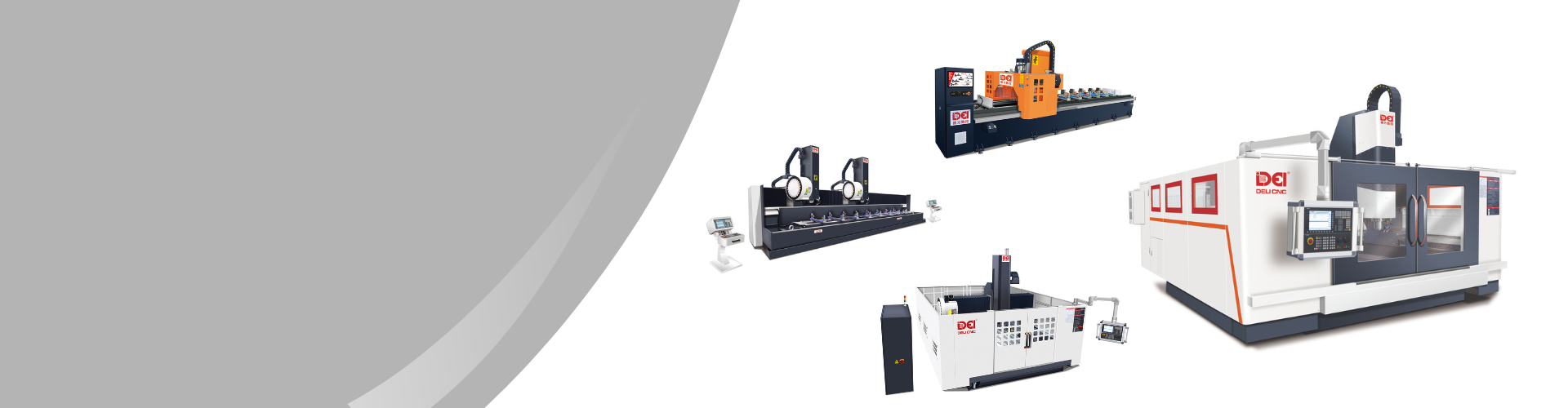
4-Axis Aluminum Profile Machining Centers for High-Precision Manufacturing
Why move to a 4-axis CNC aluminum profile machining center
Going from a standard 3-axis vertical machining center (VMC) to a 4-axis profile machine is not just about bolting on a rotary table. The machining logic itself changes.
3-axis vs. 4-axis profile machining: an ROI comparison
Buying capital equipment means you need numbers. Take a structural aluminum bracket that needs features machined on three different planes. On a 3-axis machine, the standard workflow goes like this: clamp the profile to machine Side A, unclamp, rotate 90 degrees, re-clamp for Side B, unclamp again, rotate, and re-clamp for Side C. Each re-clamping introduces a potential positioning error of 0.05 mm to 0.10 mm, and non-cutting time (setup and alignment) often accounts for over 40% of the total cycle time.
On a 4-axis machine like the Door and Windows CNC Fabrication Equipment SP, the profile is clamped exactly once. The 4th-axis rotary table indexes the part, so the machine can access and machine all sides in a single setup. Based on field application data, moving complex aluminum battery brackets or curtain wall connectors from a 3-axis setup to 4-axis cuts total cycle time by an average of 62%. Spindle uptime goes up, scrap goes down, and the payback period typically lands at 14 to 18 months.
Eliminating tolerance stack-up in a single setup
The biggest advantage of the 4th axis is getting rid of accumulated tolerances. When you manually reposition a long profile, the physical act of clamping introduces micro-stresses that can slightly distort the part. By securing the workpiece to a primary datum and using the rotary axis to bring different faces to the spindle, you keep a single continuous reference point. The indexing accuracy of 4-axis equipment holds true position tolerances between features on opposing faces within ±0.01 mm, regardless of profile length.
High-speed 4-axis CNC solutions for aluminum
Aluminum looks easy to machine. At high volumes, it is not. Its high thermal conductivity and tendency to stick to cutting tools put specific demands on machine dynamics. Get it wrong and you get poor surface finish and short tool life.
Matching spindle speed and power to aluminum alloys
For high-precision aluminum profile machining, you need spindles that can hit 12,000 to 24,000 RPM. Aluminum has a relatively low melting point. If the spindle runs too slow, the cutting edge rubs instead of shearing, heat builds up, and the aluminum melts and welds itself to the tool. That is built-up edge (BUE), and it ruins both surface finish and dimensional accuracy. A high-speed spindle paired with aggressive feed rates lets the tool shear cleanly, evacuating chips before heat transfers into the workpiece.
For 6061 and 6063 aluminum alloys, a 15,000 RPM direct-drive spindle rated at 11 kW (15 HP) minimum is the recommended baseline. When machining 7075 aerospace-grade aluminum, which is harder and more abrasive, drop the spindle speed to 10,000 to 12,000 RPM and increase feed per tooth to maintain a clean shear angle.
Automatic tool changers (ATC): don't let tool swaps drag you down
In profile machining, a single part often needs face mills, end mills, drills, and rigid tapping heads. How fast your ATC works directly affects output. Servo-driven ATCs can swap tools in 1.5 seconds. If a part needs 12 tool changes, a slow ATC adds dozens of seconds of dead time per cycle. Over a thousand-part run, that adds up to hours of lost production. A 45-degree tool-arm clamping mechanism holds the tool securely against pull-out forces during heavy roughing.
Linear guides and servo systems
Machine structure determines cutting precision. For aluminum profile machining, linear guideways beat traditional box ways. Heavy-duty roller-type linear guides have a low coefficient of friction, allowing rapid traverse rates up to 36 m/min without losing positioning accuracy. Paired with high-resolution absolute servo motors on each axis, the system achieves repeatability of ±0.005 mm. Servo feedback loops compensate for cutting forces in real time, so the tool path stays accurate even during heavy-depth-of-cut milling on wide aluminum extrusions.
Getting an automated profile machining center onto your factory floor
A machine is not just a standalone unit. It has to work with your existing line. High-precision machining has specific requirements for chip management and industry adaptation.
Chip conveyors and high-pressure coolant
Machining aluminum produces large volumes of long, stringy, abrasive chips. If they are not evacuated right away, the tool recuts them, damaging cutting edges and scratching the finished surface. A hinge-belt or scraper-type chip conveyor avoids the clogging problems common with screw-type conveyors. A high-volume, high-pressure flood coolant system delivers fluid straight to the cutting zone, handling lubrication, chip flushing, and aluminum adhesion prevention in one go.
Tailoring CNC mill configurations to your application
Every machine shop has different needs. A facility making 6-meter architectural window frames has completely different layout requirements from one producing 300 mm automotive heat sinks. We are a direct manufacturer and can customize CNC aluminum milling configurations. For example, the Curtain Wall CNC Fabrication Equipment MF can have an extended X-axis travel to handle profiles up to 7 meters, pneumatic clamping fixtures that auto-adjust to different profile widths, and custom Z-axis clearances for oversized rotary fixtures.
When requesting a custom configuration, give us the exact weight per meter and center of gravity of your aluminum extrusions, not just the maximum length. With that data, we can match the rotary axis servo motor torque correctly and design support fixtures that prevent the profile from sagging or vibrating during heavy milling.
Automotive and EV aluminum profile machining
The EV industry is driving a sharp increase in demand for complex aluminum extrusions. Battery tray enclosures and structural chassis components need to meet IATF 16949 standards. Automotive aluminum profile machining centers can be fitted with in-machine probing systems (Renishaw or Blum). The probe measures the raw extrusion, adjusts tool offsets to compensate for minor variations in the extrusion profile, and inspects critical features on the machine. This closed-loop feedback means every part hits the ±0.02 mm true position tolerances that automotive OEMs require, with full traceability.
Technical specifications and performance benchmarks
When evaluating a 4-axis aluminum profile machining center, here are the specs to use as a baseline (modeled on the Door and Windows CNC Fabrication Equipment SP):
| Component / Feature | Baseline Specification |
|---|---|
| Axis Travel (X/Y/Z) | Customizable (X: 3000 mm to 7000 mm, Y: 800 mm, Z: 600 mm) |
| 4th Axis (Rotary) | CNC Indexing, 360° Continuous, Torque: 500 Nm |
| Spindle Speed | 12,000 / 15,000 / 24,000 RPM (Direct-Drive or Built-in) |
| Spindle Power | 11 kW to 15 kW (Continuous) |
| Spindle Taper | BT40 or HSK-A63 (HSK preferred for high-speed balance) |
| Tool Magazine (ATC) | 16 to 24 Tools, Cam-driven, 1.5 seconds tool-to-tool |
| Rapid Traverse Rate | 36 m/min (X/Y/Z) |
| Positioning Accuracy | ±0.015 mm (Full Travel) |
| Repeatability | ±0.005 mm |
| Guideways | Heavy-duty Roller Linear Guides (Premium Brands) |
| CNC Controller | Fanuc 0i-MF Plus, Siemens 828D, or Syntec 6MB |
| Chip Management | Hinge-belt chip conveyor with high-volume flush |
Note: These specs can be customized to your application. For a dedicated configuration sheet, contact the Deli CNC Product Center
Why work with us as your 4-axis machining center manufacturer
Buying high-precision CNC equipment means choosing a long-term manufacturing partner, not just picking a machine off a shelf.
We are a CNC machine manufacturer, not a trading company. Since 2008, we have been building vertical machining centers, gantry mills, and specialized profile machining equipment. The entire manufacturing process happens in-house, from milling and stress-relieving cast-iron bases to final laser calibration of the axes. Every machine that leaves our floor has the structural rigidity and geometric accuracy to back it up.
Our equipment is CE certified and built under ISO 9001 quality management. Whether you are an automotive supplier needing IATF-compliant traceability or an architectural fabricator looking for good finishes on anodized aluminum, we build machining solutions around your production targets.
Frequently asked questions about 4-axis profile centers
1. What does a 4-axis aluminum profile machining center cost?
It depends on configuration. A standard 3-meter travel machine with a 16-tool ATC and Fanuc control runs between $80,000 and $120,000. A highly customized machine with extra-long travel (over 6 meters), high-speed spindle, and integrated probing can go from $150,000 to $250,000. Look at total cost of ownership (TCO) and actual ROI. Contact us for a quote tailored to your project.
2. What is the lead time and installation schedule for a custom machine?
Standard configurations have a manufacturing lead time of 45 to 60 days. Highly customized long-bed machines may take 75 to 90 days. Once the machine arrives at your facility, our engineers complete assembly, calibration, and operator training in 5 to 7 days before you go live.
3. What training and technical support come with the purchase?
We provide turnkey support: on-site installation and laser calibration, 3 to 5 days of hands-on operation and programming training, and a 12-to-24-month comprehensive warranty. Our global technical support team can connect remotely to the machine's control system to troubleshoot and reduce downtime.
Final thoughts
Switching to a 4-axis aluminum profile machining center pays off in three direct ways: less labor dependency, no setup errors, and higher throughput. The part that matters most is finding a factory-direct manufacturer who actually understands the pain points of aluminum profile fabrication.
You can see our full product lineup at the