
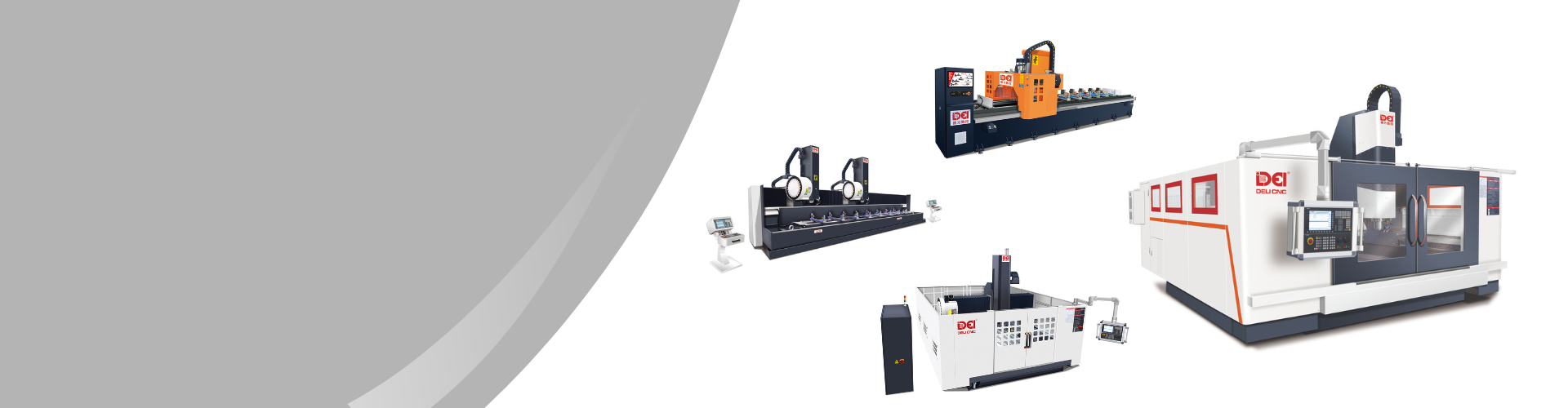
CNC Gantry vs Vertical Machining Center: Which Should You Choose
Buy the wrong machine and you live with the consequences for years. The workpiece gets repositioned, refixtured, and split across operations, and cycle time grows every time you touch it. The structure cannot absorb the cutting force, so tool load and vibration eat your inserts. Thermal drift shows up on finished parts because you picked the machine off a catalog page instead of off the part print. The machine sits idle on jobs it was never built for, or it cannot accept the parts that drive the business.
A CNC gantry machining center and a vertical machining center (VMC) are different structural concepts built for different work. The selection runs in a specific order: size first, then definition, structure, cutting force, accuracy, axis config, productivity, and a final checklist that adds the practical layer most buyers skip.
Filter by Workpiece Size and Weight
Use one criterion to choose, and use this one. Accuracy, productivity, and axis configuration all bow to the physical reality of the part.
Use a gantry machining center when:
The part is too long, wide, or tall for the largest VMC you will buy.
Workpiece weight exceeds VMC table load rating. Overload the table and it deflects, way covers distort, axis drives work harder than they were designed to.
The process needs long X-axis travel or large Y-axis clearance. Long beams, plates, and extrusions need continuous travel, not split setups.
The part cannot be repositioned between operations. A multi-ton mold base or aerospace structural component loses position accuracy and burns hours every time you re-fixture it.
The part needs machining over a large surface area in one setup. Flatness, coplanarity, and finish across a large area depend on a single continuous toolpath.
Use a VMC when:
The part fits inside the travels with room for clamps, tool holders, and probing.
Workpiece weight sits inside table-load limits with reserve.
Setup changeover speed matters more than max envelope. High-mix shops change jobs in minutes; a gantry cannot.
The production mix is mostly small to medium parts. A gantry runs idle most of the day if the envelope is mostly empty air.
Floor space is tight and operator access matters on every shift.
If your parts fall into one column, the rest of this guide explains why the filter works. If the call is borderline, the next sections give you the structural and process reasons to break the tie.
What Each Machine Is
Define the machines by structure, not by catalog size. Most selection mistakes start here.
CNC gantry machining center
A bridge-like frame supported by two columns. The spindle head rides across a horizontal crossbeam and moves in Z. The cutting tool hangs over the workpiece on an overhead frame, instead of beside the table on a single column.
Common layouts:
Fixed-gantry, moving-table: the bridge is stationary, the workpiece moves under it. Medium-large mold and plate work.
Moving-gantry: the bridge travels on X rails, the workpiece sits fixed on the floor or a stationary table. The dominant design for very large parts, because moving a 10-ton casting is impractical.
Bridge-type: an overhead beam on two rails, spindle head rides the beam. Long plates, beams, aerospace structure.
Double-column: two columns plus a crossbeam, fully supported table between them. Mold and die shops use the term interchangeably with gantry.
Overhead / portal: the workpiece sits on the floor inside the portal. Very tall or very heavy components that cannot be lifted onto a table.
Typical config: large X/Y/Z travel, heavy cast or welded structure, high-torque spindle, optional 3+2 or 5-axis head, large table or floor work area.
Vertical machining center
A vertical spindle sitting above the worktable. Spindle moves in Z, table or saddle moves in X/Y, structure is a single column or a compact C-frame. The workpiece is clamped to a table open on three sides to the operator.
Built around a C-frame, L-frame, bridge-style, or column structure. Each layout trades rigidity, travel, or access, but all of them share the vertical-spindle, table-mounted-workpiece concept.
Typical config: 3-axis base, optional 4th/5th axis rotary table, ATC, high-speed spindle, compact work envelope, strong on milling, drilling, tapping, boring, contouring, mold work.
Why the Size Filter Works: Structure Drives Capability
Gantry structure
The spindle sits on an overhead frame supported symmetrically. The mechanical consequences:
Cutting force goes into two columns and a crossbeam instead of one cantilevered column. You get a higher stiffness-to-load ratio on wide workpieces.
A gantry beam spans wide without the Y-axis sag and deflection a single-column VMC would suffer at the same span. This is why gantry wins on wide and long parts.
Heavy roughing of steel, cast iron, or titanium generates forces that flex a single column. A symmetric gantry absorbs them with less deflection. High rigidity under heavy cutting loads is the payoff.
Large molds, frames, plates, beams, housings, and structural components live here. On these parts the machining envelope, not the cycle time, sets the pace.
High-torque spindle heads, angle heads, universal heads, and automatic head-changing systems fit a gantry. On large parts, changing the spindle head costs less than repositioning the workpiece.
VMC structure
The VMC optimizes for operator access and compact part flow:
The compact vertical spindle layout puts the cutting zone at working height and in operator view.
The worktable and column suit smaller parts: things one person or a small hoist can lift, clamped within a few square meters.
The table is open on three sides. Setup, inspection, probing, in-process measurement, and manual deburring all get faster.
High-mix parts and repeat production fit here. Job changes are quick, fixtures are small, programs swap in minutes.
A VMC delivers more cutting capability per square meter of shop floor than any other architecture.
Cutting Load, Rigidity, and Material Removal Rate
Gantry: built for heavy removal
Gantry stiffness translates into material removal rate and cycle time on hard or large-section stock.
Steel, stainless, titanium, aluminum alloy, castings, welded structures, large mold bases. These forms generate cutting forces that chatter a single-column structure.
High stiffness cuts vibration in heavy milling. Vibration destroys inserts, shortens tool life, fatigues spindle bearings.
Machine mass and bridge support stabilize long-axis cuts. When the tool engages at the far end of a 3-meter X travel, machine mass is what keeps the column from ringing.
High-torque spindle options matter for roughing and large-diameter tools. Torque, not peak power, decides whether the machine pushes a big face mill or long drill through hard stock without stalling.
VMC: balanced precision and speed
A VMC optimizes for a different process window. The stiffness envelope is smaller; inside it the machine is productive.
Drilling, tapping, contour milling, finishing, pocketing, mold details. Toolpath-dense, spindle-speed-sensitive work, rather than force-sensitive.
High-speed spindle and fast ATC cut non-cutting time, which dominates the cycle on small and medium parts.
Toolpath density and frequent tool changes run the cycle here. A part with 40 tool changes and hundreds of drilling cycles gains nothing from gantry-class rigidity. It gains from rapids, ATC speed, and spindle acceleration.
The limit on a VMC is its structural concept. When part size or cutting force overloads the table, column, or fixture, no amount of VMC quality fixes it.
Accuracy and Thermal Stability
A machine that prints "±0.005 mm positioning accuracy" in its brochure does not deliver that number at every point in its envelope. Accuracy depends on stiffness, thermal symmetry, axis travel, cutting force, workpiece overhang, fixturing, and load distribution.
Large parts
Large-part work adds error sources small parts never see. A 50 mm temperature gradient across a 4-meter casting produces dimensional error measured in tenths of a millimeter, not microns.
Errors accumulate from thermal expansion, long-axis travel, foundation stability, and workpiece stress. Each grows with part size.
Gantry machines manage them with symmetric structures, thermal control, heavy castings, hydrostatic or linear guides, and compensation systems. Symmetric design sends thermal growth in predictable directions where compensation can correct it.
Small and medium parts
VMCs hold tight tolerances thanks to short axis travel, compact structure, fast servo response, stable spindle design. On a 200 mm part, none of the large-part error sources apply. Intrinsic repeatability dominates.
For parts with repeated drilling, tapping, and contour finishing, a VMC delivers better cost-per-tolerance than a gantry. Accuracy per dollar is the metric, and VMCs win it in the small-to-medium range.
The structural point: a gantry does not hold tighter tolerance than a VMC in absolute terms. It holds the same tolerance across a larger envelope, because its structure accumulates deflection, thermal drift, and geometric error more slowly over distance.
Axis Configuration and Machining Strategy
Gantry configurations
3-axis gantry: flat surfaces, plates, frames, molds, structural components. Planar or prismatic work, 3 axes are enough.
3+2 gantry: angled surfaces, multi-face machining. A 2-axis tilt/rotary head reaches the part from multiple directions without repositioning.
5-axis gantry: aerospace parts, complex molds, large impellers, composite trimming, freeform surfaces.
Automatic head-changing: one part needs roughing, finishing, drilling, boring, angled machining. The machine swaps heads instead of moving a multi-ton part.
VMC configurations
3-axis VMC: general milling, drilling, tapping, boring. The default for most small and medium parts.
4-axis VMC: rotary indexing, cylindrical features, multi-side machining. One rotary table turns a 3-axis VMC into a multi-face machine with little footprint cost.
5-axis VMC: complex geometry, medical, mold inserts, aerospace brackets. Consolidates operations that would otherwise span multiple fixtures.
Productivity: Setups, Handling, and the Units That Matter
The two families measure productivity in different units. The setup logic runs in opposite directions. Confusing the units is the most common mistake buyers make.
Gantry: fewer setups, not faster cycle time
On a gantry, cutting time is not the bottleneck. Handling is.
The main gain is finishing a large part in fewer setups. A gantry completes in one or two operations what would otherwise take five or six.
Heavy-duty cutting improves roughing. More torque and stiffness allow deeper cuts and larger stepovers, so more material comes off per minute.
Long parts run without splitting operations across machines. No inter-machine transport, no re-fixtureing, no cumulative accuracy loss from moving the part.
Material handling, crane loading, fixture prep, and inspection can dominate lead time. Loading and aligning a large workpiece can take longer than machining it. Gains come from fixturing and handling, not from faster cutting parameters.
VMC: less non-cutting time, more spindle utilization
The main gain is faster tool changes, faster rapids, compact loading, repeatable setups, and automation compatibility. Non-cutting time is where the VMC wins.
Suits high-mix, mid-volume, or high-volume small parts. The machine runs different parts in sequence without long changeovers.
Pallet systems, rotary tables, and robot loading keep a VMC cutting 24 hours a day on a portfolio of small parts.
The units mistake
Gantry productivity is measured in parts completed per fixture. Eliminating setups and completing large parts is the goal.
VMC productivity is measured in parts per hour, or spindle utilization percentage. Cycle time, tool-change time, and throughput define it.
Compare a gantry on parts-per-hour and a VMC on parts-per-fixture and you reach the wrong conclusion, because the units do not match.
Selection Checklist
Apply this to your real part portfolio. The first two checklists are technical filters drawn from the chapters above. The third adds the practical layer that decides whether a machine you technically need is a machine you can run.
Gantry fits your work when
Workpiece exceeds standard VMC travel. This is the primary filter; it overrides almost everything else.
Part is long, wide, heavy, or hard to reposition. If the shop cannot move it between operations, the machine must reach every machined surface in one setup.
Heavy milling or large tool engagement. Steel, cast iron, titanium, large-section aluminum demand a stiffness envelope a single column cannot give.
Multi-face machining of a large component. A 3+2 or 5-axis gantry head reaches angled features without repositioning a multi-ton part.
Your current bottleneck is outsourcing large parts. Bringing that work in-house on a gantry pays for the machine faster than most other investments.
VMC fits your work when
The part fits the standard envelope with margin for clamping and probing.
You need high spindle speed and fast tool changes on toolpath-dense parts.
You machine small to medium precision parts where tolerance, finish, and repeatability define quality.
Production includes frequent job changeovers. A VMC swaps parts in minutes with minimal fixture change.
Floor space is limited. A VMC delivers more cutting capability per square meter than any other architecture.
You need 3-, 4-, or 5-axis flexibility in a single compact footprint.
The practical layer: infrastructure, budget, and lead time
A machine that fits the part can still fail on the shop floor. Before the purchase order:
Foundation. A gantry needs a dedicated poured foundation, often isolated from the rest of the slab. A VMC sits on a standard shop floor with minor leveling.
Material handling. Gantry work means crane access, heavy fixtures, and trained rigging crew. No overhead crane rated for your heaviest part, no gantry.
Power and air. Gantry spindles and coolant systems draw more. Confirm supply and transformer capacity before sizing the machine.
Operator skill and staffing. Gantry setup is measured in days. VMC setup is measured in minutes. Staff the machine for the setup cycle it runs.
Lead time and budget. Gantry lead time runs longer and the install is a project in itself. If the large-part work is not yet under contract, the machine can sit waiting for work that slips.
Industry signal. Aerospace, shipbuilding, wind, heavy machinery, large mold, and rail define the gantry part class. Automotive, medical, electronics, mold inserts, and general precision work live in the VMC sweet spot: small parts, tight tolerances, fast throughput, frequent change.