
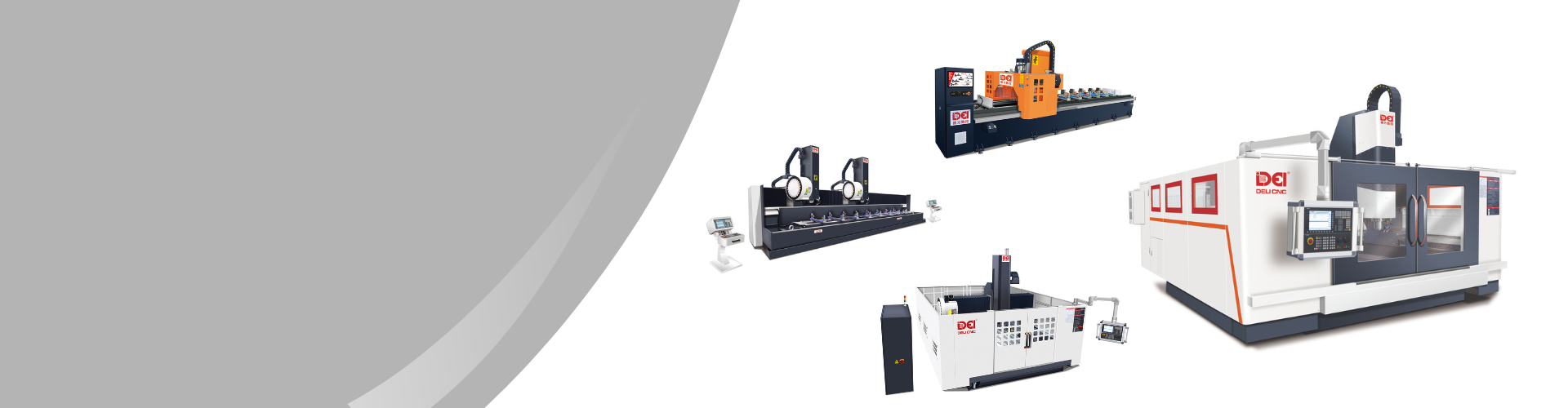
This guide takes a related but different angle. DELICNC does not sell finished aluminum parts. DELICNC builds the CNC machining centers, gantry machines, and profile fabrication equipment that produce those parts at volume. If your shop wants to make custom aluminum products in-house, or you are specifying a production line for a customer, the machine you choose decides what kinds of parts you can make, how accurate they stay, and what they cost per piece.
What Qualifies as a Custom Aluminum Product
The word "custom" is broad, but most custom aluminum products share a path. They start from a standard material, usually 6061 or 6082 aluminum, and become specific through cutting, milling, drilling, and joining. The common families are:
Machined brackets and housings. Small structural parts with holes, pockets, and faces cut to a tolerance.
Post-machined extrusions. Standard profiles cut to length and then milled at the ends or along the body.
Structural parts. EV battery trays, rail sections, and chassis brackets where flatness and repeatability matter most.
Facade elements. Mullions, transoms, and curtain wall nodes cut and drilled at compound angles.
Furniture and enclosure frames. Aluminum frames for cabinets, displays, and equipment housings.
None of these is exotic. The difference between a commodity part and a custom aluminum product is the machining step, and that step is where DELICNC equipment sits.
The Production Route From Stock to Finished Part
A custom aluminum product rarely comes off one machine in one move. The typical route runs through four stages, and DELICNC covers the first three with its equipment range.
1. Cut the stock to length. Long extrusions and bars are sawn before any milling. Double-head saws handle this for profile work, cutting both ends in a single indexed pass so the length stays consistent across a batch.
2. Machine the features. A vertical machining center mills the pockets, holes, and faces. For small and medium parts this is where most of the value is added.
3. Fabricate the assembly geometry. Curtain wall and frame parts often need compound-angle cuts that a standard mill cannot reach. Profile machining centers and 5-axis machines handle that stage.
4. Finish and join. Anodizing, powder coating, and assembly usually happen downstream with a finishing partner. DELICNC builds the machining and fabrication equipment, not the coating line.
The first three stages decide the part. The fourth protects its look. A buyer evaluating custom aluminum products should therefore look at the machine line first, because that is what sets the limits on what can be made.
Why the Machine, Not the Metal, Sets the Limit
Aluminum is forgiving to cut and unforgiving to hold. Thin sections flex, long parts twist, and heat from a slow pass can pull a flat tray out of tolerance. The material does not decide whether a part stays accurate. The machine does.
Rigidity. A weak frame lets the part move under the cutter. DELICNC designs its machining centers around a rigid frame so the cut load transfers to the structure, not to the workpiece.
Repeatability. Tolerance is a property of the machine, not the alloy. The same drawing run on a loose machine and a stiff one produces two different parts.
Setup count. Every extra clamp and re-fixture adds a chance for error. Fewer setups means the part leaves the machine closer to the drawing.
Two shops can quote the same part and deliver very different consistency based only on the machines they run. A buyer comparing suppliers should ask what equipment sits behind the quote.
Matching the Machine to the Part Family
There is no single "custom aluminum product machine." The right center depends on the part shape, size, and volume.
Vertical machining centers suit small to medium parts: brackets, housings, and plate components. The covers compact models for tight shops and larger travels for bigger plates.
Gantry machining centers suit large, flat, or long parts where a vertical machine would need awkward fixturing. A battery tray or a rail section lies better on a wide table than it stands in a small envelope.
Profile machining centers suit curtain wall and frame work where the cut angles are the product. A facade node is defined by its compound joints, and the machine has to reach them.
5-axis centers suit parts with features on multiple faces or deep compound geometry, where flipping the part by hand would add setups and error.
If you are weighing these options, the lays out the trade-offs by part family, volume, and tolerance, which is a faster way to narrow the field than reading spec sheets alone.
Custom Aluminum Products by Industry and the Right Setup
The same aluminum shows up across industries, but the production setup changes with the part.
EV and battery storage. Battery trays are large, thin, and flat, which makes them prone to warping under heat. A gantry or 5-axis center that machines the tray in fewer setups keeps it flat. DELICNC documents this approach on its , which covers part types and line layouts for that work.
Rail and transport. Long aluminum sections need a table and a rigidity that holds the full length steady. The shows how DELICNC equipment handles sections that would flex on a smaller machine.
Facade and architecture. Curtain wall nodes are defined by angle. Profile centers cut the compound joints so every piece matches the one beside it.
Furniture and enclosures. Frames are usually medium volume with frequent design changes, which favors a flexible VMC cell over a dedicated line.
In-House Production Versus Outsourcing the Work
A common question when sourcing custom aluminum products is whether to make them or buy them. The answer depends on volume, variety, and lead time.
Volume. Above a certain monthly count, the per-part cost of running your own center drops below the price of buying each part from a supplier.
Variety. Shops with many part numbers and small batches gain most from in-house flexibility, because every outsourced change carries a setup fee and a wait.
Lead time. When a design changes weekly, an external supplier's queue becomes the bottleneck. Owning the machine keeps the change in your own shop.
The machine price is only part of this math. Tooling, fixtures, labor, floor space, and downtime all enter the total cost of ownership. A center that costs more up front but holds tolerance longer usually wins on cost per part over three years.
DELICNC sees the same pattern across its customers. The shops that plan the line around their real part mix, rather than buying the cheapest single center, are the ones that recover the investment on schedule. A center chosen for the hardest part you run, not the easiest, stays useful when the work changes.
What to Tell a Machine Supplier Before You Buy
Shops that buy custom aluminum products, or buy the machines that make them, get better quotes when they share the right detail. Before you ask for a line or a part price, gather:
Material and grade. 6061, 6082, or another series changes tooling and speeds.
Part dimensions and weight. The envelope and mass set the machine size.
Tolerance. State the number that matters, not a blanket tight spec.
Batch size and mix. Steady volume and frequent changeovers need different setups.
Target industry. EV, rail, and facade each carry their own quality expectations.
DELICNC asks for exactly this set when a customer requests a solution, because the machine that fits a 500-piece monthly bracket run is not the one that fits a 5,000-piece monthly tray run. Sharing the real numbers early avoids buying the wrong envelope.
From a Single Machine to a Full Line
Buying one center is rarely the whole project. A shop moving into custom aluminum products usually needs the machine, the fixtures, and a way to feed material through it without losing accuracy between steps. DELICNC approaches this as a line problem, not a single-machine sale. A DELICNC project starts from the part drawing and works back to the envelope, the spindle, and the fixture plan, so the center arrives matched to the work instead of generic.
Material handling is the quiet cost. A capable center paired with manual loading loses time at every part. DELICNC lays out the cell so the part flows from saw to mill to fabrication without a bench full of waiting stock, which is what turns a machine spec into a production rate. The savings show up in throughput, not in the cut alone.
The component base matters for uptime over years, not for the first shift alone. DELICNC builds around established partner brands for the parts that wear and the parts that control: linear guides, spindles, controllers, and pneumatics from suppliers such as NSK, THK, MITSUBISHI, SIEMENS, FANUC, Schneider Electric, and SMC. The value is not the name list. It is that a known drive and guide package is easier to service and stock than a closed proprietary one, which keeps a custom aluminum products line running when a part eventually wears.
Support after delivery is where many equipment buys fail. DELICNC runs commissioning and operator training so the first parts hold tolerance on day one, and the DELICNC team that sized the machine stays reachable when a line changes. For shops moving from outsourcing to in-house production, that continuity is the difference between a center that sits idle and a line that pays back its cost.
FAQs
Does DELICNC make custom aluminum products?
No. DELICNC builds the CNC machining centers, gantry machines, and profile fabrication equipment that produce them. The finished parts come from the shops that run that equipment.
Which machine makes the most custom aluminum products?
For most shops it is the vertical machining center, because brackets, housings, and plates cover the bulk of daily work. Large or long parts move to a gantry, and angle-critical facade parts move to a profile center.
Is aluminum harder or easier to machine than steel?
Easier to cut, harder to hold. Aluminum removes quickly but flexes and heats, so rigidity and clamping matter more than raw spindle speed.
When does in-house production beat outsourcing?
Usually once volume is steady and the part mix changes often. The fixed cost of the machine spreads across many parts, and design changes stay inside your own lead time.
How do I avoid warping on thin aluminum parts?
Cut in fewer setups, keep the part supported across its full length, and let the machine's rigidity carry the load instead of the fixture. Fewer setups means less heat and less movement per part.
Conclusion
Custom aluminum products are defined less by the metal and more by the machine behind them. The same 6061 bar becomes a bracket, a tray, or a facade node depending on the center that cuts it. DELICNC builds those centers, from compact vertical machines to wide gantry and profile lines, so the shops that run them can make the parts their customers need.