
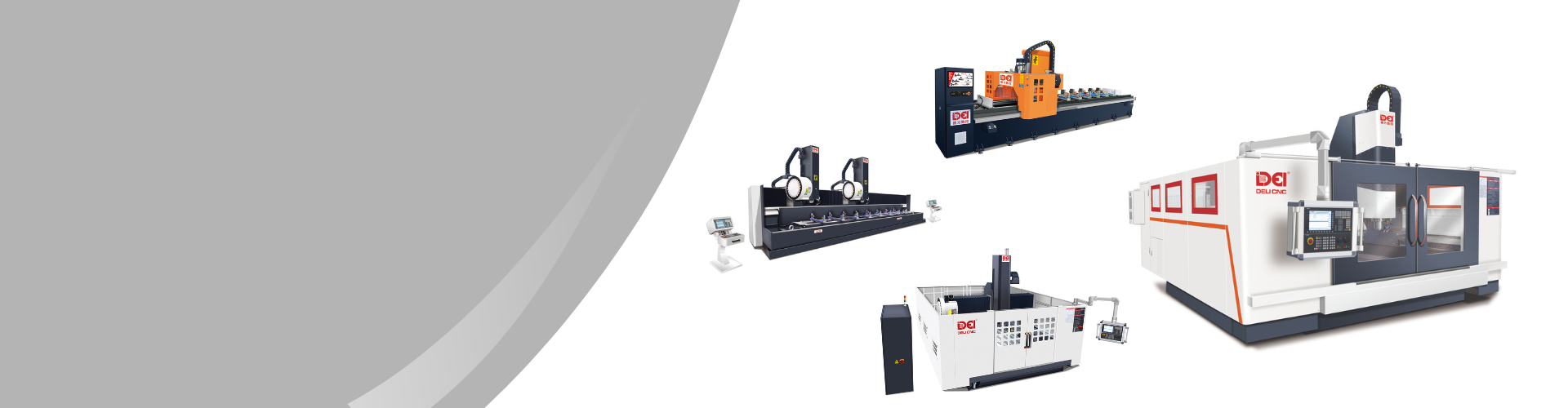
This guide takes the angle that matters for anyone who makes or buys these parts. DELICNC does not sell finished CNC components. DELICNC builds the vertical machining centers, gantry machines, and profile fabrication equipment that produce them at volume. If your shop wants to make CNC high quality parts in-house, or you are specifying a production line for a customer, the machine you choose sets the tolerance ceiling for every part that comes off the line.
What Tight Tolerance Means for a CNC Part
Tolerance is the allowed deviation from a stated dimension. A drawing might call for a bore at 20.00 mm with a plus or minus 0.02 mm band. Hold that band across a batch of 5,000 and the part is high quality. Drift outside it on part 4,800 and the part is scrap, even if the aluminum is perfect.
High quality in CNC work is therefore repeatability, not a single lucky cut. The measures that buyers care about break down into a few concrete numbers: dimensional tolerance on each feature, positional tolerance between features, flatness on large faces, and surface finish on machined walls. A part that looks clean but misses the position spec by 0.1 mm will not assemble. Two parts can leave the same drawing and look identical on the bench, yet one assembles cleanly and the other needs rework. The difference is rarely visible. It shows up on the inspection report, and it shows up in the field when a bracket loosens or a housing leaks. Tight tolerance is what turns a machined block into a part that fits, functions, and passes inspection every time.
Why the Machine Sets the Limit, Not the Material
Aluminum, steel, and stainless all machine to tight tolerance in the right hands. The material is not the bottleneck. The bottleneck is whether the machine can hold the part still, cut it accurately, and do it the same way on the ten thousandth part as the first.
Three machine properties decide this:
Rigidity. A frame that deflects under the cutter lets the part move mid-cut. DELICNC designs its machining centers around a rigid structure so the cutting force transfers into the base, not into the workpiece.
Repeatability. Tolerance is a property of the machine, not the alloy. Run the same drawing on a loose center and a stiff one and you get two different parts.
Setup count. Every extra clamp and re-fixture is a chance to lose position. Fewer setups means the part leaves the machine closer to the drawing.
DELICNC builds its centers to keep all three properties stable for years of daily running, which is exactly where most shops start to lose tolerance. Consider a thin aluminum bracket. Cut it on a machine that flexes under load and the wall bows by a few hundredths of a millimeter that no one sees until assembly. Cut it on a rigid center and the wall stays put. The alloy is the same in both cases. The outcome is not. Two shops can quote the same part and deliver very different consistency based only on the machines they run. The equipment behind the quote decides the part, not the metal in the bin.
The Production Route That Protects Tolerance
A CNC high quality part rarely reaches tolerance in one operation. The typical route runs through stages, and each one either adds accuracy or risks losing it.
Stock is cut to length first. Long extrusions and bars are sawn before any milling, and a double-head saw handles profile work by cutting both ends in a single indexed pass so length stays consistent across the batch. You can see how DELICNC approaches this stage on its page.
A vertical machining center then mills the pockets, holes, and faces where most of the value is added. For small and medium parts this is the core tolerance step. The covers compact models for tight floors and larger travels for bigger plates.
Large or long parts move to a gantry machining center, where a wide table holds the workpiece flat instead of standing it in a small envelope. DELICNC documents this approach across its , which suit battery trays, rail sections, and other parts where flatness matters most.
Compound-angle and multi-face work needs profile centers or 5-axis machines to reach the geometry without extra setups. Finishing and coating happen downstream with a partner, because the machining equipment, not the coating line, is what sets the dimensions. DELICNC covers the first three stages with one equipment range, so a shop can build a line without mixing brands and losing tolerance between steps.
Matching the Machine to the Tolerance You Need
There is no single machine for CNC high quality parts. The right center depends on the part shape, size, and how tight the spec is.
Vertical machining centers suit brackets, housings, and plates where tolerance lives in hole position and pocket depth. The DELICNC VMC range, including the compact model, covers most daily work.
Gantry machining centers suit large, flat parts where a vertical machine would need awkward fixturing that itself introduces error. A tray or rail section lies better on a wide table.
Profile machining centers suit curtain wall and frame work where the cut angle is the tolerance. A facade node is defined by its compound joints.
5-axis centers suit parts with features on multiple faces, where flipping by hand would add setups and drift.
Tolerance also has a cost curve. Holding plus or minus 0.05 mm is straightforward on a stiff center. Holding plus or minus 0.01 mm costs more in cycle time, tooling, and inspection, and it pushes the machine closer to its limit. The practical goal is to hold the spec the part needs in service, then buy a center with margin below that line so daily wear never pushes you out of tolerance.
DELICNC sizes each center to the part it will run most, because a machine working inside its comfort zone holds tolerance longer. Behind every DELICNC center is a consistent component base. DELICNC builds around established partner brands for the parts that wear and the parts that control, including NSK, THK, MITSUBISHI, SIEMENS, FANUC, Schneider Electric, and SMC. The value is not the name list. It is that a known drive and guide package is easier to service and stock than a closed proprietary one, which keeps a tolerance-critical line running when a part eventually wears.

In-House Production Versus Outsourcing the Tolerance Risk
A common question when sourcing CNC high quality parts is whether to make them or buy them. The answer depends on volume, variety, and how much tolerance risk you can hand to a supplier.
Volume. Above a certain monthly count, running your own center drops the per-part cost below buying each piece.
Variety. Shops with many part numbers and small batches gain most from in-house flexibility, because every outsourced change carries a setup fee and a wait.
Lead time. When a design changes weekly, an external queue becomes the bottleneck, and tolerance consistency depends on a partner you do not control.
A shop that outsources a bracket at plus or minus 0.1 mm may receive parts that pass one month and drift the next, because the supplier changed a fixture or a machine without telling them. Bringing the work in-house trades that uncertainty for a known, owned process, provided the volume justifies the center.
The machine price is only part of this math. Tooling, fixtures, labor, floor space, and downtime all enter the total cost of ownership. A center that costs more up front but holds tolerance longer usually wins on cost per part over three years.
DELICNC sees the same pattern across its customers. The shops that plan the line around their real part mix, rather than buying the cheapest single center, are the ones that recover the investment on schedule. A center chosen for the hardest part you run, not the easiest, stays useful when the work changes. DELICNC runs commissioning and operator training so the first parts hold tolerance on day one, and the DELICNC team that sized the machine stays reachable when a line changes.
What to Tell a Machine Supplier Before You Buy
Shops that buy CNC high quality parts, or buy the machines that make them, get better quotes when they share the right detail. Before you ask for a line or a part price, gather:
Material and grade. 6061, 6082, or another series changes tooling and speeds.
Part dimensions and weight. The envelope and mass set the machine size.
Tolerance. State the number that matters, not a blanket tight spec.
Batch size and mix. Steady volume and frequent changeovers need different setups.
Target industry. Automotive, rail, and facade each carry their own quality expectations.
One more item belongs on the list: how the tolerance will be measured. A claim of plus or minus 0.02 mm means little without a CMM or gauge plan, and the machine choice should leave room for that measurement, not fight it.
DELICNC asks for exactly this set when a customer requests a solution, because the machine that fits a 500-piece monthly bracket run is not the one that fits a 5,000-piece monthly tray run. Sharing the real numbers early avoids buying the wrong envelope. DELICNC turns that set into a machine proposal rather than a generic catalog pick.
FAQs
Does DELICNC make CNC high quality parts?
No. DELICNC builds the vertical machining centers, gantry machines, and profile fabrication equipment that produce them. The finished parts come from the shops that run that equipment.
Which machine holds the tightest tolerance?
For most shops it is the vertical machining center, because brackets, housings, and plates cover the bulk of daily work. DELICNC positions the VMC as the workhorse for tolerance on everyday parts. Large or long parts move to a gantry, and angle-critical facade parts move to a profile center.
How do I avoid tolerance drift on thin or long parts?
Cut in fewer setups, keep the part supported across its full length, and let the machine's rigidity carry the load instead of the fixture. DELICNC designs its tables and clamps to spread support across the part. Fewer setups means less heat and less movement per part.
Is tighter always better?
No. Tighter tolerance costs more in cycle time, tooling, and inspection. Match the spec to the function, then choose a machine that holds that spec comfortably, not one running at its limit.
When does in-house production beat outsourcing?
Usually once volume is steady and the part mix changes often. The fixed cost of the machine spreads across many parts, and design changes stay inside your own lead time.
Conclusion
CNC high quality parts are defined less by the metal and more by the tolerance they hold. The same 6061 bar becomes a bracket, a tray, or a facade node depending on the center that cuts it. DELICNC builds those centers, from compact vertical machines to wide gantry and profile lines, so the shops that run them can make parts that fit, function, and pass inspection every time.