
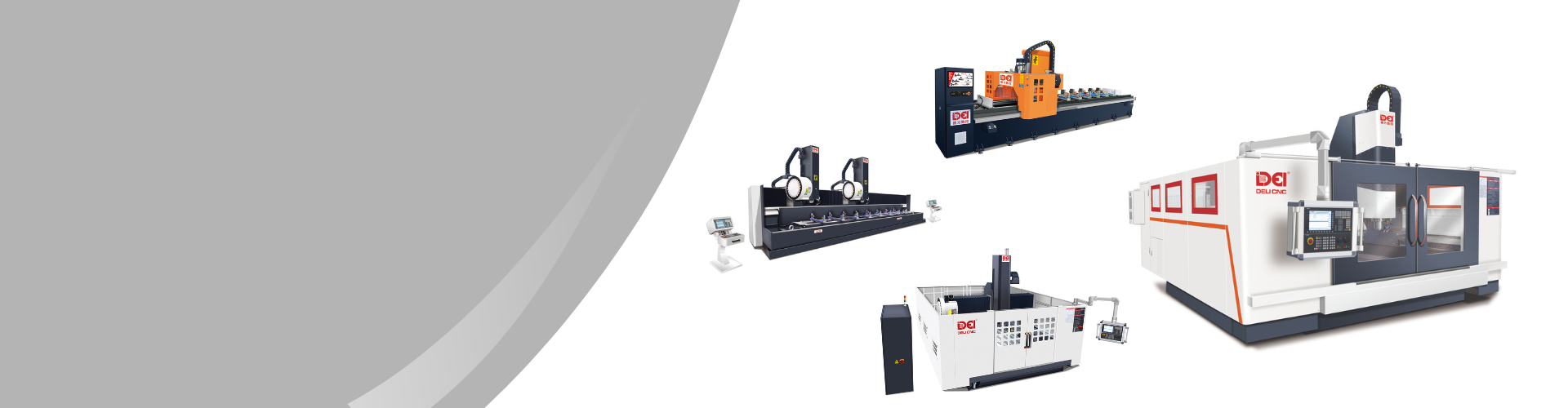
This is a checklist, not a spec sheet. Work through it before you request a quote, and carry the same list into conversations with any supplier. DELICNC also publishes a full that walks each step in more depth. A buyer who knows the part envelope, the tolerance, and the real cost of ownership gets a machine that fits the work instead of a catalog number that almost fits.
1. Start With the Part, Not the Machine
The most common buying mistake is choosing a frame size first. Start with the workpiece. Measure the longest dimension, the widest dimension, the tallest feature, and the finished weight. A gantry milling machine is sized by its table travel and its bridge clearance, so those four numbers set the minimum machine you can consider. A rail profile that is 6 meters long needs a table and a gantry span that clear 6 meters plus fixture allowance. A battery tray that is 2 meters wide needs a bridge that spans 2 meters plus clamp room.
DELICNC sizes each gantry center to the part it will run most often, because a machine working inside its comfort zone holds tolerance longer and costs less per part. If the part mix ranges from small brackets to long extrusions, say so early. The right answer may be two machines or one gantry with a wide enough table, and that decision should come from the part list, not from a brochure.
2. Gantry or Vertical: Pick the Right Frame
A vertical machining center is the better choice for most small and medium parts, because the work sits in a compact envelope and the spindle comes down from above. The gantry wins when the workpiece is wider or longer than a vertical center can hold, or when the part is thin and would flex if clamped at a few points. The bridge structure lets the table support the whole part while the spindle moves across it.
The trade is floor space and cost. A gantry milling machine takes more footprint and a higher investment than a comparable vertical center, so it only pays back when the parts are big enough to need it. DELICNC covers both frame types, and the choice between them should follow the part shape rather than a preference for one style. You can compare the two approaches directly in the DELICNC guide on .
3. Rigidity Decides Tolerance on Long Parts
On a long part, every millimeter of frame deflection shows up as a taper or a bow that no inspection gauge will forgive. Rigidity comes from the column design, the base mass, and how the spindle load transfers into the structure. A double-column gantry spreads cutting force across both sides of the bridge, which keeps a long rail or a wide tray dimensionally stable through a long cut.
DELICNC designs its gantry machining centers around a rigid structure so the cutting force transfers into the base, not into the workpiece. This matters most on thin aluminum, where a soft hold lets the wall move mid-cut and the error only appears at assembly. The alloy does not decide the outcome. The frame does. You can review the full DELICNC gantry range across its to see how table size and bridge design scale with part length.
4. Spindle Speed and Torque for Aluminum
Most gantry work in the DELICNC customer base is aluminum, and aluminum wants high spindle speed with enough torque at mid range to clear chips without loading the tool. A spindle tuned for steel will cut aluminum, but it leaves cycle time and surface finish on the table. Match the spindle to the material and the feature sizes you run.
Behind every DELICNC center is a consistent component base built around established partner brands for the parts that wear and the parts that control, including NSK, THK, MITSUBISHI, SIEMENS, FANUC, Schneider Electric, and SMC. The value is not the name list. It is that a known drive and guide package is easier to service and stock than a closed proprietary one, which keeps a tolerance-critical line running when a part eventually wears.
5. State the Tolerance That Matters
Buyers often ask for the tightest spec on every feature, then pay for it in cycle time, tooling, and inspection. The better move is to state the number that matters for function and let the machine hold that with margin. Holding plus or minus 0.05 mm is straightforward on a stiff gantry. Holding plus or minus 0.01 mm costs more in time and measurement and pushes the machine closer to its limit.
DELICNC asks for the real tolerance before proposing a machine, because the machine that fits a 5,000-piece monthly tray run is not the one that fits a 500-piece monthly bracket run. One more item belongs on the list: how the tolerance will be measured. A claim of plus or minus 0.02 mm means little without a CMM or gauge plan, and the machine choice should leave room for that measurement, not fight it.
6. How the Part Is Held: Table and Fixtures
A gantry table is the part's foundation for the whole job, so its flatness and its clamping options decide how steady the workpiece stays. T-slot tables suit general work, while dedicated or vacuum fixturing suits high-volume runs of the same profile. The goal is to support the part across its full length so heat and cutting force move it as little as possible.
DELICNC designs its tables and clamps to spread support across the part, because fewer setups mean less heat and less movement per part. For long extrusions and rail sections this is the difference between a part that holds dimension and one that drifts after the first few meters.
7. Axis Count: 3-Axis or 5-Axis Gantry
A 3-axis gantry covers the bulk of planar and pocketed work: trays, plates, rail sections, facade nodes cut from one side. When a part has features on multiple faces, flipping it by hand adds setups and drift, and that is where a 5-axis gantry pays for itself by reaching compound angles in a single clamp. The DELICNC is one example of a bridge frame built for wide, flat parts.
DELICNC offers gantry centers in both configurations, and the choice follows the geometry of the part rather than a desire for more axes. The extra axes only help because they remove a setup, and if the part is flat, a 3-axis bridge does the same job for less.
8. Control System and Automation
The control decides how fast an operator moves from drawing to first cut, and how consistently the line repeats. DELICNC builds around established CNC platforms so programming, tool offsets, and maintenance stay familiar to the floor crew. Automation, from an automatic tool changer to loading systems, changes throughput more than it changes accuracy, so size it to the batch, not to the demo video.
DELICNC runs commissioning and operator training so the first parts hold tolerance on day one, and the DELICNC team that sized the machine stays reachable when a line changes. For a project manager building a new line, that continuity is part of the real cost of ownership.
9. Count Total Cost, Not Sticker Price
The machine price is only part of the math. Tooling, fixtures, labor, floor space, power, and downtime all enter the total cost of ownership, and a center that costs more up front but holds tolerance longer usually wins on cost per part over three years. A gantry that runs for a decade with low scrap beats a cheap one that drifts after eighteen months.
DELICNC sees the same pattern across its customers. The shops that plan the line around their real part mix, rather than buying the cheapest single center, are the ones that recover the investment on schedule. A center chosen for the hardest part you run, not the easiest, stays useful when the work changes.
10. Commissioning, Training, and Support
A gantry milling machine is a long-term asset, and the buying decision should include who keeps it running. Ask about installation, training, spare parts lead time, and response when something stops. A supplier who disappears after delivery leaves you holding the downtime.
DELICNC provides commissioning and operator training and keeps the team that sized the machine reachable, because a tolerance-critical line cannot wait a month for a replacement guide or a control fix. For procurement and plant managers, this support path is as important as the feed rate on the spec sheet.
Questions to Ask a Supplier Before You Buy
What is the maximum part length, width, height, and weight the machine handles with fixtures?
Which frame fits my part mix, gantry or vertical, and why?
What spindle speed and torque suit my material?
What tolerance can the machine hold, and how is it verified?
How is the part supported across its length?
Which control platform runs the machine, and is it serviceable locally?
What is the total cost of ownership over three years, not the price alone?
What commissioning, training, and spare-parts support come with it?
DELICNC asks for exactly this set when a customer requests a solution, because sharing the real numbers early avoids buying the wrong envelope. DELICNC turns that set into a machine proposal rather than a generic catalog pick.
FAQs
Does DELICNC sell gantry milling machines?
DELICNC builds CNC gantry machining centers, which is the same class of machine often called a gantry milling machine. The finished parts come from the shops that run that equipment.
When does a gantry beat a vertical center?
When the part is wider or longer than a vertical envelope can hold, or when a thin part would flex in a vise. The bridge frame supports the whole workpiece on a wide table.
How many axes do I need?
Most planar and pocketed parts run on a 3-axis gantry. Parts with features on multiple faces benefit from a 5-axis gantry that reaches compound angles in one clamp.
Is a tighter tolerance always better?
No. Tighter tolerance costs more in cycle time, tooling, and inspection. Match the spec to the function, then choose a machine that holds that spec comfortably.
What should I prepare before asking for a quote?
The part envelope, material and grade, the tolerance that matters, batch size and mix, target industry, and how the tolerance will be measured.
Conclusion
Pick the gantry by the frame, spindle, tolerance, and support it needs to cut your parts, and ignore the bridge width on the brochure. DELICNC builds gantry machining centers for automotive, EV battery tray, rail, curtain wall, furniture, PV bracket, and aluminum profile shops, and the checklist above is the same one DELICNC uses to turn a part list into a machine proposal.