
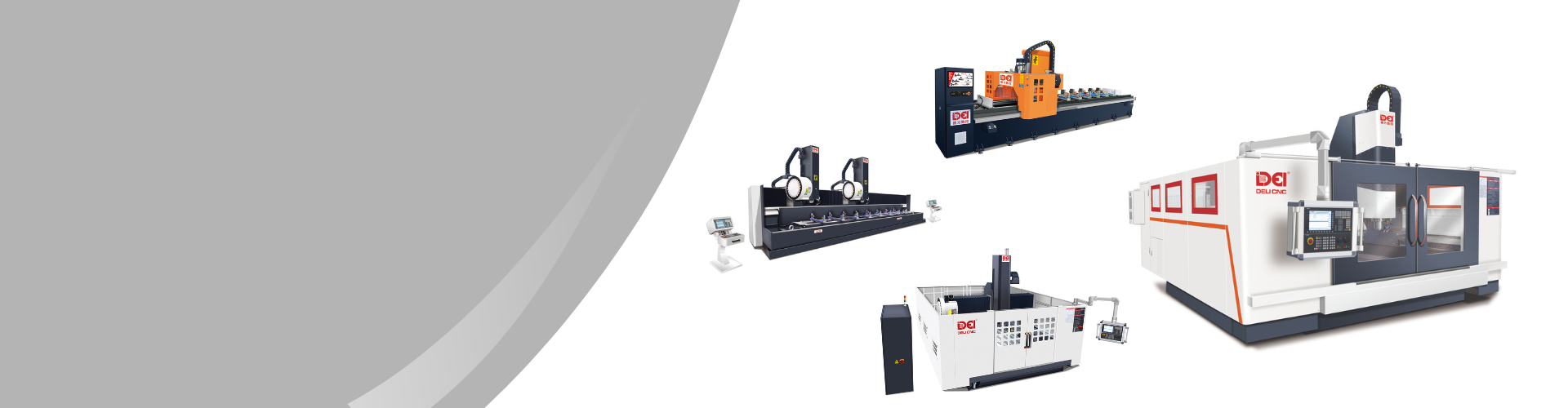
Vertical Machining Center Manufacturer: Selection Guide 2026
A vertical machining center (VMC) is the workhorse of most metal fabrication shops. A vertically oriented spindle removes material from the top of a stationary or moving table, and in one setup it handles milling, drilling, tapping and boring. When buyers look for a vertical machining center manufacturer, they are really choosing a partner who will shape part quality, throughput and maintenance cost for the next decade. This guide covers what a VMC does, the criteria that separate competent builders from the rest, and the questions procurement and engineering teams should ask before requesting a quote. The examples stay on high-volume, commercially proven work: automotive aluminum parts, EV battery trays, window and door profiles, curtain wall sections, furniture frames, PV brackets and rail-transit extrusions. These are the segments where Chinese manufacturers like DELICNC already compete on equal terms.
What a vertical machining center actually does
The one feature that defines a VMC is spindle orientation. The spindle sits vertical, perpendicular to the worktable. That geometry drops chips naturally, gives the operator clear access to the part, and pushes cutting forces down into the table instead of lifting the workpiece. For most prismatic parts, plates, brackets, housings and fixture bodies, a VMC is the fastest stable way to reach finished features.
In a single clamping the machine mills faces and profiles, drills and bores holes, taps threads, and on 4-axis or 5-axis builds contoured surfaces without moving the part. Because a VMC's real job is holding accuracy across a few thousand parts a week, the structure matters more than any feed-rate number on the brochure. A cast frame that is stress-relieved and scraped keeps its geometry. One that is not will drift as the machine warms up.
Why the manufacturer matters more than the brochure
Two VMCs with the same travel and spindle speed can deliver completely different results on the same floor. The gap shows up in three places a spec sheet never captures. How the structure is built and aged decides whether tolerances hold on part 5,000 as well as part one. Which components sit inside, spindle, ball screw, guideway, controller and servo, decides how long the machine lasts and how easy spares are to get. What happens after commissioning decides whether the purchase pays off or just sits there.
For procurement and plant managers, the manufacturer's track record in your exact material and part mix is the most useful signal you can get. A builder who ships aluminum and non-ferrous lines every month already knows your chip load, fixture and thermal problems. One whose references are all steel tooling will learn them on your floor, at your cost.
What to check when evaluating a VMC manufacturer
Machine structure and rigidity
VMCs come in single-column and double-column, or bridge, layouts. A single-column machine such as DELICNC's SCH, SCD, HA and HB series handles general milling, drilling and tapping with enough rigidity for everyday prismatic parts. When the workpiece is tall, heavy or off-center, a double-column design, DELICNC's SCA series, keeps the spindle symmetric to the part and cuts the deflection a cantilevered head would add. Ask the manufacturer for deflection data or a reference part, not a photograph.
Axis configuration: 3, 4 or 5
A 3-axis machine covers most flat and prismatic work where features face one direction. A 4-axis adds a rotary table for indexing or continuous machining around a diameter, useful for manifolds, housings and round fixtures. DELICNC's MDF series is a 4-axis VMC built around simultaneous processing with a high-performance electrospindle and a movable column. A 5-axis reaches complex surfaces and compound angles in one setup and removes the cumulative error of multiple clampings. It earns its cost only when the part genuinely needs it. On a simple plate it adds expense and programming overhead. Pick the lowest axis count that finishes the part in one setup. That rule protects both budget and cycle time.
Spindle, control and component quality
The spindle sets the ceiling on surface speed and tool life. The controller sets the floor on what your programmers can do. Reputable manufacturers name the component brands they build around. DELICNC specifies motion and control elements from NSK, THK, Mitsubishi, Siemens, FANUC, Schneider Electric and SMC, with spindles from specialists such as HSD Mechatronics and Hiteco. When a supplier is open about its supply chain, you can plan spares and predict service life instead of guessing.
Application fit: aluminum and non-ferrous focus
A VMC is only as good as its fit with your material. Aluminum and other non-ferrous alloys cut fast and load carbide edges with sticky chips, so the machine needs real chip evacuation, the right coolant or MQL strategy, and fixturing that controls thermal growth. Builders with deep aluminum experience, serving automotive, EV, rail, 5G, curtain wall and furniture production, tune spindle, clamping and programming for that behavior instead of treating aluminum like soft steel. EV battery trays are the hard case: large thin-wall aluminum plates that demand flatness and low distortion. The right manufacturer addresses that with structure and clamping, not a bigger spindle.
Automation, integration and footprint
A standalone VMC is rarely the end of the story. Check how it connects to the rest of your line: automatic door and pallet change, probing, chip conveyors, and hand-off to downstream processes. A manufacturer who also builds the sawing, gantry and fabrication equipment can specify one continuous flow instead of three machines bought separately and bolted together later.
Commissioning, training and after-sales
The complaint heard most often from fabrication shops is slow supplier response after installation. Before you choose, confirm who commissions the machine on your parts rather than a test bar, what operator training is included, typical spare-part lead time, and the response window for a breakdown. A manufacturer's answer to these questions predicts your downtime cost more reliably than its price.
Vertical machining center vs gantry machining center
The most common mix-up is VMC against gantry. They are not rivals. They cover different envelope sizes.
| Factor | Vertical machining center | Gantry machining center |
|---|---|---|
| Workpiece size | Small to medium prismatic parts | Large, long or wide plates and structures |
| Spindle position | Vertical, above the table | Bridge-mounted, travels over the part |
| Best for | Brackets, housings, fixtures, plates | Large aluminum panels, long profiles, EV battery enclosures |
| Floor footprint | Compact | Large |
| Typical investment | Lower to mid | Higher |
| Rigidity at scale | Limited by column height | High across a wide span |
For workpieces too large for a VMC, long rail-transit extrusions or wide EV battery enclosures, a is the right machine. Most shops run both: the VMC for daily prismatic parts, the gantry for oversized plates. Size the two together and the line stays balanced instead of pushing a VMC past its physical limit.
Where a VMC fits in a complete fabrication line
A VMC seldom works alone in profile or plate fabrication. A typical flow runs like this:
Cut to length. A rough-cuts aluminum extrusions at both ends in one setup and feeds clean blanks downstream.
Mill and drill features. The VMC adds the holes, slots, pockets and contours a saw cannot make.
Finish large or compound parts. A gantry center takes the oversized work the VMC cannot reach.
Assemble or fabricate. For facade and frame work, combines drilling, milling, tapping, chamfering and cutting in one automated workflow, so saw-cut and milled blanks move into finishing without re-fixturing.
For furniture and custom home production, DELICNC's covers automatic sawing and machining lines that feed downstream assembly, the same idea applied to modular aluminum frames. The point for buyers is simple: choose a manufacturer who can specify the whole cell, because the VMC's payback depends on what happens before and after it.
Questions to ask a VMC manufacturer before you quote
Use this list in every supplier conversation:
What is your real experience with my material? Ask for a reference part in aluminum or your specific alloy, not a steel demo.
Which component brands are inside? Spindle, ball screw, guideway, controller, servo.
What axis config do you recommend for my part, and why? Listen for one-setup reasoning, not an upsell.
How is commissioning done, on my parts or a test bar?
What training and documentation are included?
Spare-part lead time and local stock? Blades, clamps, spindles, controllers.
Can you integrate the VMC with my saw, gantry or fabrication equipment?
What is the warranty and response window? Put the number in the contract.
Lead time from order to install? Critical for new-line projects.
Total cost of ownership. Energy, tooling, maintenance and downtime, not just sticker price.
A manufacturer who answers these with references beats a lower quote backed by vague support.
Why consider DELICNC as your VMC supplier
DELICNC (DELICNC Intelligent Equipment Co., Ltd) is a state-level high-tech enterprise founded in 2008, with more than 14 years building CNC machining centers and intelligent fabrication equipment. Its span the SCH, SCD, SCA (double-column), HA, HB4D and HB series, plus the 4-axis MDF series. That range covers a small fabricator's first upgrade through a high-volume automotive or EV line.
The company builds on a component supply chain that includes NSK, THK, Mitsubishi, Siemens, FANUC, Schneider Electric and SMC, and serves customers such as CATL and SUNGROW. Beyond standalone VMCs, DELICNC delivers turnkey lines: automatic aluminum processing, door and window, furniture frame and sawing production lines. A VMC can be one cell in a complete workflow rather than an isolated purchase. Because the VMC, the gantry center and the fabrication equipment share one application engineering team, a DELICNC line is designed as a single flow rather than three machines sourced separately.
For buyers focused on aluminum, EV battery trays, curtain wall, furniture, PV brackets or rail-transit profiles, that integration is the practical advantage. One technical partner handles specification, commissioning and support across the whole cell.
FAQs
What does a vertical machining center manufacturer actually provide?
More than a machine. A real manufacturer supplies the structure, spindle, control, commissioning, training, spare parts and application engineering. Judge the whole package, because post-sale support decides your uptime.
3-axis, 4-axis or 5-axis VMC, which do I need?
Use the lowest axis count that finishes the part in one setup. 3-axis covers most flat prismatic work. 4-axis adds rotary indexing for round features. 5-axis earns its cost only on compound surfaces that would otherwise need several clampings.
What component brands should I look for in a VMC?
Spindle, ball screw, guideway, controller and servo brands signal longevity and spare-part availability. Suppliers who name them save you trouble later. Vague ones cost you.
How long does VMC commissioning and training take?
It depends on model and integration, but confirm the manufacturer commissions on your actual parts, includes operator training, and states a response window for support before you sign.
Should I buy a standalone VMC or a full line?
If the VMC is one step in profile or plate fabrication, a full-line approach, saw, VMC, gantry and fabrication, usually pays back faster through less handling and re-fixturing. Ask the manufacturer about integration.
Conclusion
Choosing a vertical machining center manufacturer is a decade-long decision disguised as a procurement form. Weigh structure and rigidity, axis configuration, component quality, fit with your material, automation potential, and above all the support you get after installation. Match the axis count to the part, size the VMC against the gantry for oversized work, and treat the machine as one cell in an integrated line rather than a standalone buy.