
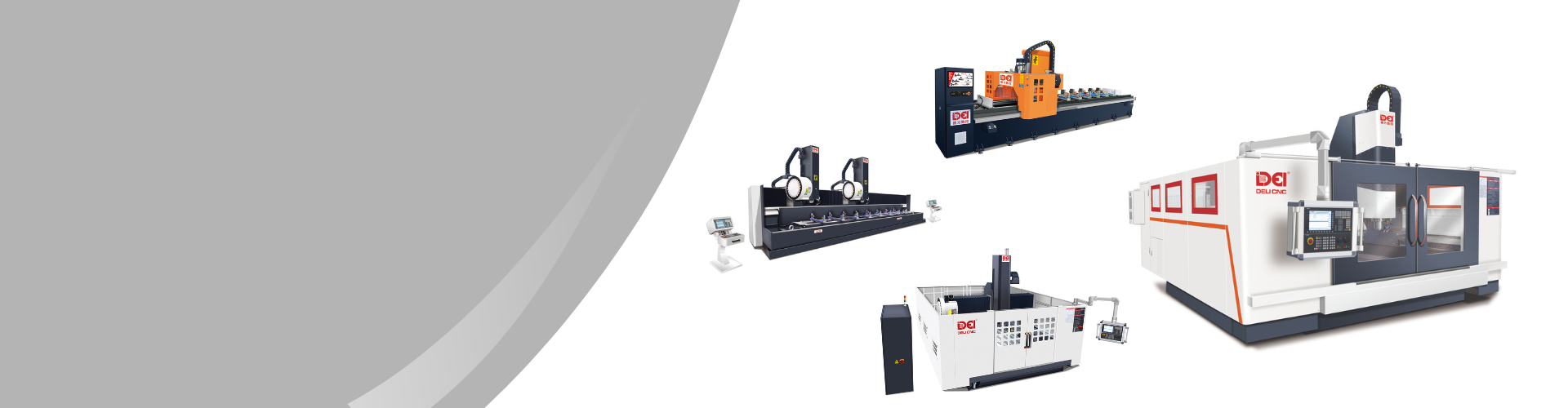
CNC Machines for Manufacturing: Which Type Fits Your Parts
Walking onto a shop floor, you see the same question on every production director's mind: which machine should I buy to make these parts, at this volume, without burning the budget? The phrase "CNC machines for manufacturing" covers a wide family of computer controlled equipment, but the label hides a genuine decision between them. A vertical machining center, a gantry center, a profile machining center, and a double head saw are all CNC machines, and they could not be more different in what they do well.
This guide breaks down the main CNC machine types used in discrete manufacturing and matches each one to the parts it handles best. By the end you should be able to shortlist the type that fits your workpiece shape, size, and production volume, then dig into the specific model that meets your tolerance and floor space needs.
What Is a CNC Machine for Manufacturing
A CNC machine follows programmed toolpaths to cut, drill, mill, or saw a part with repeatable accuracy. In a manufacturing setting the machine repeats the same job across hundreds or thousands of parts rather than cutting a one-off prototype. The core building blocks are the same across most centers: a control unit that reads the program, a spindle that drives the cutting tool, a set of linear axes that position the tool or the part, and a table or fixture that holds the workpiece.
1. CNC Vertical Machining Centers
A vertical machining center (VMC) holds the spindle upright and cuts from above. Gravity pulls the workpiece flat against the table, which keeps locating simple and loading intuitive. An operator can drop a block or plate on the table, clamp it, and machine the top face with little thought about holding force. Most work is one face per setup, though adding a 4th or 5th axis brings rotation into the picture.
Advantages
Lowest entry cost of the machining centers, with standard tooling and a control most operators already know
Compact footprint that often rolls through a standard bay door
Flexible enough to handle one off, small batch, and varied work on a single machine
Fast to set up for flat panels, plates, and framed parts
Disadvantages
One face at a time unless you add rotary axes
Deep closed pockets need through spindle coolant and careful toolpaths
Limited table size restricts the length of the part you can swing
Applications
Aluminum profiles, plates, and industrial flat parts
Furniture frames and PV brackets
Window and door profiles
EV battery tray sections and general automotive aluminum parts
Mold and general precision components in low to medium volume
DELICNC builds vertical machining centers as its most common configuration, typically a BT40 spindle with a 4th axis option for shops that need a second face without the cost of a larger cell. Most DELICNC customers start here, because flat and framed parts dominate daily production. For buyers evaluating a , the natural fit is exactly the flat and framed geometry most shops machine every day.

2. CNC Gantry Machining Centers
A gantry machining center uses a bridge or portal structure: the spindle rides on a beam that spans a long, fixed table. Instead of moving the part, the machine moves the cutter across it. That layout is what makes a gantry the right answer for parts bigger than a vertical center's table, or parts whose single face stretches several meters.
Advantages
Handles long, wide, and heavy workpieces a VMC cannot reach
Strong structural rigidity across a large envelope
Cuts long aluminum sections and big frames in one pass
Disadvantages
Larger footprint and a heavier foundation requirement
Higher purchase price than a vertical center
Overkill for small or short parts where a VMC is cheaper
Applications
Long aluminum sections and rail transit profiles
Large curtain wall frames and unitized panels
Big EV battery trays and automotive structural plates
Oversized industrial frames that exceed vertical table travel
DELICNC's gantry line includes both 3 axis and 5 axis bridge models. DELICNC are built for these long and heavy jobs, from aluminum extrusions to large trays that neither a vertical nor a horizontal center can swing. For many DELICNC customers the choice is not horizontal versus vertical at all, but vertical versus gantry, because their parts are long rather than tall.
3. CNC Profile Machining Centers
A profile machining center is purpose built for long aluminum extrusions: curtain wall mullions, transoms, window and door frames, and furniture profiles. The part is fed or indexed along its length, and the spindle works the faces and ends with 4 or 5 axes of motion. Where a general VMC treats a profile as just another block, a profile center is designed around the shape from the ground up.
Advantages
Purpose built for long, thin extrusions that a VMC table cannot hold well
4 and 5 axis heads cut complex end angles and face features in one setup
High throughput on repeated profile lengths
Disadvantages
Narrow application range compared with a general machining center
Less suited to solid blocks and thick plate
Applications
Curtain wall and facade mullions and transoms
Window and door frames
Furniture aluminum frames
Standard and custom profile lengths in high mix
DELICNC's covers this profile work end to end, pairing milling and drilling with the cutting steps these parts need. Most DELICNC customers in the facade and window segment run a profile center next to a saw, so the extrusion is cut and machined in one flow.
4. Double Head Sawing Machines
A double head saw cuts aluminum profiles at fixed or compound angles using two blades at once. It is not a milling center, but in a manufacturing line for frames and extrusions it earns its place by doing the high volume cut that feeds everything else. DELICNC builds several double head saw configurations, from standard angle to seven axis compound angle models.
Advantages
Cuts both ends of a profile in a single stroke, which no machining center matches for speed
High volume output for frame and extrusion production
Accurate repeat angle cutting across long runs
Disadvantages
Cutting only, no milling or drilling of features
Limited to profiles and sections it can clamp
Applications
Curtain wall and window frame cutting
Furniture profile cutting
High volume aluminum extrusion slicing
Angle and compound angle cuts on long sections
DELICNC offers as part of the same production line that includes its profile centers, so a shop can size and machine extrusions without mixing vendors. Shops that standardize on DELICNC equipment often buy the saw first, then add a profile center, because the saw sets the daily cutting throughput for the whole frame line.
5. 5 Axis Machining Centers
A 5 axis center adds two rotary axes so the tool can approach the part from almost any angle. On a gantry or profile base this lets a single setup reach complex faces that would otherwise need multiple clampings on a 3 axis machine. The payoff is fewer setups, less cumulative locating error, and shorter cycle time on contoured work.
Advantages
Multiple faces in one clamping, cutting setup labor
Better surface finish on contoured and curved parts
Reduced fixture count and cumulative error
Disadvantages
Higher cost and more complex programming
Needs skilled operators and careful tool length management
Overkill for flat parts a 3 axis VMC handles cheaper
Applications
Large EV battery trays with contoured features
Curved and angled profile ends
Complex framed parts that need several faced operations
Automotive structural aluminum with mixed face geometry
DELICNC builds 5 axis gantry and profile centers for shops that hit the limit of 3 axis work. DELICNC builds these centers with components from NSK, THK, Mitsubishi, Siemens, FANUC, Schneider Electric, and SMC, which keeps them reliable through long production runs. The catch with adding a 4th axis to a vertical center is volume: a 5 axis gantry keeps cutting on large parts while a VMC still loads one piece at a time. For a clear view of how axis count changes capability, see our breakdown of 3-axis, 4-axis and 5-axis machining differences.

Other CNC Types You May See in a Shop
The types above cover the metal cutting and sawing centers most relevant to DELICNC's line, but a manufacturing shop may also run machines built for different processes. CNC lathes turn round parts and are the backbone of shaft and fitting work. CNC routers handle wood, plastic, and soft metals at lower cost than a machining center. Laser, plasma, and waterjet cutters shape flat sheet by heat or abrasive rather than by spindle.
None of these replace a machining center for milling solid aluminum, but they sit alongside one in a complete line. DELICNC focuses on milling, gantry, profile, and saw equipment so its customers can build a coherent aluminum and frame production cell from a single source.
How to Match a CNC Machine Type to Your Parts
The fastest way to pick a type is to sort your work by three facts: shape, size, and volume. The thinking below turns those facts into a shortlist.
Start with Part Shape
Flat panels, plates, and frames with features on one or two faces point to a vertical machining center. DELICNC's vertical centers cover most flat and framed work a shop sees. Long parts whose single face runs several meters point to a gantry. Thin extrusions with end angles point to a profile center. Round parts point to a lathe.
Measure Part Size and Weight
If the part is longer or heavier than a vertical table can hold, a gantry is usually the only machining center option. DELICNC sizes its gantry beams to match the longest section a customer runs, not a generic envelope.
Count Your Volume
Low to medium mix with frequent changeovers favors the flexible vertical route. Steady, repeated prismatic or profile parts favor a gantry or profile cell with pallet or automated feeding. High volume frame cutting favors a double head saw at the front of the line.
Decide Axis Count
Three axes cover most flat and framed work. A 4th axis adds a second face on the machine you already run. Five axes earn their cost only when contoured faces or tight setup tolerance demand them. For a side by side view of the tradeoffs, our lays out the envelope, rigidity, and cost differences in detail.
Plan Floor Space and Budget
A vertical center is compact and rolls through a bay door. DELICNC builds its vertical and gantry centers to roll through a standard bay door, which matters for shops adding capacity without rebuilding the floor. A gantry needs more foundation and aisle space, often two to three times the footprint of a vertical center. Buyers should model throughput per dollar rather than sticker price, because the cheaper vertical fleet can out earn a sparse horizontal cell on the wrong part.
FAQs
How many types of CNC machines are there?
Shops use more than a dozen distinct CNC types once you count lathes, routers, lasers, and cutters. DELICNC builds the core group of vertical, gantry, profile, saw, and multi axis centers for this work, while other processes such as turning and sheet cutting sit alongside them in a full line.
Which CNC machine is best for aluminum profiles?
Long aluminum extrusions such as curtain wall mullions and window frames are best cut and machined on a profile machining center, paired with a double head saw for high volume angle cuts. A vertical center can hold short profile blocks but struggles with full length sections.
Should I choose a gantry or a vertical center for long parts?
Choose a gantry when the part is longer or heavier than a vertical table can swing, or when a single face spans several meters. Choose a vertical center for parts that fit the table and for maximum flexibility on varied work.
Do I need a 5 axis machine?
Most flat and framed parts do fine on 3 or 4 axes. A 5 axis center pays off when contoured faces or strict setup tolerance make multiple clampings too slow or too error prone. Add it only when the volume justifies the higher cost.
Conclusion
CNC machines for manufacturing are not one tool but a set of types, each built for a different part shape, size, and volume. The vertical center wins on cost and flexibility for flat and framed work. The gantry wins on envelope for long and heavy parts. The profile center and double head saw own the aluminum extrusion and frame line. The 5 axis center earns its place on contoured, multi face jobs.