
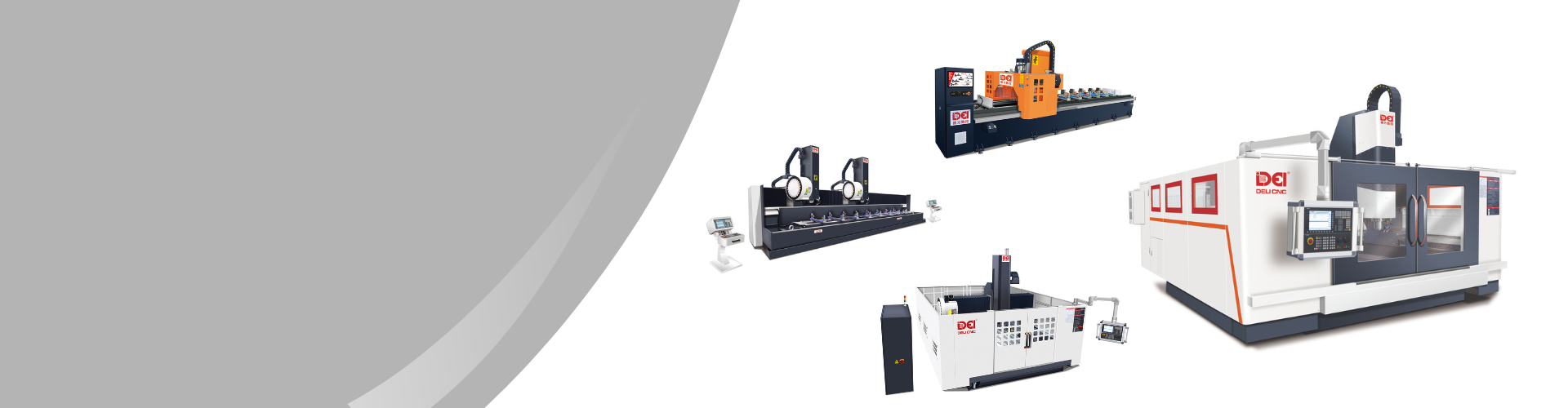
5-Axis Profile Machining Center for Curtain Wall: Compound Angle Cutting Explained
Curtain wall systems look simple from the street. Up close, they are a lattice of aluminum mullions, transoms, and connectors cut and drilled at angles that rarely sit at a clean 90 degrees. When a facade calls for compound angle cutting, a standard saw or a three-axis mill runs out of freedom fast. That is where the 5-axis profile machining center earns its place on the shop floor.
DELICNC builds these machines for curtain wall shops, facade contractors, and aluminum profile processors. What follows covers what the machine does, why curtain wall work needs compound angle cutting, how that cutting actually works, how it stacks up against saws and vertical machining centers, and what to check before you buy.
What a 5-axis profile machining center actually does
A 5-axis profile machining center is a CNC machine built to mill, drill, tap, and saw long aluminum extrusions in a single setup. The "profile" part matters. Instead of a flat table for plates, the machine holds a long section horizontally or vertically and moves the cutting head along its length. The "5-axis" part means the cutting spindle can rotate and tilt, so the tool reaches surfaces and hole patterns that a fixed vertical spindle cannot.
True simultaneous 5-axis versus 3+2 positioning
Not every machine sold as "5-axis" works the same way. A 3+2 machine tilts the head to a fixed angle, locks it, and then cuts like a three-axis machine. That handles many facade holes and face mills, but it cannot follow a continuously curving compound joint. A true simultaneous 5-axis profile machining center drives two rotational axes together with the three linear axes during the cut. For curtain wall work, simultaneous motion is what lets you machine a connector that meets the main section at a twisted angle without flipping the part.
DELICNC configures its 5-axis profile machining center with a moving column design, so the section stays still while the head travels. That keeps a long, flexible aluminum profile from deflecting under its own weight during the cut, which protects both accuracy and surface finish.
The curtain wall work envelope
Curtain wall profiles are long and slender. A machine sized for mold making will not fit a six-meter mullion. The work envelope of a profile machining center is defined by the maximum profile cross section it can clamp and the maximum length it can process. DELICNC lays out its around these dimensions, because the right envelope decides whether a shop can take on unitized facade packages or only small stick-built frames.
Why curtain wall fabrication demands compound angle cutting
Compound angles appear wherever two facade planes meet at something other than a right angle. A straight run of curtain wall is mostly 90 degree cuts. The moment the building turns a corner, slopes a lobby, or steps a roofline, the joints become three dimensional. DELICNC runs into this with facade contractors on nearly every skewed project, and the fix is almost always the same: cut the angle on the machine, not on site.
Mullions, transoms, and three-dimensional joints
Mullions are the vertical members; transoms are the horizontal ones. Where they meet a skewed plane, the connection holes and seat cuts must sit at a compound angle so the next piece lands flush. If the angle is off by even one degree, the gap shows on the building face and the installer spends hours shimming or reworking on site. Compound angle cutting on a 5-axis profile machining center produces those seats in one program, with the rotational axes handling the tilt while the linear axes handle the position.
The hidden cost of angle errors
Angle errors do not announce themselves at the machine. They surface three weeks later, on a lift at the construction site, when a panel will not seat. The cost goes past the re-cut. Crane time, installer idle time, and a strained relationship with the general contractor all pile on top. Shops that move compound angle work from manual template routing to a 5-axis profile machining center typically report far fewer site fit issues, because the cut follows the CAD model instead of a person with a protractor.
How compound angle cutting works on a profile machining center
The geometry looks intimidating, but the principle is straightforward. The machine adds two rotational axes to the three linear ones, and the control system maps tool motion from the CAD model through a post-processor into axis commands. DELICNC sets these two extra axes on its profile machining centers so the cutter reaches compound seats without rotating the part by hand.
Rotary and tilt axis geometry
On a profile machining center, the two extra axes are usually a rotation around the profile length (so the head swings to the cut plane) and a tilt of the spindle (so the tool meets the surface normal). Together they let the cutter approach a hole or a seat at any compound angle within the machine's envelope. The rigid double-column or moving-column structure keeps that geometry stable across a long part, which is the difference between a clean hole and a tapered one.
Post-processor and toolpath demands
A 5-axis profile machining center is only as good as its post-processor. The CAD/CAM system must output correct code for the specific kinematic layout, or the tool will tilt the wrong way and crash into the fixture. Shops should confirm that the machine builder supplies a validated post-processor for their CAM software and that the simulation shows the head clearing the clamps. DELICNC provides application support for programming workflows so the first production part is close to right, not a series of expensive trials.
Spindle and tooling for aluminum profiles
Aluminum cuts best at high surface speed with sharp, polished flutes and the right coolant strategy. DELICNC fits its 5-axis profile machining center with a high-speed electrospindle and an HSK A63 interface, a taper built for high rotational speed and repeatable tool changes. For curtain wall work the tooling is usually short, robust end mills and drills rather than long reach tools, because the cuts are on the profile face and edges, not deep inside a cavity.
5-axis profile center against conventional methods
Choosing equipment is about matching the process to the part. A 5-axis profile machining center is not always the right first machine, but for a specific and growing part of curtain wall work, it is the right call. DELICNC sells both profile centers and saws, so the comparison below comes from the shop floor, not a catalog.
Double-head saw versus 5-axis profile machining center
A double-head saw is fast and economical for straight 45 and 90 degree cuts on window and door profiles. DELICNC also builds for high-volume angle cutting. The limit is freedom. A saw cuts a plane; it cannot drill a compound seat, mill a pocket, or produce a twisted connector. When a project needs both, shops often run saws for the simple cuts and a 5-axis profile machining center for the complex ones. The two are complementary, not strictly competing.
3-axis VMC versus profile machining center
A vertical machining center excels at plates, blocks, and fixtures. It struggles with a six-meter extrusion because the table is wrong and the part will not fit. A profile machining center is purpose built for long sections. If your work is mostly curtain wall profiles, a VMC forces you into short lengths and many setups, which adds handling and error. For shops weighing the two, DELICNC published a that walks through rigidity, axis configuration, and automation fit.
Manual template routing
Template routing is still common in small shops. An operator holds a jig and routes the angle by hand. It is cheap to start and flexible for one-off pieces. It does not scale, and it does not hold tolerance across a large facade package. When a project repeats hundreds of identical compound connectors, manual routing becomes the bottleneck and the quality risk.
Cutting material waste and cycle time
A 5-axis profile machining center pays for itself partly through speed, but a larger share of the return often comes from waste and rework reduction. DELICNC treats waste reduction as a design goal on these machines, not an afterthought.
Nesting and offcut control
Long aluminum extrusions are bought by length. How you lay out parts along that length decides your offcut. Good CAM nesting on a profile machining center groups parts to minimize scrap and to keep the remaining bar usable for the next job. For facade shops, that directly lowers the material cost per meter of finished frame. Some of the same thinking applies to sawing, and DELICNC covers across sawing, nesting, and coolant strategy.
Minimum quantity lubrication for aluminum
Aluminum does not need a flood of coolant the way steel does. Minimum quantity lubrication (MQL) delivers a fine mist of lubricant to the cutting edge, which cuts coolant consumption by a wide margin and keeps the shop cleaner. For curtain wall production, MQL also reduces the post-machining cleaning step, because there is less fluid to wipe off before assembly. Less fluid, less mess, and a lower operating cost per part.
Procurement and project planning
Buying a 5-axis profile machining center is a project, not a purchase. The right machine for a facade contractor is different from the right machine for a stick-built window shop. DELICNC's application team usually starts this conversation with the part, not the price list.
Sizing the machine to your longest profile
Measure the longest section you actually cut, then add margin for handling. A machine that fits your current jobs but not your next bid will box you in within a year. Also match the clamping envelope to your widest mullion cross section. DELICNC offers for very large aluminum structures, and the profile machining center for the long, slender facade members, so the choice depends on part shape more than on brand preference.
What to verify with a supplier
Before signing, ask for a machined sample of your own profile, not a generic demo block. Confirm the post-processor for your CAM system. Check the service response time and whether spare parts are stocked locally, because a facade project has a fixed site date and a stopped machine is a stopped contract. Ask about training, because a 5-axis machine in untrained hands produces expensive mistakes. Finally, review the control system and whether it supports the data and traceability your customers require.
FAQs
Can a 5-axis profile machining center replace a double-head saw?
For simple 45 and 90 degree cuts, a saw is faster and cheaper per piece. A 5-axis profile machining center replaces the saw only where compound angles, pockets, and drilled seats are required. Most shops keep both.
How accurate is compound angle cutting on these machines?
Accuracy depends on the machine structure, the spindle interface, and the post-processor. With a rigid moving column and a validated programming workflow, curtain wall seat cuts hold tight, repeatable angles that manual methods cannot match.
Is a 5-axis profile machining center worth it for a small curtain wall shop?
If your projects include skewed facades, corners, and three-dimensional connectors in volume, the reduction in site rework and the ability to take on harder bids usually justifies the investment. If you only cut straight stick-built frames, a saw and a VMC may be enough.