
What Does a CNC Machine Do for Your Production Line
What a CNC Machine Does in Plain Terms
A CNC machine turns instructions into cut metal. An engineer builds a 3D model in CAD, then CAM software converts that model into toolpaths. Those toolpaths become G-code, a list of coordinated moves the machine controller can read. The controller drives servo motors that move the spindle and the table along set axes while the spindle spins a cutting tool through the material. Chips fall away and a part takes shape. DELICNC machines run standard G-code, so programs from common CAM tools drop in without a rewrite.
The job sounds simple, but the value shows up in the repeat. A skilled operator at a manual mill can make one good bracket. A CNC machine makes the first bracket and then the thousandth bracket to the same drawing, with no drift from fatigue, mood, or a changed shift. That consistency is what lets a production line promise delivery dates it can keep. DELICNC builds for that repeat, because a line lives or dies on part ten thousand matching part one.
DELICNC designs its machines around that repeatability. The frame, the spindle, the control loop, and the workholding all exist to produce the same cut on part number one and part number ten thousand.
The Parts That Make It Work
Five subsystems do the actual work, and each one affects how the machine behaves on your floor.
The spindle holds and spins the cutting tool. Its power and speed set how fast you can remove material and which alloys you can cut cleanly. A weak spindle stalls in thick aluminum; a well-matched one keeps the chip load steady.
The axes move the tool and the part relative to each other. Most machines use three linear axes, X, Y, and Z. Adding a rotary axis, often called a 4th or 5th axis, lets the machine reach more faces of a part without a second setup.
The control system reads the G-code and tells the servo motors where to go and how fast. A responsive control keeps corners sharp and surfaces clean instead of rounded or gouged.
The automatic tool changer swaps drills, end mills, and taps without an operator opening the door. More tools on call means more operations in one cycle and fewer handling steps between machines.
The workholding, the fixtures that clamp the stock, decides whether the part moves when the tool bites in. Good fixtures are the quiet hero of a stable line, because a part that shifts by a fraction of a millimeter ruins the batch. DELICNC tunes these five subsystems together, because a fast spindle on a soft frame still makes scrap.
What It Does on a Production Line, Step by Step
On a working line, a CNC machine follows a loop that repeats all day.
First, the operator loads the part program and confirms the preset tools are in the changer. DELICNC machines accept tool offset tables that load with the job, so the setup stays consistent from one run to the next.
Next, the raw stock is fixtured. The locating points are set the same way every time, which is why standardizing fixtures pays back faster than any single hardware upgrade.
Then the cut runs. The spindle mills contours, drills holes, taps threads, and profiles edges according to the program. The machine does not pause to think; it follows the code.
During and after the cut, the operator or an in-machine probe checks the first piece. If it measures in tolerance, the machine keeps going. The value of the whole system is that it keeps going with the same result, hour after hour.
Types of CNC Machines and What Each Does
Not every CNC machine does the same job. The type you need depends on the size of your parts, the material, and how many you make.
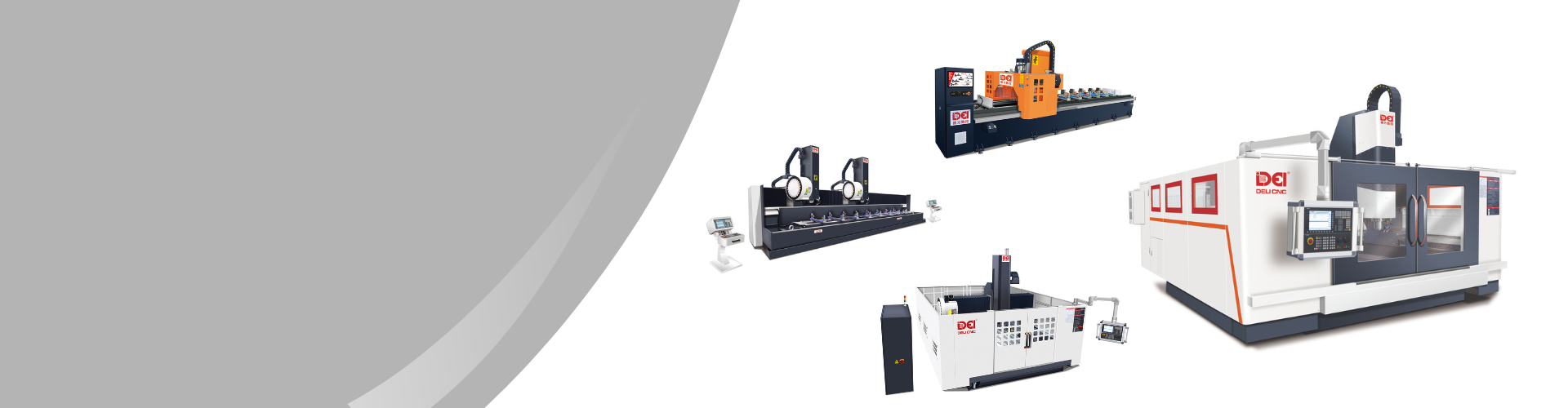
A vertical machining center, or VMC, holds the spindle upright and cuts downward into the part below it. It suits small and medium parts, high-mix batches, and general milling, drilling, and tapping. DELICNC offers vertical centers for the smaller work and gantries for the long work, so the type follows the part. The is built for this kind of repeat batch work, with a rigid frame and a tool changer sized for mixed jobs. For a deeper look at how these machines read programs and remove material, our walks through the structure, axes, and control systems in detail.

A gantry machining center uses a bridge structure that straddles the table, which lets it handle long and large parts that would overhang a VMC. The gives the envelope and stability that keep large aluminum work supported through the cut. Long rail profiles and wide panel sections are where this structure earns its place, because the part stays put while the bridge moves the spindle across it.
A profile machining center and a double-head saw handle extrusions rather than solid blocks. These machines cut, drill, and notch aluminum sections for curtain wall frames, window lines, and similar assembled structures. They sit upstream of the machining centers in a real line, turning raw extrusion into ready-to-assemble parts.
Choosing between these types is a real decision, not a footnote. Our lays out the selection logic shop by shop, based on part size, batch mix, and floor space.
How a CNC Machine Fits Into Your Line
A CNC machine is rarely the whole line. It is one station in a workflow that starts before it and ends after it.
Upstream, raw stock gets cut to length. A double-head saw trims aluminum extrusions to the right size and angle so the machining center receives parts that are already close to final. Doing this cut on a separate saw keeps the expensive machining center focused on the work only it can do.
In the middle, the machining center makes the critical cuts: the holes that must line up, the faces that must sit flat, the contours that define the part. This is where accuracy and throughput meet.
Downstream, parts move to assembly, welding, or finishing. When the upstream and middle steps are consistent, the downstream station receives parts that fit, which removes a whole class of rework.
DELICNC treats these machines as one workflow rather than four separate purchases. The point is a line that flows, not a rack of impressive but disconnected iron.
What It Does for Your Numbers
The reason a production director cares what a CNC machine does is the effect on the bottom line.
Throughput rises because the spindle spends more of the shift removing material. Every minute saved per part multiplies across the whole batch.
Labor costs drop because one operator can tend several machines once the programs and fixtures are set. The machine does the repetitive motion; the person supervises and handles exceptions.
Scrap falls because the first piece is close and the thousandth is the same. Consistent parts mean fewer surprises at inspection and fewer returns from the customer.
For thin aluminum work, such as EV battery trays and rail sections, the machine's rigidity controls deformation that would otherwise warp the part after cutting. Holding that warp down protects the spindle hours you recovered from being spent on scrap instead of saleable parts.
Over a year, those gains shorten the payback period on the equipment and lower the total cost of ownership. That is the case a plant manager makes when arguing for the purchase. DELICNC quotes this total-cost-of-ownership view to customers instead of a bare machine price, because the price is the small number.
How to Choose the Right One for Your Line
Picking the right CNC machine starts with the part, not the catalog. Four variables decide most of the answer.
Part size sets the envelope. Small brackets fit a VMC; long rail profiles need a gantry or a profile center. Trying to force a big part onto a small machine creates overhang, vibration, and scrap.
Material sets the spindle and feed requirements. Aluminum cuts fast and loads the tool lightly; steel demands more torque and slower passes. The machine must match the alloy you run most.
Batch size sets the automation level. A steady high-volume run justifies more tool capacity and faster changers. A low-volume job earns its money through fast changeover and flexible fixturing.
Required accuracy sets the structure and control loop. Stable, repeatable cuts come from a rigid frame and a responsive controller, which is why machine design matters more than a spec sheet number.
The DELICNC MC vertical machining center fits shops that make many smaller parts, while the DELICNC MD 3-axis gantry machining center fits lines that handle long or large aluminum work. Matching the machine to these four variables is the difference between a line that struggles and one that runs.
Buyer Checklist Before You Commit
Before you ask for a quote, pin down a few facts about your work. Define the largest part envelope you will run, because that drives the machine size. List the materials and their typical thickness. State your realistic batch sizes, not your best-case hope. Note the operations each part needs, such as milling, drilling, or tapping. Decide how the new machine must connect to your existing line, upstream sawing and downstream assembly included.
A specialist will review the part drawing and the batch and propose a configuration, not a catalog. DELICNC approaches every inquiry this way, because a focused match beats a generic recommendation.
FAQs
What is the difference between a CNC machine and a manual one?
A manual machine relies on the operator to move the table and spindle by hand for every cut. A CNC machine follows a stored program, so the same part comes out identical whether it is the first or the last of the run. The CNC version trades operator skill for repeatability and speed.
Can one CNC machine make different parts?
Yes. You change the program and the fixtures, not the machine. Shops that run many part numbers load a new program and swap tool offsets, then start the next batch. That flexibility is why a VMC suits high-mix work.
How many people does it take to run a CNC machine?
One trained operator can tend several machines once programs and fixtures are set. The operator loads stock, starts the cycle, and watches for exceptions rather than standing at the control all shift.
What does a CNC machine cost?
The price depends on size, axis count, spindle, and control brand, so a fixed number would mislead. The better question is total cost of ownership: what the machine saves in scrap, labor, and rework against what it costs to buy and run.
How long does it take to install one?
A standard VMC can be placed and commissioned in days once utilities and foundations are ready. A large gantry needs more floor preparation and alignment time. DELICNC plans installation as part of the project, not an afterthought.