
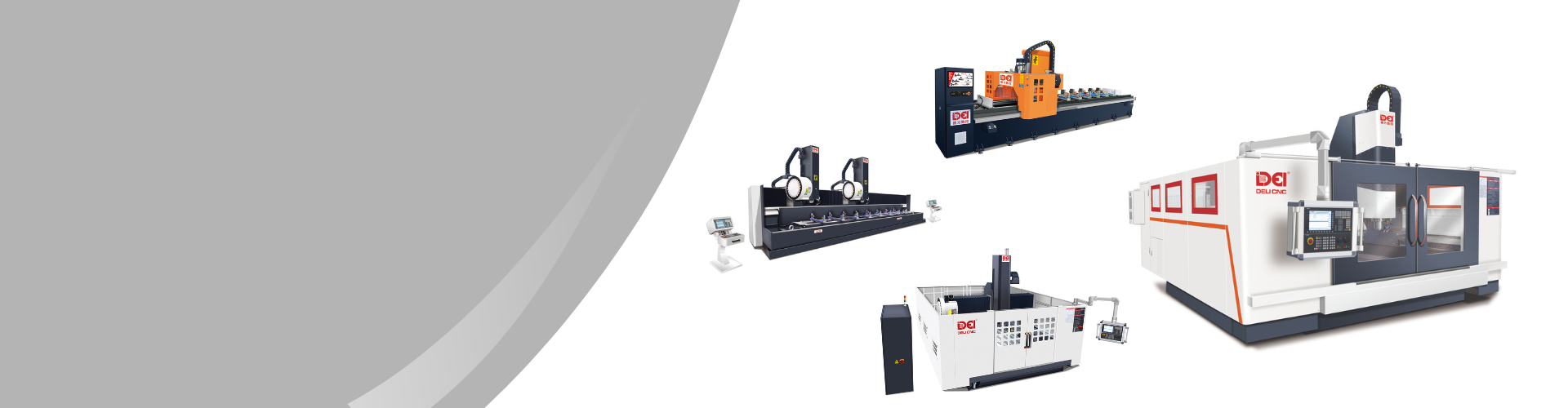
CNC Milling Machines: Structure, Axes, and Control Systems
CNC milling automates precision cutting using computer-guided instructions, delivering consistent quality across every part.
Machine types — vertical, horizontal, and 5-axis — each serve different complexity and volume requirements.
Structural components like the machine bed, linear guides, and spindle directly determine rigidity, accuracy, and longevity.
Axis count defines part complexity: 3-axis for flat features, 4-axis for cylindrical parts, 5-axis for complex geometries in one setup.
Leading controllers (Fanuc, Siemens, Heidenhain) differ in reliability, features, and programming approach — choosing the right one matters.
Smart manufacturing integration (Industry 4.0) enables real-time monitoring, predictive maintenance, and production optimization.
Introduction
Welcome to the world of precision manufacturing! CNC milling machines are the powerhouses behind countless products we use daily. From the phone in your pocket to the car you drive, CNC machining plays a vital role. These sophisticated machines use computer-guided instructions to cut and shape materials with incredible accuracy. This guide covers the structure, axes, and control systems of CNC milling machines and explains how they fit into modern production.
CNC Milling Machine Fundamentals
At its core, CNC milling is an automated process that uses computer numerical control to guide a cutting tool. Instead of manual operation, a pre-programmed set of digital instructions tells the machine exactly how to move and cut a workpiece. This automation is what sets CNC milling machines apart from their traditional manual counterparts.
The result is a process that offers superior precision, consistency, and speed. Whether you’re making a single prototype or thousands of identical parts, CNC machining ensures each one is produced to the same high standard. Here is how they work and where they fit in manufacturing.
Definition and Working Principle
A CNC milling machine removes material from a workpiece using a rotating cutting tool guided by computer numerical control (CNC). A digital design file — typically a CAD model — is translated into G-code, a programming language that tells the machine exactly how to move, at what speed, and to what depth.
Unlike manual mills that depend entirely on operator skill, CNC milling delivers hands-off precision after initial setup. The machine follows its programmed path with no deviation, ensuring every part is identical to the last — whether you're making one prototype or ten thousand production parts.
Role in Modern Manufacturing
In modern manufacturing, CNC milling is essential for achieving high efficiency and precision. These machines are the workhorses of industries ranging from aerospace and automotive to medical and electronics. Their ability to produce complex parts with tight tolerances makes them a go-to choice for everything from engine components to surgical implants.
The benefits of a high-performance CNC milling machine are clear. They enable mass production with consistent quality, something that is difficult to achieve with manual methods. By automating the cutting process, manufacturers can reduce cycle times, minimize waste, and increase overall output. This high efficiency leads to lower production costs and a stronger competitive edge.
Furthermore, CNC machining allows for rapid prototyping and design iterations. Engineers can quickly create and test physical parts from their digital models, accelerating the product development process and fostering innovation across industries.
Milling vs Turning Overview
Industries from automotive and aerospace to medical devices and consumer electronics rely on CNC milling for high-throughput, high-accuracy production. The advantages are well established:
Consistent quality across large production runs
Reduced cycle times and material waste
Rapid prototyping directly from digital models
Tight tolerances achievable on hard materials
A well-specified CNC milling machine reduces per-part cost while raising quality standards — a combination that is difficult to match with any other manufacturing method.
CNC milling: The cutting tool rotates while the workpiece remains stationary. Suited for flat surfaces, pockets, slots, and complex 3D geometries.
CNC turning (lathe): The workpiece rotates while a non-rotating tool moves linearly. Best for cylindrical or symmetrical parts such as shafts, bolts, and pins.
Knowing which process fits your part geometry early in the design phase saves significant time and cost downstream.
Machine Types and Kinematic Configurations
CNC milling machines come in various types, each designed to meet specific manufacturing needs. The most common types of CNC milling machines are defined by their spindle orientation and the number of axes they can control. Understanding these differences is key to choosing the right machine for your projects.
From simple vertical mills to highly complex 5-axis machining centers, the kinematic structures of these machines determine their capabilities. These structures dictate how the tool and workpiece move relative to each other, which in turn affects the complexity of parts you can produce. Below are the primary types of CNC mills and their configurations.
Vertical CNC Milling Machines
The vertical mill is the most common CNC machine type. Its spindle points downward along a vertical axis, giving the operator clear visibility of the cutting area. This makes setup straightforward and monitoring easy.
Vertical mills excel at face milling, drilling, and pocket operations. Their relatively compact footprint and lower entry cost make them the preferred choice for prototyping, short runs, and small-to-medium workshops. For teams starting with CNC machining, a vertical mill is almost always the right first investment.
Horizontal CNC Milling Machines
Horizontal machining centers orient the spindle parallel to the worktable. The main practical benefit: gravity pulls chips away from the cutting zone, improving chip evacuation, extending tool life, and producing better surface finishes on deep cuts.
Horizontal machines are built heavier and are typically equipped with pallet changers — allowing one workpiece to be fixtured while another is being machined. This dramatically reduces downtime and makes horizontal machining centers the preferred choice for high-volume production of large parts like engine blocks and structural components.
5-Axis CNC Machining Centers
5-axis machining is the most capable configuration available. The machine moves the cutting tool or workpiece along five simultaneous axes — three linear (X, Y, Z) and two rotary (A/B or C) — enabling access to virtually any surface angle without re-fixturing.
The practical benefits of a 5-axis CNC machining center include:
Single-setup machining of parts that would otherwise require 3–4 separate operations
Superior surface finish — the tool stays tangent to the cutting surface throughout
Shorter, more rigid tools reduce vibration and increase cutting speed
Higher accuracy — fewer setups means fewer compounding positioning errors
5-axis centers are essential for aerospace structural parts, complex mold cavities, turbine blades, and medical implants.
Kinematic Structures (Table-Table / Table-Head / Head-Head)
The kinematic structure of a 5-axis machining center describes how the two rotary axes are implemented. This configuration affects the machine’s dynamics, the size of parts it can handle, and its overall suitability for certain applications. There are three primary types of kinematic structures for these advanced milling machines.
Each configuration has its own set of advantages. Table-Table designs are excellent for smaller, complex parts, while Head-Head structures can accommodate very large and heavy workpieces. The Table-Head configuration offers a versatile middle ground. Understanding these structures is crucial when selecting a 5-axis machining center for specific production needs.
Here is a comparison of the main kinematic structures:
Kinematic Structure Rotary Axes Location Best Suited For Table-Table Both rotary axes in the spindle head Smaller, intricate parts; high-speed machining Table-Head One rotary axis in the table, one in the head Medium-sized parts, versatile applications Head-Head Both rotary axes are in the head Large, heavy workpieces
Mechanical Structure of CNC Milling Machines
The performance of a CNC milling machine depends heavily on its mechanical structure. The key structural components, such as the machine bed, guides, and spindle, work together to provide the rigidity and stability needed for high-accuracy machining. A well-built machine tool minimizes vibration and ensures that the cutting tool maintains its precise path.
When considering a CNC machine for your workshop, it’s important to look beyond just the specifications and examine the quality of its construction. The materials and design of these foundational elements directly influence the machine’s longevity, reliability, and the quality of the parts it produces. Here is a closer look at each component.
Machine Bed and Structural Rigidity
The machine bed is the foundation of any CNC milling machine. It supports all other components and must be incredibly strong and stable to absorb vibrations generated during the cutting process. Most high-quality machine beds are made from cast iron or polymer concrete because these materials have excellent damping properties.
Structural rigidity is paramount for achieving high precision. A rigid frame prevents the machine from flexing or deflecting under the load of heavy cuts. This stability is crucial when machining hard materials or producing parts with very tight tolerances, such as engine blocks or aerospace components. Any lack of rigidity will translate directly into inaccuracies in the finished part.
When choosing a machine for your workshop, pay close attention to the construction of the bed and frame. A heavier, more robust structure is generally a good indicator of a machine that can deliver consistent, high-precision results over many years of service.
Linear Guides and Axis Drives
Linear guides and axis drives are the components responsible for moving the machine’s axes smoothly and accurately. Linear guides, such as linear rails or box ways, provide a straight and stable path for the moving parts of the machine, like the table or the spindle head. The quality of these guides is critical for maintaining high accuracy over the entire travel distance.
The axis drives, typically consisting of servo motors and ballscrews, provide the force and control needed to move the axes along the linear guides. Ballscrews are commonly used in CNC machines because they offer low friction, high efficiency, and excellent positional accuracy. They convert the rotary motion of the motor into precise linear motion.
Together, the linear guides and axis drives ensure that the cutting tool can be positioned with extreme precision anywhere within the machine’s work envelope. The performance of these systems is a key factor in the overall accuracy and repeatability of the milling machine.
Spindle Systems and Cutting Performance
The spindle system is central to a CNC milling machine’s performance. It holds the cutting tool and rotates it at high speeds to remove material. The performance of the spindle directly impacts cutting efficiency, surface finish, and the range of materials the machine can handle. Spindle systems can be belt-driven, direct-driven, or have integrated motors.
High-speed spindles are essential for achieving smooth finishes, especially when working with materials like aluminum or when performing fine detailing work. The spindle’s power (horsepower) and torque determine its ability to handle heavy cuts and tough materials without slowing down. A powerful and well-balanced spindle minimizes vibration, leading to better tool life and part quality.
Modern milling machines often feature spindles with advanced features like through-spindle coolant, which delivers coolant directly through the tool to the cutting edge. This improves chip evacuation and cooling, allowing for more aggressive cutting parameters and longer tool life.
Tool Holders and Automatic Tool Changers
Tool holders are the critical link between the spindle and the cutting tool. They must securely grip the tool and be precisely balanced to ensure concentric rotation, which is essential for accuracy and surface finish. Different types of tool holders, such as CAT, BT, and HSK, are used depending on the spindle taper and application requirements.
For high efficiency in CNC milling, an automatic tool changer (ATC) makes a significant difference. This device holds a magazine of different tools and can automatically swap them into the spindle as needed based on the program’s instructions. This automation eliminates the need for an operator to manually perform tool changes, drastically reducing cycle times.
The benefits of buying a machine with an ATC are significant:
Increased Productivity: Tool changes happen in seconds, maximizing spindle uptime.
Reduced Labor: One operator can oversee multiple machines.
Complex Part Machining: Enables operations that require multiple different tools to be completed without manual intervention.
Axis Systems and Motion Control
The axis system is what gives a CNC machine its ability to move and create shapes. The number and type of axes determine the complexity of the parts a machine can produce. Motion control is the technology that directs these axes with the high accuracy required for precision CNC machining.
From the basic three linear axes to the advanced multi-axis configurations using a rotary table, each axis adds a new dimension of capability. Understanding how these axes work together helps when deciding which machine is right for your specific needs. Here is a breakdown of the different axis systems and how they work.
X, Y, Z Linear Axes
The foundation of any CNC milling machine is its three linear axes: X, Y, and Z. On a vertical milling machine — the most common configuration — these axes allow the cutting tool to move left-to-right (X), front-to-back (Y), and up-and-down (Z) relative to the workpiece. This three-axis motion is sufficient for a wide range of machining tasks.
The combination of these movements defines the machine’s cutting area and work envelope. The X and Y axes typically control the movement of the worktable, while the Z-axis controls the vertical movement of the spindle. This arrangement allows for the precise positioning of the cutting tool anywhere within the machine’s working volume.
Here’s how they generally work:
X-Axis: Moves from left to right.
Y-Axis: Moves from front to back.
Z-Axis: Moves up and down.
A machine with these three linear axes is known as a 3-axis machine and is capable of producing parts with high precision for many applications.
Rotary Axes (A, B, C)
To create more complex shapes, CNC machines can be equipped with additional rotary axes, denoted as A, B, and C. These axes introduce rotational movement, allowing the workpiece or the tool to be tilted and rotated. This capability unlocks the ability to machine parts from multiple sides without needing to manually re-fixture them.
The A, B, and C axes rotate around the X, Y, and Z axes, respectively. These rotary axes can be added to a 3-axis machine through accessories like a rotary table or a tilting head. Machines with one or two additional rotary axes are known as 4-axis and 5-axis machines.
This added rotation is what enables the machining of undercuts, angled holes, and complex curved surfaces that are impossible to create on a standard 3-axis machine in a single setup. The use of rotary axes is a hallmark of advanced CNC machining.
3-Axis, 4-Axis, and 5-Axis Machining Principles
The number of axes a milling machine has defines its machining capabilities. 3-axis machines are the most common type, moving the tool in X, Y, and Z directions. They are perfect for parts with features on a single plane.
Adding a fourth axis, typically a rotary A or B axis, allows the workpiece to be rotated. This is useful for machining features around a cylindrical part. Adding a fifth axis allows for even more complex rotations, enabling the machine to access the workpiece from virtually any angle. This significantly reduces cycle times and improves accuracy by eliminating the need for multiple setups.
Here’s a quick summary of the benefits as you add more axes:
Increased Complexity: Ability to machine more intricate parts.
Higher Accuracy: Fewer setups mean less chance for error.
Improved Finishes: The tool can be kept in optimal alignment with the part surface, achieving high precision and tight tolerances.
CNC Control Systems and Digital Integration
The “brain” of a CNC machine is its control system. CNC controllers interpret the digital program and translate it into precise electrical signals that drive the motors and control the machine’s movements. Modern controllers from manufacturers like Siemens, Heidenhain, and Fanuc offer sophisticated features for programming, operation, and monitoring.
Beyond the controller itself, digital integration is turning CNC machining into a connected part of smart manufacturing. This involves connecting machines to networks, using advanced software for programming, and incorporating sensors for real-time feedback. Here is how these elements work together.
CNC Controllers (Siemens, Heidenhain, Fanuc etc.)
The CNC controller is the user’s interface with the machine and the central processing unit for all operations. Different manufacturers, such as Siemens, Heidenhain, and Fanuc, are leaders in the field, each known for specific strengths. The choice of controller can impact the machine’s ease of use, programming flexibility, and performance capabilities.
Fanuc controllers are widely known for their reliability and are the most common in the industry. Siemens controllers are recognized for their comprehensive feature set and powerful capabilities, especially in high-end 5-axis machining. Heidenhain is often preferred in Europe for its exceptional precision and shop-floor-oriented programming.
Choosing a controller often comes down to operator familiarity and the specific requirements of the types of CNC machines being used.
Controller Brand Known For Common Application Fanuc Reliability, market dominance, robustness General machining, automotive Siemens User-friendly interface, high-end features 5-axis and complex machining Heidenhain High precision, shop-floor programming Tool and die, high-accuracy parts
Programming and CAM Integration
Programming a CNC milling machine can be done in two main ways: directly at the controller using G-code, or offline using Computer-Aided Manufacturing (CAM) software. While simple parts can be programmed manually, CAM software is essential for creating toolpaths for complex parts.
CAM software takes a 3D CAD model of the part and helps the programmer define the machining strategy, select tools, and set cutting parameters. It then generates the G-code automatically, saving a tremendous amount of time and reducing the risk of programming errors. This integration is crucial for achieving high accuracy, especially on intricate designs.
For home workshops, user-friendly CAM software is an invaluable accessory. It simplifies the programming process, making it possible for hobbyists and small business owners to produce professional-quality parts without needing to become expert G-code programmers.
Sensors, Feedback Systems, and Monitoring
To ensure high precision, CNC machines rely on a network of sensors and feedback systems. These systems constantly monitor the machine’s position, speed, and other critical parameters. Rotary encoders on the motors and linear scales on the axes provide real-time feedback to the controller, allowing it to correct for any deviations from the programmed path instantly.
This closed-loop feedback is what allows CNC machining to achieve such remarkable accuracy and repeatability. In addition to position feedback, modern machines often include sensors for monitoring tool wear, spindle load, and temperature. This data can be used to optimize the cutting process and prevent potential problems before they occur.
Tool presetters and touch probes are common accessories that function as sensors. They can automatically measure tool lengths and locate the workpiece, further automating the setup process and improving accuracy. These monitoring systems are key to running a reliable and efficient machining operation.
Smart Manufacturing and Connectivity
The latest trend in CNC machining is its integration into smart manufacturing environments, also known as Industry 4.0. This involves connecting CNC machines to a central network, allowing for the seamless flow of data between the shop floor and other business systems. This digital integration offers powerful benefits for monitoring and managing production.
Through connectivity, managers can track machine status, production output, and efficiency in real-time from anywhere. This data can be used to identify bottlenecks, schedule maintenance, and optimize resource allocation. Smart manufacturing transforms the CNC machine from a standalone tool into an intelligent node in a larger production ecosystem.
The benefits of this connectivity are clear:
Remote Monitoring: Keep track of your machines without being on the floor.
Predictive Maintenance: Use data to predict when maintenance is needed, reducing downtime.
Improved Efficiency: Analyze performance data to make informed decisions and improve processes.
Conclusion
CNC milling machines are a practical investment for any workshop or production floor. Understanding the structure, axes, and control systems covered here — from the rigidity of the machine bed to the choice between Fanuc, Siemens, and Heidenhain controllers — gives you a solid foundation for making informed decisions. Whether you need a straightforward vertical mill for prototypes or a 5-axis machining center for complex aerospace parts, the right machine depends on your part complexity, production volume, and budget. If you are evaluating options, reach out for a consultation to discuss which configuration fits your requirements.