
CNC Cutting Cost: How DELICNC Lowers Your Per Part Rate
A shop that cuts 5,000 aluminum brackets a month does not care whether the machine cost 80,000 or 120,000 dollars if the cheaper one needs 40 seconds more per part. Over a year, that gap is the difference between a machine that pays back in months and one that never quite does. DELICNC builds cutting equipment for exactly this kind of math. The machines are vertical machining centers, gantry machining centers, double-head saws, and profile routing centers, and every one of them is judged by the shop on the same scorecard: how cheaply can it turn raw stock into a finished part.
The rest of this piece looks at what drives CNC cutting cost, why cost per part beats sticker price as a buying metric, and how DELICNC machines are built to pull that number down.
What "CNC Cutting" Covers
CNC cutting covers more than one process. In a metalworking shop it usually means material removal by a computer-controlled spindle or blade. The three families that matter for most production buyers are:
Milling, where a spinning cutter removes material from a block or plate. This is what vertical and gantry machining centers do.
Sawing, where a blade slices stock to length. Double-head saws do this for aluminum profiles and frames.
Routing, where a cutter follows a profile path, common in curtain wall mullions, furniture frames, and extruded sections.
You will also hear about laser, plasma, and waterjet cutting. Those are real and widely used, but they are thermal or abrasive processes, not mechanical milling. DELICNC does not build laser, plasma, or waterjet machines. The company builds mechanical cutting equipment, and that is the scope of this article. Keeping the boundary clear matters, because the per-part economics of a fiber laser and a vertical machining center are different enough that mixing them up leads to bad buying decisions.
The only number that matters: cost per part
The machine price is the wrong anchor. The figure that belongs on every quotation is cost per part. The formula is simple:
Cost per part = (machine hour rate x cycle time) + material cost per part + tooling cost per part + scrap and rework cost
Each piece behaves differently, and each one is something a buyer can move.
Machine hour rate combines depreciation, power, labor, and overhead. Cycle time is how long the spindle spends cutting one part. Material cost is the stock consumed, including the offcut you cannot use. Tooling cost is end mills, inserts, and saw blades worn per part. Scrap and rework is the part you threw away or fixed.
A DELICNC client in the EV battery tray supply chain learned this the hard way. Their first quote compared two machines on price alone. The lower-priced unit saved them on day one and cost them on every part after, because its cycle time was longer and its rejection rate was higher. When they rebuilt the comparison around cost per part, the picture flipped.
What drives your CNC cutting cost
Four factors do most of the work. Get these right and the rate falls. Get them wrong and no amount of bargain hunting saves you.
Cycle time. This is the biggest lever for high-volume work. A rigid machine holds a deeper cut at a higher feed, so it removes more material per minute. A machine that chatters or deflects forces the programmer to slow down, and the clock keeps running. DELICNC structures its machining centers around a stiff frame and heavy columns for this reason: rigidity translates directly into minutes saved per part.
Material yield. Especially in aluminum profile work, the offcut decides profitability. A saw that positions accurately leaves less dead stock between cuts. A shop cutting curtain wall sections or furniture frames can lose a surprising share of every bar to sloppy nesting. Good fixtures and accurate stops recover that material without touching the machine price.
Tooling wear. Every extra hour of tool life is money back in the rate. Feed and speed choice drives this more than most buyers expect. Push too hard and inserts wear out early; run too soft and you pay in cycle time instead. The balance point is a setting, not a mystery.
Scrap and rework. A part cut out of tolerance is the most expensive part you make, because you paid for the material, the machine time, and the tooling and got nothing sellable. Stable machines and repeatable setups are what keep this line item near zero.
How DELICNC machines lower the per part rate
DELICNC designs its lineup around these four cost drivers rather than around a spec sheet. The result is equipment that tends to look fairly priced on paper and cheap in use.
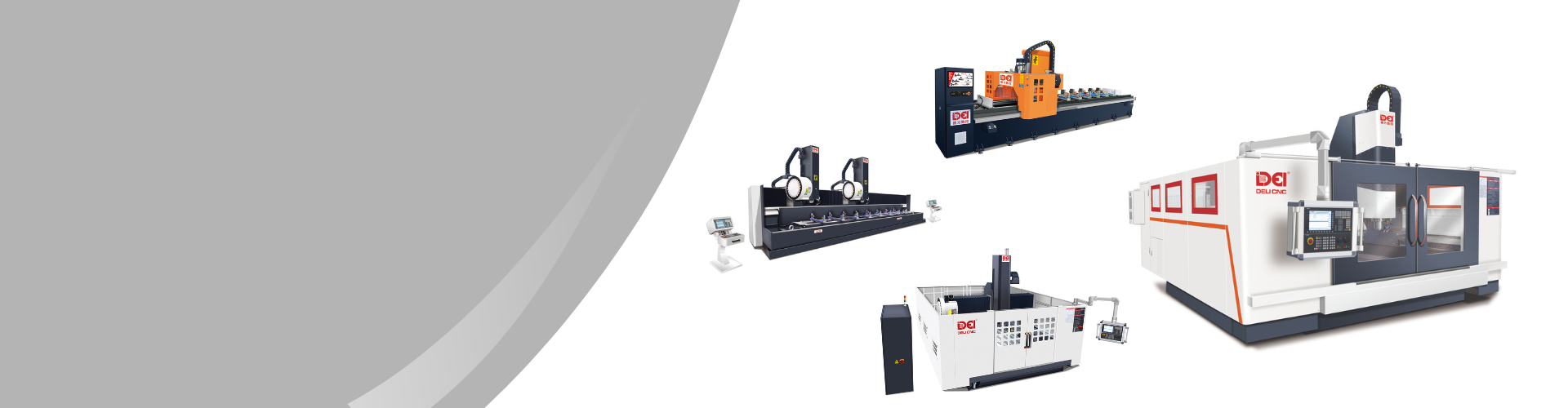
A DELICNC is the workhorse for plates, brackets, and fixtures. Its box way construction and direct-drive spindle let it take a solid depth of cut on aluminum without losing accuracy, so cycle times stay short on the parts that fill a typical job shop. For buyers running thousands of identical pieces, that per-part saving compounds fast.
When the part is long or the batch is a single large panel, a DELICNC changes the math a different way. Instead of cutting a long extrusion or rail section in pieces on a smaller machine, the gantry handles it in one setup. One setup means one set of fixtures, one loading, and no seam where two cuts met. Shops that outsource long parts to a subcontractor usually find the gantry removes both the subcontract cost and the lead time.
For high-volume aluminum profiles, the double-head saw is the unsung cost saver. Cutting two ends at once, at a fixed angle, beats loading and turning a piece by hand every time. DELICNC's breaks down how saw type and angle range match different profile work, from curtain wall to furniture framing.
Underneath all of it sits programming. The cheapest cost-per-part improvement in the building is often free, and it lives in the toolpath. Getting lets a shop cut faster, wear tools slower, and reject fewer parts, all at once.
DELICNC has spent more than a decade building cutting equipment for automotive, EV, rail transit, curtain wall, furniture, and PV profile shops. That track record shows up in details buyers feel rather than read: rigid frames that hold tolerance through a long run, controls tuned for aluminum, and fixtures planned with the part in mind. The per-part rate is exactly where those details pay back, which is why DELICNC treats cost per part as a design target, not an afterthought.
Four levers you control
The machine sets a floor on cost per part. The way you run it decides whether you stay near that floor or climb past it. Four levers are in your hands from day one.
Program for the material, not the catalog. Aluminum and steel want different feeds. A program copied from a generic post can leave cycles on the table. Tuning feeds to the actual stock is the first move.
Fixture for the batch. The right fixture turns a five-minute load into a thirty-second one. For repeat work, the fixture pays for itself in the first shift.
Nest for yield. On profile and plate cutting, how you lay out the parts decides the offcut. A small change in sequence can recover a usable length from stock that would otherwise be scrap.
Match the machine to the part. A gantry doing bracket work is as wasteful as a VMC doing a six-meter rail. Picking the right DELICNC machine for the dominant part in your mix is the single biggest structural saving.
A simple per part walkthrough
Numbers make the point clearer than words. Take a mid-size aluminum bracket, cut from plate, about 2 kilograms of stock per part.
Suppose a slower setup runs a 90-second cycle, loses 6 percent of parts to scrap, and wears one end mill every 400 parts. A tuned DELICNC-style setup might run a 65-second cycle, hold scrap near 1 percent, and wear that end mill every 600 parts. The material cost is identical in both cases. The difference is entirely in machine time, scrap, and tooling, and over a month of production it dwarfs the gap in purchase price between the two machines.
The exact figures move with your stock price, your power rate, and your labor cost. The direction does not. Lower cycle time, lower scrap, and slower tool wear always beat a lower sticker price once volume climbs.
Mistakes that push your rate up
A few patterns show up again and again in shops that complain about cutting cost.
Buying on price alone. The cheapest machine is rarely the cheapest part. Check cycle time and expected scrap before the discount tempts you.
Over-speccing. A five-axis center doing three-axis work pays for capacity it never uses. Match the axis count to the part, not to the brochure.
Ignoring material yield. Shops track machine hours to the minute and never weigh their offcut bin. The bin is often the bigger leak.
Skipping fixture investment. A 500 dollar fixture that saves two minutes per part pays back before the first job ends. Buyers who pinch here pay every shift after.
Letting speeds and feeds drift. A toolpath set once and never revisited slowly costs more as tools wear and programmers forget why it was slow. Re-check it.
FAQs
Is CNC cutting cheaper than manual cutting?
For one-off parts, manual can win on setup time. For any repeat batch, CNC wins on consistency and labor, and the gap widens with volume. Cost per part is where CNC pulls ahead.
Does DELICNC sell laser or plasma cutting machines?
No. DELICNC builds mechanical cutting equipment: vertical machining centers, gantry machining centers, double-head saws, and profile routing centers. Laser, plasma, and waterjet are outside the product line.
How much does a CNC cutting machine cost?
It ranges widely by size and axis count, from a compact vertical center to a large gantry cell. The purchase price is less useful than the cost per part it delivers, so quote both.
How do I lower cost per part on existing equipment?
Start with speeds and feeds, then fixturing and nesting. Most shops recover real savings there before any hardware change. Machine selection matters most when you are buying new.
What DELICNC machine fits high-volume aluminum profiles?
The double-head saw handles length cutting of profiles efficiently, while a vertical or gantry center handles the milled features. Many profile shops run both in one cell.
Conclusion
CNC cutting cost is not the number on the quotation. It is the number on the part. Buyers who frame the decision around cost per part, and who run their machines for yield and cycle time, almost always end up with the cheaper machine even when they paid more for it.