
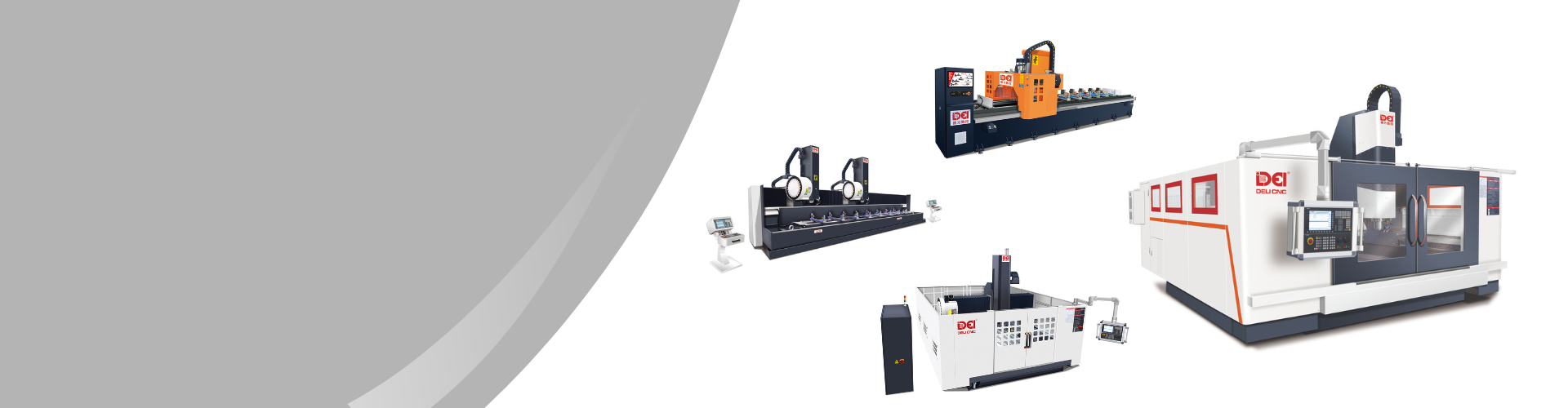
This guide explains which parts genuinely belong on a 5 axis machine, when the extra axes pay for themselves, and when a 3 axis or 4 axis center is the smarter buy. DELICNC builds 5 axis machining centers for exactly these part families, so the examples below draw on real machines and real production work rather than theory.
What Counts as a 5 Axis CNC Machining Part
Not every complex-looking part needs five axes. The search term "5 axis CNC machining parts" covers a wide range of work, but most of it falls into three groups.
Geometry That Needs a Tilted or Rotated Tool
Some parts have surfaces that sit at compound angles to the raw stock. A turbine-like housing, a tilted mounting flange, or an impeller-style pocket cannot be cut cleanly with a vertical tool alone. A 3 axis machine would need the stock pre-angled on a fixture, which adds a setup and a source of error. A 5 axis machine tilts the part so the tool meets the surface head-on. The cut stays short, the tool load stays even, and the surface finish improves because the cutter engages at the right angle. DELICNC builds 5 axis centers that handle this class of part without custom fixtures.

Parts With Features on Multiple Faces
A bracket that needs milled pads on five sides is a classic case. On a 3 axis VMC, the operator machines the top, then flips the part, re-indicates it, clamps again, and repeats. Every flip is a new setup, a new chance for misalignment, and more idle time. A 5 axis center rotates the part to each face in one clamping. DELICNC positions its 5 axis work around this single-setup advantage because it is where the biggest shop-floor gains show up: less handling, fewer fixtures, and no cumulative shift between faces.
Large, Thin, or Awkward Aluminum Sections
Aluminum is light and easy to cut, but large thin sections bend under clamping force and heat. An EV battery tray, a long rail transit profile, or a wide curtain wall mullion can warp if it is pinned down hard and milled from one side only. A 5 axis gantry keeps the part flat on a large table while the spindle reaches awkward angles, so you avoid deep side milling that pumps heat into the sheet. This is one of the strongest reasons shops move to 5 axis work, and it is covered in more detail on the .
How 5 Axis Machining Changes the Job
The two rotary axes are what separate a 5 axis machine from a 3 axis or 4 axis center. In a typical setup, the part sits on a rotary table or in a trunnion, and the controller drives the linear and rotary axes together so the tool stays normal to the surface as it moves. That coordination is the whole point: the machine does the reorientation that a 3 axis operator would otherwise do by hand with fixtures.
For the buyer, the practical change is simple. A part that took four setups on a VMC takes one on a 5 axis center. One clamping means one reference point, so every feature is located from the same coordinate system. The part comes off the machine with its features already aligned, which is why 5 axis work tends to raise first-pass yield on complex parts.
When a 5 Axis Machine Is the Right Call
A 5 axis center costs more than a 3 axis VMC, so the purchase only makes sense when the part or the volume creates a real payback. These are the signals.
You Are Fighting Setup and Clamping Time
If your operators spend more time loading, indicating, and unclamping than they spend cutting, the machine is the bottleneck only part of the time. The rest is handling. A 5 axis center collapses several setups into one, so the spindle runs a larger share of the shift. For a production director watching throughput, that change is often worth more than a small gain in pure cutting speed, and DELICNC sizes its 5 axis tables so the gain shows up on the floor.
Multiple Clamping Introduces Cumulative Error
Every time a part is re-clamped, its position shifts by a small amount. One shift is tolerable. Four shifts add up, and the final hole pattern can land outside the spec even though each individual cut was accurate. A 5 axis part stays put, so the tolerance stack stays under control. DELICNC sees this most often on structural aluminum parts where hole patterns must line up across a wide face.

Large Aluminum Parts Keep Warping
Thin aluminum warps from clamping stress and cutting heat. The usual fix on a 3 axis machine is to clamp harder, which makes the warp worse. A 5 axis gantry reaches the part from angles that avoid deep, heat-heavy side passes, and the wide table supports the whole section so it stays flat. DELICNC's are built for exactly this kind of large-section work, and the same logic applies to rail and curtain wall parts.
Complex Surfaces Fail Quality Checks
When a part has compound curves, a 3 axis tool can only approximate the shape with many small stepping cuts, and the steps show up as a poor finish or as dimensional drift. A 5 axis tool follows the curve directly, so the surface meets the drawing on the first run. This matters for automotive structural parts and any component where a rough surface means rework or scrap. DELICNC sees this most on automotive structural aluminum, where a rough surface means rework.
When 3 Axis or 4 Axis Is Enough
A 5 axis machine is not the answer to every job. If your parts are flat plates with holes, simple pockets, or features on a single face, a 3 axis VMC is faster to program, cheaper to buy, and easier to staff. A 4 axis center adds one rotary axis, which is enough for parts that need features around a cylinder or on a few indexed positions but not full compound-angle access.
The honest rule: buy the axis count the part needs, not the one with the most marketing appeal. DELICNC builds 3 axis, 4 axis, and 5 axis centers because most shops run a mix, and the right fleet is usually a blend rather than a wall of top-end machines.
Parts DELICNC Builds 5 Axis Centers For
DELICNC designs its 5 axis line around the part families its customers really run, not around a generic spec sheet. Three of them come up again and again.
EV Battery Trays
A battery tray is a large, thin aluminum section with features on both faces and tight tolerance on the busbar pockets. Cut it on a 3 axis machine and you fight warping the whole way. DELICNC's crane-type and bridge-type 5 axis machining centers hold the tray flat on a wide table and reach both faces in one clamping. The is built for this kind of large, heavy-section work, while the fits shops that need the same single-setup logic on a slightly smaller envelope.
Rail Transit Long Aluminum Sections
Rail parts are long, and long aluminum bends if it is not supported along its length. A 5 axis gantry spans the section so the whole length stays referenced to one coordinate system. The DELICNC CNC gantry machining centers range covers the bridge and crane structures that make this possible, and the long aluminum parts application page shows how the work is laid out on the floor.
Curtain Wall Profiles
Curtain wall mullions and transoms need compound-angle cuts where the glass and panel interfaces meet. A 5 axis profile center cuts those angles in one pass instead of indexing a saw and a mill separately. The consistency matters because every piece on a facade has to match the one next to it. DELICNC's profile centers run this work for facade fabricators every day.
Choosing the Right 5 Axis Configuration
Within 5 axis there are real differences, and picking wrong costs money.
A bridge-type machine carries the spindle on a moving bridge over a fixed table. It suits parts that are wide but not extremely heavy, and it keeps the table clear for easy loading. The HK3020 is DELICNC's bridge-type model in this class.
A crane-type (often called gantry-type) machine uses a larger overhead structure and a heavier table, built for big, heavy aluminum sections like EV trays and rail parts. The HK4025 is DELICNC's crane-type model, and it is the one most often specified for tray and structural work.
There is also the question of where the rotation lives. A rotary table spins the part; a swivel head tilts the spindle. Table rotation is common for smaller parts; head or mixed rotation suits large parts where spinning a heavy workpiece is slow and risky. DELICNC configures both depending on the part weight and the floor layout.
A Practical Selection Checklist
Before you ask a supplier for a quote, answer these for your own shop:
What is the largest part envelope you need to machine, including fixtures? Match the table, not the catalog photo.
How many faces does the part have features on? One or two faces rarely need 5 axes.
What is the part weight? Heavy sections point toward a crane-type gantry; light sections fit a bridge-type.
What tolerance must the features hold across faces? Tight cross-face tolerance is the strongest case for single-setup 5 axis.
What is your annual volume? Low volume with many setups still pays back through labor saved; high volume pays back faster.
Can your CAM software and programmers handle simultaneous 5 axis toolpaths? The machine is only as good as the post-processor behind it. DELICNC's application team checks this before quoting, so the center arrives ready to cut.
Common Mistakes Buyers Make
The first mistake is buying 5 axes for a part that only needs three. The second is the opposite: staying on a 3 axis VMC and adding fixtures to fake the extra access, which hides the real cost in setup labor and scrap. The third is ignoring the software side. Simultaneous 5 axis cutting needs CAM that can generate safe, collision-checked toolpaths, and a shop that skips this step ends up underusing an expensive machine. The fourth mistake is judging the machine only on the headline travel numbers. For aluminum work, rigidity and table support matter more than a few extra millimeters of stroke, because that is what keeps a large part from moving during the cut.
FAQs
Is a 5 axis machine harder to program than a 3 axis VMC?
The machine logic is more involved, but modern CAM handles the rotary math. The bigger change is training operators to think in setups rather than in separate operations. Most shops adapt within a few weeks.
Do I need 5 axes for small aluminum parts?
Only if the part has compound-angle features or tight cross-face tolerances. A small flat bracket with holes on top does not need it.
Will a 5 axis center replace my VMCs?
Usually not entirely. It takes the complex, multi-face work; the VMCs keep running the simple parts. A blended fleet is the normal end state.
How do I know if my part will warp on a 3 axis machine?
If it is a thin section over about 400 mm and needs features on both faces, assume warping risk and plan for 5 axis or for extra fixturing. The DELICNC deformation guide covers the warning signs in depth.