
How to Reduce CNC Machining Costs for Large Parts
Large parts are expensive to machine because every decision carries more weight. A small programming error, a weak fixture, an oversized blank, or an unnecessary tolerance can consume hours of machine time and put a high-value workpiece at risk.
For large CNC parts, the cheapest quotation is not always the lowest-cost process. Setup time, rework risk, fixture stability, material handling, and machine suitability often decide the real cost per finished part.
This guide explains how to reduce CNC machining costs for large parts without lowering quality. It focuses on practical decisions in part design, machine selection, workholding, tooling, process control, and supplier communication.
Why large parts are expensive to machine
Large-part CNC machining cost is a system cost, not only a cutting cost. The spindle may be removing material, but the final cost also includes setup, alignment, loading, fixture design, inspection, tool wear, chip control, and the risk of scrap.
Large workpieces often need larger equipment, longer travel, stronger workholding, and more careful inspection. They may also require cranes, forklifts, custom supports, or additional operators for safe loading and unloading.
Cost driver Why it matters for large parts Machine size Larger machines usually have higher hourly cost, floor-space needs, and installation requirements Setup time Alignment, clamping, probing, and program checks take longer on oversized workpieces Fixture design Weak support can cause vibration, distortion, dimensional error, or rework Tooling Long-reach tools, heavy roughing, and large surfaces can increase tool cost and wear Cycle time Large faces, deep pockets, and long hole patterns need more machining time Handling Heavy or long parts may need cranes, forklifts, lifting points, and safe loading plans Inspection Large dimensions may need more measurement points, special gauges, or in-process checks Rework risk Scrap cost is high because material, handling, and machine time are already invested
A cost-reduction plan should address these drivers together. Reducing only the machine hourly rate may not help if the process still requires extra setups, manual rework, or repeated inspection.
Start cost reduction at the design stage
The cheapest time to reduce machining cost is during the design stage, before tolerances, radii, wall thickness, and blank size are locked. Once the drawing is released, many cost drivers become harder to change.
Avoid unnecessary tight tolerances
Tight tolerances increase cost because they often require slower machining, more finishing passes, more inspection, and more process control. They are necessary for functional areas, but they should not be applied to every surface by default.
Use tight tolerances for:
Assembly interfaces
Sealing surfaces
Bearing or guide surfaces
Critical hole positions
Datum surfaces
Areas that affect product function or safety
Use general tolerances for non-critical faces, clearance areas, and surfaces that do not affect assembly. If every dimension is treated as critical, the supplier may need to machine and inspect the part more slowly than the real function requires.
Simplify deep pockets, thin walls, and hard-to-reach features
Deep pockets, thin walls, and small internal radii can make a large part much more expensive. Deep features may require long tools, reduced cutting parameters, and extra step-down passes. Thin walls can vibrate or deform during machining. Small corner radii may require small-diameter tools that remove material slowly.
Where the function allows, consider these changes:
Increase internal corner radii.
Avoid deep narrow slots that are difficult to clean and machine.
Add temporary support or extra material for thin-wall areas.
Keep complex features only where they are needed.
Separate functional surfaces from non-critical surfaces on the drawing.
These changes may look small in CAD, but they can reduce tool changes, cycle time, and rework risk on the shop floor.
Plan machining allowance and raw material size carefully
Oversized material increases both material cost and roughing time. Too little machining allowance can also create problems if the blank is warped, welded, cast, or cut with unstable dimensions.
For large aluminum plates, frames, castings, or welded structures, confirm the raw material condition before machining. The best blank size is not always the smallest blank. It should provide enough allowance for flatness correction, datum preparation, clamping, and expected material movement.
If the part can use a near-net-shape blank, extrusion, casting, or pre-cut profile, the material removal volume may be reduced. This is especially useful when the part has large pockets or when many similar components will be produced.
Choose the right CNC machine for the part size
Machine selection has a direct effect on cost. A machine that is too small can force multiple setups, repositioning, and extra alignment. A machine that is too large may increase hourly cost without improving productivity.
The right machine is the one that minimizes total part cost, not simply the one with the lowest hourly rate.
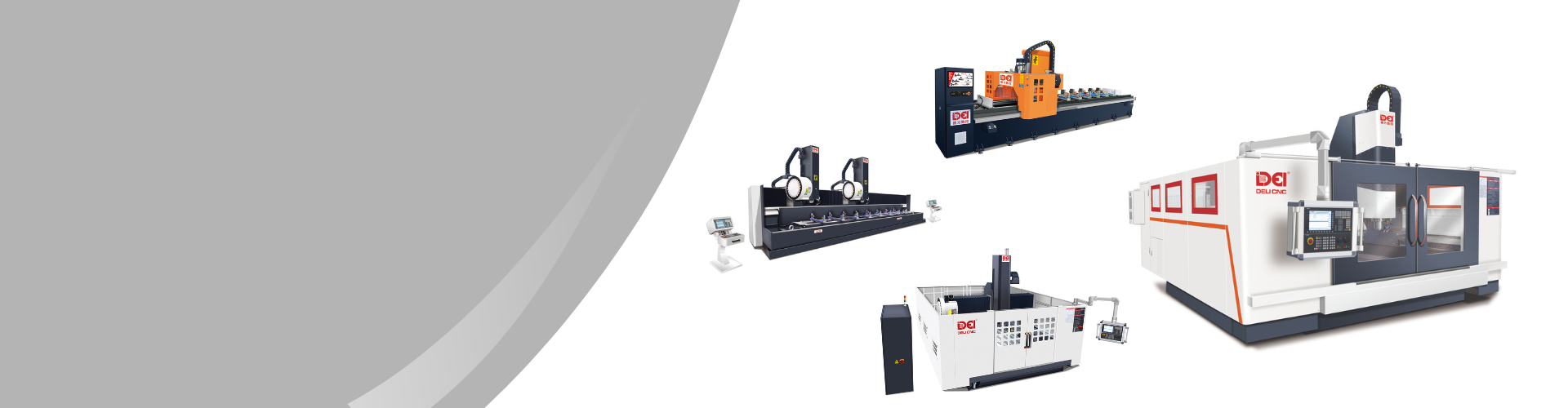
For large aluminum plates, industrial frames, molds, and EV battery trays, a can be cost-effective when it reduces multiple setups and supports stable full-area machining. For smaller aluminum blocks or medium-sized parts, a may be more economical. For long aluminum profile cutting before machining or assembly, a can improve cutting efficiency and length consistency.
Part type Common cost problem Suitable equipment direction Large aluminum plate Large surface area, long hole patterns, heavy setup CNC gantry machining center EV battery tray Large size, thin walls, sealing surfaces, many holes CNC gantry machining center with stable fixture Industrial aluminum frame Long structure, assembly holes, possible repositioning Double-head saw plus CNC machining process Small aluminum block No need for large travel or large table area CNC vertical machining center Curtain wall profile Repeated cutting, drilling, milling, and slotting Long aluminum profile Length accuracy and angle cutting before assembly Double head sawing machine
For , the required machine or process depends on whether the main operation is cutting, drilling, milling, end machining, or full-length machining. A process-specific machine may reduce manual positioning and repeated measurement.
Improve tool selection and cutting strategy
Tooling affects both cycle time and quality. For large parts, tool failure can be expensive because it may damage a high-value workpiece after many hours of machining.
Balance roughing speed and tool life
Roughing should remove material efficiently, but aggressive roughing is not always cheaper if it causes vibration, tool breakage, or unstable dimensions. The goal is a stable material-removal process that protects the machine, fixture, and workpiece.
For aluminum parts, choose tools that support good chip evacuation and reduce built-up edge. Keep the cutting edge sharp, use suitable flute geometry, and match the tool diameter to the pocket, surface, or contour being machined.
Use finishing only where accuracy or surface quality requires it
Not every surface needs the same finish. Functional surfaces, mounting faces, sealing areas, and critical holes may need careful finishing. Non-critical surfaces may not need repeated finishing passes.
Cost can often be reduced by separating surfaces into categories:
Critical functional surfaces
Sealing surfaces
Mounting surfaces
Cosmetic surfaces
Non-critical clearance surfaces
This allows the process engineer to focus machining time where it matters instead of finishing every surface to the same level.
Control chips during long machining cycles
Large aluminum parts can generate a high chip volume. If chips are not removed, they can be recut by the tool, scratch the surface, increase heat, and affect dimensional stability.
Use suitable coolant, mist, air blast, or chip evacuation methods for the material and machine configuration. Pay special attention to deep pockets, long slots, and fixture areas where chips can collect.
Tool wear should also be monitored during long jobs. Burrs, poor surface finish, abnormal noise, higher spindle load, or dimensional drift can all indicate that the tool needs attention.
Shorten non-cutting time
Cost is not created only when the tool is cutting. Loading, clamping, probing, tool changes, cleaning, measurement, program verification, and waiting for tools or inspection equipment can all increase the final part cost.
Use a simple checklist before production:
Is the fixture ready before the part reaches the machine?
Are the correct tools prepared and measured?
Has the CNC program been verified?
Are the drawing version and program version correct?
Are inspection tools available near the machine?
Is chip cleaning planned for long aluminum machining cycles?
Is the operator clear about critical dimensions and stop points?
Tool presetting can help when many tools are used. Setup sheets can reduce operator variation. Program simulation can reduce machine waiting time and lower the chance of collision or air-cutting errors.
For repeat jobs, record what worked. A clear setup record can save time when the same part returns for the next batch.
Prevent rework and scrap with process control
Scrap prevention is a major cost-control strategy for large parts because the value of material, machine time, and handling is already built into the workpiece.
A large part should not be treated as a normal small part with longer cycle time. It needs more careful control of datum surfaces, fixture repeatability, tool offsets, inspection points, and machining sequence.
Use first-piece inspection before batch machining
For batch production, first-piece inspection can prevent repeated errors. Check the datum, critical features, hole positions, surface condition, and important dimensions before running the full batch.
For one-off large parts, use staged inspection. Instead of waiting until the final operation, verify key features after high-risk steps. This can catch problems before more machining time is added.
Track tool wear and dimensional drift
Tool wear can change part size gradually. On a large part, this may not be visible until a long operation is complete. Track tool life, surface condition, burr formation, and key dimensions during production.
If a dimension begins to drift, check the tool, fixture, coolant, chip buildup, and thermal condition before continuing.
Keep machine calibration and maintenance records
Large-machine accuracy depends on more than the program. Foundation condition, machine calibration, thermal stability, lubrication, guideways, spindle condition, and probing systems can all affect the result.
Maintenance records help identify patterns. If errors appear after a machine move, a fixture change, a tool change, or a maintenance event, the records can guide troubleshooting.
Match production volume with the right process plan
The best cost-reduction method depends on production volume. A one-off part, a prototype, a small batch, and mass production should not use the same level of fixture investment or process optimization.
Production situation Cost-reduction priority One-off large part Safe setup, correct machine size, careful inspection, avoid scrap Prototype Flexible fixture, clear inspection, avoid over-optimization Small batch Repeatable setup, tool standardization, useful process notes Mass production Dedicated fixture, cycle-time optimization, stable inspection plan, possible automation
For one-off work, the main goal is often to avoid damage and complete the job correctly. For repeated production, a dedicated fixture, optimized program, and standardized tool package can reduce the total cost per part.
Small cycle-time savings can matter in batch production, but they should not create instability. A slightly slower but stable process may cost less than an aggressive process that creates rework.
Work with the supplier before finalizing the process
Machine selection should start with the part, the process, and the production plan, not with the machine catalog alone. A supplier can give a better recommendation when the application information is complete.
Prepare the following information before requesting a machine recommendation or process review:
Part drawings and 3D models
Maximum and typical part size
Workpiece weight
Material type and raw material form
Critical tolerances and surface requirements
Required operations, such as milling, drilling, tapping, boring, trimming, or slotting
Monthly or annual production volume
Current cost or quality problems
Fixture concept or existing fixture photos
Loading method, such as crane, forklift, or manual loading
Available workshop space and layout limitations
Foundation, power, air, coolant, and chip-removal requirements
Operator training and maintenance support needs
For DELICNC equipment selection, this information helps the engineering team compare machine travel, table size, spindle configuration, fixture space, loading access, and process suitability. It also helps avoid choosing a machine that is either undersized for the part or oversized for the production need.
Common mistakes that increase large-part machining cost
Many large-part cost problems come from decisions made before the machine starts cutting. Avoid these common mistakes:
Choosing a machine based only on purchase price.
Using equipment with insufficient travel, table size, or table load.
Applying tight tolerances to every surface.
Designing deep pockets or sharp internal corners without manufacturing review.
Using weak fixtures for large or thin parts.
Repositioning large parts too many times.
Running long jobs without checking tool wear.
Ignoring chip removal during aluminum machining.
Skipping first-piece or staged inspection.
Not planning lifting, loading, foundation, and maintenance before purchase.
Avoiding these mistakes can reduce unnecessary machine time, handling, inspection, and rework. Actual savings depend on part design, material, tolerance, batch size, equipment selection, and shop-floor conditions.
Conclusion
Reducing CNC machining costs for large parts is not just a matter of negotiating a lower price. The real cost depends on design decisions, machine suitability, setup time, fixture stability, tool strategy, inspection, handling, and rework prevention.