
How to Choose a CNC Machine for Aluminum Parts
Still, buying a CNC machine for aluminum parts is not just a matter of choosing the fastest spindle or the largest table. A small bracket, a long extrusion, a thin EV battery tray, and a curtain wall profile all create different problems on the shop floor.
The right machine depends on the part first: its size, material form, machining process, tolerance, clamping method, production volume, and the cost of running the machine every day.
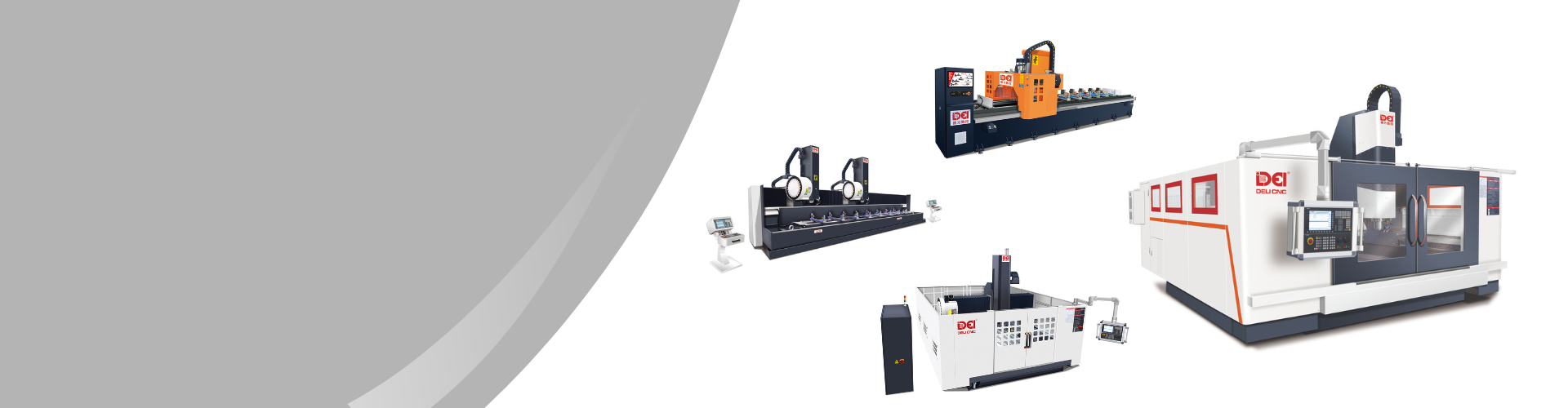
This guide explains how to choose between a , , , and for different aluminum part applications.
Need a machine recommendation? Send DELICNC your drawing, material details, target output, and machining requirements. That is usually enough to start narrowing down the right configuration.
Start with the aluminum part, not the machine
Many buyers begin with machine models, spindle speeds, and prices. That is understandable, but it can lead to the wrong comparison.
Start with the part. A machine that works well for small aluminum blocks may be a poor fit for long profiles or large battery trays. The better question is not "Which model is best?" It is "Which machine can hold this part, cut it reliably, and keep the process stable in production?"
Before comparing machines, define the basics:
Part size and maximum workpiece dimensions
Material form: block, plate, casting, extrusion, tube, or profile
Aluminum alloy grade
Required machining operations
Tolerance and surface finish requirements
Monthly or annual production volume
Number of setups
Fixture and clamping difficulty
Loading method and automation needs
Available factory floor space
These details change the machine choice more than a catalog specification does.
Identify the material form
Aluminum comes into the machine in different forms, and each form changes the selection logic.
| Aluminum form | Typical parts | Main selection issue |
|---|---|---|
| Aluminum block | Housings, brackets, precision parts | Milling efficiency and repeatability |
| Aluminum plate | Panels, base plates, battery trays | Table size, flatness, and clamping |
| Aluminum casting | Automotive housings, structural parts | Datum control and material variation |
| Aluminum extrusion | Profiles, frames, rails | Long support and accurate cutting |
| Thin-wall aluminum part | EV trays, enclosures, lightweight structures | Deformation and vibration control |
| Architectural profile | Curtain wall, window, and door systems | Long profile drilling, milling, slotting, and cutting |
For small and medium aluminum blocks, a vertical machining center is usually practical. For large plates or EV battery trays, a gantry machining center gives more work area and fixture space. For long aluminum profiles, a double-head saw or dedicated curtain wall CNC machine may be more efficient than a general-purpose machining center.
Define the real machining work
Next, list what the part actually needs. Common aluminum machining operations include:
Milling
Drilling
Tapping
Pocket machining
Slotting
Chamfering
End milling
Profile cutting
Surface finishing
Hole pattern machining
If the main job is accurate profile cutting, a double-head sawing machine may be the first machine to consider. If the part needs drilling, tapping, contour milling, and pocketing, a vertical machining center is more likely to fit. If the workpiece is large and needs machining across a wide area, look at a gantry machining center.
Match part size with the real working area
Do not choose a machine only by nominal X/Y/Z travel. Travel is only one part of the working area. Fixture space, tool clearance, loading access, and chip removal space also matter.
Check:
Fixture height and width
Tool length and spindle clearance
Multi-station fixture layout
Operator loading access
Chip removal space
Future part size changes
An EV battery tray may fit inside the listed travel range, but the fixture, clamps, and tool approach may require a larger table. A long aluminum profile may need support across its full length, not just at the cutting point.
Factors that matter when choosing a CNC machine for aluminum parts
Aluminum is easier to cut than steel, but stable aluminum machining still depends on the machine structure, spindle, fixture, coolant, chip removal, and process control.
Spindle speed and power
Aluminum machining usually benefits from higher spindle speed, especially with small tools used for finishing, drilling, and contour work. But maximum RPM is not the whole story.
Compare:
Maximum spindle speed
Continuous spindle power
Torque characteristics
Spindle cooling
Tool holder compatibility
Stability during long production runs
Roughing and finishing performance
High RPM helps only when the rest of the system can support it. The spindle still needs enough power. The machine still needs rigidity. The coolant and chip removal system still need to keep up.
For small precision aluminum components, high-speed spindle performance and fast tool changes may matter most. For large plates or structural components, rigidity and stable cutting across a wide area may matter more.
Rigidity and vibration control
Aluminum is soft compared with steel, but rigidity still matters. This is where some buyers get caught out.
Poor rigidity can cause:
Chatter marks
Poor surface finish
Inconsistent dimensions
Extra deburring work
Shorter tool life
Higher scrap rate
Unstable hole positions
Thin-wall aluminum parts, large plates, and long profiles are especially sensitive to vibration and poor support. The machine structure, spindle condition, fixture design, tool selection, and cutting parameters all affect the result.
With aluminum, weak rigidity may not break tools right away. It often shows up as a rougher surface, drifting dimensions, and more rework.
Worktable size, travel range, and fixture layout
Select table size and travel based on how the part will actually run, not just on the finished part dimensions.
| Aluminum part type | Machine requirement |
|---|---|
| Small aluminum blocks | Compact VMC, fast tool change, high spindle speed |
| Large aluminum plates | Gantry machining center, wide table, strong structure |
| Long aluminum profiles | Long support, profile clamps, accurate cutting |
| Curtain wall profiles | Dedicated CNC fabrication equipment |
| EV battery trays | Large travel, stable clamping, repeatability |
For batch production, fixture layout can affect output as much as cutting speed. A multi-station fixture can reduce loading time for small parts. For large or thin-wall parts, the fixture must support the workpiece without forcing it out of shape.
Accuracy, repeatability, and thermal stability
Do not stop at a general claim like "high precision." Ask whether the machine can hold accuracy across shifts, operators, and batches.
Review:
Positioning accuracy
Repeatability
Flatness
Hole position accuracy
Parallelism
Perpendicularity
Thermal stability
Surface finish consistency
Batch-to-batch repeatability
For automotive aluminum parts, repeatability is often more important than one perfect sample. For EV battery trays, hole position and large-area consistency are critical. For curtain wall profiles, length accuracy, hole alignment, and slot positioning affect assembly later.
Chip removal and coolant
Aluminum creates a large volume of light, sharp chips during high-speed machining. If chips stay in the cutting area, they can scratch surfaces, shorten tool life, and increase downtime.
Check:
Chip conveyor design
Coolant tank capacity
Coolant flow
Air blast or mist cooling options
Cleaning access
Enclosure design
Suitability for long-shift production
A good coolant and chip removal setup helps reduce built-up edge, protect surface finish, and keep the machine running with fewer interruptions.
Tool magazine capacity and setup time
Many aluminum parts need several operations: rough milling, finish milling, drilling, tapping, chamfering, slotting, countersinking, and contour machining. If the tool magazine is too small, operators have to stop the job and change tools more often.
Compare:
Tool magazine capacity
Tool change time
Tool length management
Number of tools required per part
Setup time per batch
Operator intervention frequency
Tool breakage detection options
In aluminum part production, reducing setup time can be worth more than a small increase in cutting speed.
Which CNC machine type fits different aluminum parts?
No single CNC machine is right for every aluminum part. The best fit depends on the workpiece and the process.
CNC vertical machining center for small and medium aluminum parts
A is a practical choice for small and medium aluminum parts that need milling, drilling, tapping, pocketing, and contour machining.
Typical applications include:
Aluminum brackets
Aluminum housings
Precision plates
Small structural parts
Automotive aluminum components
Furniture hardware
Connectors and blocks
A VMC works well when the part fits the table and the job needs flexible multi-operation machining. Compare spindle speed, tool magazine capacity, table size, repeatability, coolant, chip removal, and fixture flexibility.
A VMC is not always the answer, though. Large plates, long profiles, and curtain wall components usually need different equipment.
CNC gantry machining center for large plates and EV battery trays
A is better for aluminum parts that need a large work envelope, a stable structure, and enough room for fixtures.
Typical applications include:
Large aluminum plates
EV battery trays
Automotive structural parts
Large frames
Industrial panels
Large molds or tooling plates
Oversized aluminum components
When the part is too large for a standard vertical machining center, a gantry machining center provides the work area and fixture layout needed for stable machining.
EV battery trays are a common example. They usually require large travel, stable clamping, accurate hole positioning, and repeatability across batches. For this type of work, a gantry machining center is often a better fit than a standard VMC.
Planning an EV battery tray project? DELICNC can help review machine travel, fixture layout, spindle configuration, and production efficiency before you choose a model.
Double-head sawing machine for aluminum profile cutting
For long aluminum profiles, the main challenge is handling, clamping, and accurate cutting. If the primary process is length cutting or angle cutting, a can be more efficient than a general-purpose machining center.
Typical applications include:
Aluminum profiles
Window and door profiles
Curtain wall profiles
Furniture aluminum frames
Long extrusion parts
Industrial aluminum frames
A double-head saw does not replace a machining center. It is built for accurate aluminum profile cutting. Milling, drilling, tapping, and slotting may still require CNC machining equipment. In many production lines, the saw comes first, followed by downstream CNC drilling or milling.
Curtain wall CNC fabrication equipment for architectural profiles
is built for architectural aluminum profiles and long profile processing.
Typical applications include:
Curtain wall mullions
Transoms
Window and door systems
Architectural aluminum frames
Long aluminum profiles
Connector holes and slots
Curtain wall profiles often need cutting, drilling, milling, and slotting over long workpieces. Dedicated equipment can make positioning faster and improve batch consistency compared with a general-purpose machine.
Application-based selection guide
Different industries care about different things. The machine that works for one aluminum application may slow down another.
Automotive aluminum parts
Automotive aluminum parts need repeatable accuracy, stable fixtures, predictable cycle time, and consistent results across batches.
For small and medium automotive aluminum parts, a CNC vertical machining center often works well. For larger structural components, a CNC gantry machining center may provide better support and a larger work area.
Selection factors include:
Batch repeatability
Fixture repeatability
Surface finish
Hole position accuracy
Cycle time
Quality consistency
Learn more about DELICNC solutions for applications.
EV battery trays
EV battery trays often involve large aluminum structures, many holes, sealing surfaces, and strict assembly requirements. Many are thin-wall or semi-structural parts, so clamping and deformation control matter.
A CNC gantry machining center is commonly used for EV battery tray machining because it provides large travel, fixture space, and stable large-area machining.
Check:
Large work envelope
Stable clamping
Accurate hole positioning
Flatness control
Repeatability across batches
Chip evacuation during long machining cycles
See DELICNC application information for .
Long aluminum parts and profiles
Long aluminum profiles are a handling and clamping problem as much as a cutting problem. A standard VMC may not provide enough length support or efficient loading for long extrusion parts.
For long profiles, consider:
Full-length workpiece support
Accurate profile positioning
Stable clamping
Cutting angle accuracy
Drilling and slotting requirements
Integration with downstream processes
A double-head sawing machine, curtain wall CNC machine, or profile CNC solution may be more efficient depending on the process. Learn more about .
Aluminum furniture components
Aluminum furniture components often need clean appearance, repeatable holes, accurate angle cutting, and efficient batch production. The right equipment depends on whether the process is mainly profile cutting, connector machining, or complete frame fabrication.
Possible equipment choices include:
Double-head saw for accurate cutting
CNC vertical machining center for connectors and hardware
Profile CNC or curtain wall CNC equipment for long frame components
Explore DELICNC solutions for applications.
CNC machine selection checklist for aluminum parts
Before contacting a CNC machine supplier, prepare the information below. It helps the supplier recommend a useful configuration instead of quoting a standard model that may not fit the job.
Part and drawing information
Prepare:
2D or 3D drawings
Maximum and minimum part size
Aluminum alloy grade
Material form: block, plate, casting, extrusion, or profile
Wall thickness
Tolerance requirements
Surface finish requirements
Hole pattern and critical dimensions
Monthly or annual production volume
Process and productivity requirements
Clarify:
Required machining operations
Number of setups
Target cycle time
Batch size
Tool quantity
Fixture method
Manual or automatic loading
Shift hours per day
Current production bottlenecks
Machine configuration requirements
Compare:
Spindle speed and continuous power
Machine rigidity and structure
X/Y/Z travel
Worktable size and load capacity
Tool magazine capacity
Chip conveyor and coolant system
Fixture compatibility
Controller and programming support
Safety enclosure
Maintenance access
Spare parts and after-sales support
Questions to ask the supplier
Ask your supplier:
Can this machine process my largest aluminum part with fixture clearance?
What spindle configuration do you recommend for my aluminum alloy?
How will the machine control vibration during high-speed aluminum machining?
Can you provide fixture suggestions based on my drawing?
What is the estimated cycle time?
How many tools are required for this part?
Can the machine support future part size changes?
What training and after-sales service are available for overseas buyers?
Can remote technical support be provided?
What spare parts are commonly needed?
Not sure whether your part needs a VMC, gantry machining center, double-head saw, or curtain wall CNC machine? DELICNC can evaluate the equipment type based on your part size and process.
Mistakes to avoid when buying a CNC machine for aluminum parts
Choosing only by machine price
The lowest machine price is rarely the lowest production cost. Compare cycle time, scrap rate, tooling cost, fixture efficiency, downtime risk, and after-sales support.
A cheaper machine may increase rework, reduce uptime, or limit future part sizes. For industrial aluminum part production, total cost of ownership matters more than purchase price alone.
Looking only at spindle RPM
High RPM helps with aluminum machining, but it does not guarantee stable production. The machine also needs enough power, rigidity, chip removal, coolant, and fixture support.
Maximum RPM is only one part of the spindle specification. Continuous cutting performance is what matters in real production.
Ignoring fixture and clamping requirements
Fixture design can decide whether an aluminum part holds tolerance during machining. A rigid machine cannot deliver stable accuracy if the part is poorly supported or over-clamped.
Thin-wall aluminum parts and long profiles need controlled clamping force and proper support to prevent deformation.
Using a general machine for a specialized profile process
If your main work is long aluminum profile cutting, drilling, and slotting, a general-purpose VMC may not be the most efficient choice. A double-head saw or curtain wall CNC fabrication equipment may handle the work faster and with less loading trouble.
Overlooking after-sales support and operator training
For overseas buyers, after-sales support is part of the machine choice. Confirm installation guidance, operator training, spare parts availability, remote technical support, and maintenance access before purchase.
Recommended CNC machine by aluminum part type
| Aluminum part type | Main process | Recommended machine type | Why it fits |
|---|---|---|---|
| Small precision aluminum blocks | Milling, drilling, tapping | Flexible for small and medium parts | |
| Aluminum housings | Pocketing, contouring, drilling | Good for multi-operation machining | |
| Large aluminum plates | Face milling, drilling, contouring | Large work area and stable structure | |
| EV battery trays | Drilling, milling, tapping, sealing surface machining | Large travel, fixture space, repeatability | |
| Long aluminum profiles | Length cutting, angle cutting | Efficient for accurate profile cutting | |
| Curtain wall profiles | Cutting, drilling, milling, slotting | Built for architectural profile production | |
| Aluminum furniture frames | Cutting, drilling, connector machining | Double-head saw + VMC/profile CNC | Balances output and flexibility |
| Automotive brackets | Milling, drilling, tapping | Repeatable accuracy for batch machining |
Why work with DELICNC for aluminum CNC machine selection
Selecting a CNC machine for aluminum parts works best when the recommendation starts from the drawing, not from a model list. DELICNC can help compare machine types based on part size, material form, tolerance, production volume, fixture needs, and process flow.
DELICNC product options include:
for small and medium aluminum parts
for large aluminum plates, EV battery trays, and oversized components
for aluminum profiles and long extrusion parts
for architectural aluminum profiles
Whether your project involves precision milled aluminum parts, large EV battery trays, long aluminum profiles, or curtain wall fabrication, DELICNC can help evaluate the machine configuration and production approach.
Contact DELICNC to get a CNC machine recommendation for your aluminum part production line.
Conclusion
The right CNC machine for aluminum parts starts with the workpiece. Look at the geometry, material form, required process, tolerance, production volume, fixture design, and long-term production cost before comparing machine models.
As a practical guide:
Use a CNC vertical machining center for small and medium precision aluminum parts.
Use a CNC gantry machining center for large aluminum plates, EV battery trays, and oversized parts.
Use a double-head saw for efficient aluminum profile cutting.
Use curtain wall CNC fabrication equipment for architectural aluminum profile processing.
Final selection should always be confirmed against the drawing, material grade, tolerance requirements, fixture design, and production volume.