
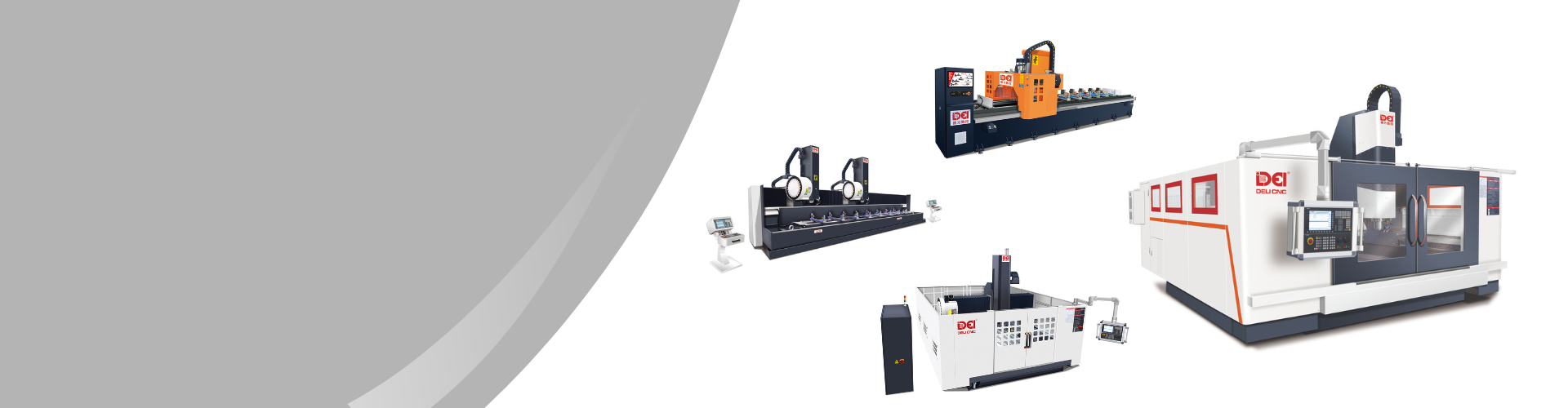
DELICNC CNC Machines for Manufacturing: Built for EV Rail
Why EV and Rail Push CNC Machines Harder
EV battery trays and rail transit parts share a difficult combination. They are large, they are made from aluminum, and they are thin relative to their length or width. That combination is where ordinary machining cells lose money.
A battery tray can be more than a meter across and only a few millimeters thick in places. Clamp it the wrong way and the plate bows. Machine it in two setups and the second setup repeats every locating error from the first. Rail transit parts go the other direction: long aluminum profiles that can run several meters, where the far end moves if the structure is not rigid. Both parts punish machines that were designed for small, stiff, dense components.
The builder saw this pattern early because its customers were already in automotive aluminum, new energy, and metal fabrication. The machines were engineered to keep large thin work supported and to let long work stay put through the cut. That is the difference between a cell that holds tolerance and one that buries the savings in scrap.
The CNC Machine Types That Carry Manufacturing Work
The four families that most fabrication and assembly lines actually need make more sense sorted by what each one does best than by its spec sheet.
Vertical Machining Centers for Structural Parts and Brackets
The vertical machining center is the workhorse for structural aluminum parts, mounting brackets, fixtures, and machined plates. It handles the bulk of a manufacturing line's mixed work because the envelope fits most parts that are not oversized. The is built for this role, with a rigid frame and a tool changer sized for jobs that mix drilling, tapping, and contour milling in one cycle.
For EV and rail suppliers, the vertical center is where smaller structural pieces live: hangers, seat brackets, connector plates, and the machined details that feed a larger assembly. DELICNC configures these centers for aluminum first, which matters because aluminum wants different speeds and feeds than steel, and a machine tuned for the wrong material leaves surface marks or burns tools.
Gantry Machining Centers for Large Trays and Long Profiles
When the part gets too big for a vertical center, the gantry structure takes over. The bridge spans the work and the spindle moves across it, so a large plate stays supported under the cut instead of cantilevered on one side. The is the model most EV tray and rail lines start from, because it gives the envelope for a full tray and the stability for a long profile in a single setup.
DELICNC offers 5-axis gantry options as well, which let a tray or a curved rail section be machined from multiple angles without unclamping. Removing a setup removes a locating error, and on thin aluminum that is often the line between in tolerance and scrapped. For rail work the gantry also keeps a long part from shifting at the far end, which is the failure mode that ruins straightness down the length.
Profile machining centers and double-head saws for extrusions
Rail transit and EV frames use a lot of extruded aluminum, and extrusions are best cut and machined close to their final shape before assembly. Its profile centers handle the end milling, hole patterns, and notch cutting on long sections, while the double-head saws cut compound angles for curtain wall and frame work. These machines sit upstream of the machining centers in a real line, turning raw extrusion into ready-to-assemble parts.
DELICNC designs these to run as one workflow rather than four separate purchases. A complete manufacturing line for EV or rail usually runs vertical centers for details, a gantry for the big trays and long members, and profile equipment for the extrusions.
Machining EV Battery Trays Without the Warp
The battery tray is the part that defines EV machining. It is large, thin, and flatness critical, because the cells and cooling structure bolt to it. Warp during cutting is the enemy, and it comes from three places: clamping force that bends the plate, heat that distorts it, and a second setup that doubles the error.
The cell addresses all three. Vacuum and dedicated fixture plates hold the tray without over clamping. High-speed spindles remove material before heat builds. A 5-axis gantry machines the top and the feature faces in one clamp so there is no second setup to mislocate. The shows how these machines are applied across tray projects, from prototype volumes to line rate production.
The DELICNC approach builds the cell so the first piece is close, which protects the margin on every piece after it. A tray that comes out flat in one setup ships. A tray that needs a rework loop or a second operation costs you spindle hours and scrap you never recover.
Rail Transit: Long Aluminum Parts in One Setup
Rail transit structures are the mirror image of the tray. Instead of one wide thin plate, you get long members: body side frames, roof sections, floor beams, and the extrusions that make up the shell. Length is the problem. A part that is several meters long will flex at the end if the machine cannot hold it steady.
The covers how gantry and profile machines handle these members, from the gantry that bridges a full length section to the profile center that end mills and drills the connection features. The builder sizes the gantry envelope to the part, not a catalog number, because rail members vary more by project than by standard.
For a rail supplier, the win is the same as for EV: one setup, supported work, no mid length drift. DELICNC has shipped these lines into transit and metro projects where straightness and hole pattern repeatability decide whether a member fits on the assembly jig.
How to Match a Machine to Your Parts
Selection gets easier once you sort parts by three variables: size, batch, and material. DELICNC uses the same logic with every customer who calls about CNC machines for manufacturing.
Size decides structure. If the part fits a vertical center envelope, start there. If it is wider than the door or longer than the table, move to a gantry. Your supplier will tell you the envelope you actually need, including fixture allowance, because a part that just fits the table rarely runs well without room to clamp.
Batch decides automation. A steady repeat batch justifies a larger tool changer, pallet staging, and offline setup. A mixed low-volume job earns its money from fast changeover and standardized workholding instead. The practical move is to start with the family that hurts most, because a quick win on one part family funds the next machine.
Material decides the cut. Aluminum wants speed and the right tool; the centers are configured for aluminum first. If you also run steel details, say so up front, because the spindle and coolant plan change. DELICNC builds the machine around the material mix you ship, not a generic default.
What Protects Your Margin After Purchase
The machine price is the smallest part of the cost. What protects margin is how the cell runs for the next five years. The builder focuses on three things that show up in the monthly numbers.
Rigidity keeps tolerance as the shift wears on. A frame that deflects under cut forces throws the same part out at hour eight that passed at hour one. It uses box way and reinforced structures on the machines that carry large work, because deflection is where scrap hides.
Tool handling decides spindle time. A tool changer and offset table sized to the job means the spindle cuts instead of waiting. The machines accept offset tables loaded with the job, so a well-run shop never re-indicates a tool that was preset yesterday.
Support decides uptime. DELICNC has supplied automotive and new energy lines for more than fourteen years, with components from NSK, THK, MITSUBISHI, SIEMENS, FANUC, Schneider, and SMC, and key customers including CATL and SUNGROW. That supply base is why spare parts and service stay practical, not theoretical, when a line is down.
A Practical Selection Checklist
Use this list before you ask for a quote. It keeps the conversation on the part, which is the only thing that should drive the machine.
Measure the largest part, not the average. Size the envelope with fixture allowance.
List the material mix. Aluminum only, or steel details too.
State the batch. Steady repeat, or mixed low volume.
Mark the features that decide fit. Flatness on trays, hole pattern on rail members.
Count the operations per part. Every extra setup is a location to lose tolerance.
Name the bottleneck. Changeover time, scrap rate, or simply capacity.
Ask for the envelope and the structure, not just the model number.
A DELICNC specialist will review the part drawing and the batch and propose a configuration, not a catalog. It matches the model to your tray dimensions and volume. That is the difference between buying iron and building a line.
FAQs
Which DELICNC machine is best for EV battery trays?
For full-size trays, a 5-axis gantry such as the MD series machines the part in one clamp and avoids the warp that comes from a second setup. Smaller tray details run on a vertical center.
Can one DELICNC line serve both EV and rail work?
Often yes. Rail members and EV trays both want a gantry for the large parts and a vertical center for details, with profile equipment for extrusions. The cell is designed so the families share workholding logic and tool standards.
Do DELICNC machines handle steel as well as aluminum?
The centers are configured for aluminum first, which is where EV and rail work lives. If your line also runs steel details, tell your supplier during selection so the spindle, coolant, and tool plan are set for both.
How long before a line is running?
Lead time depends on size and configuration, especially for large gantry machines. The supplier confirms a schedule after the part and envelope are fixed, and the installation plan is part of the proposal, not an afterthought.
What about support after purchase?
DELICNC provides commissioning and service through its component partners and field team, with the spare parts base built around NSK, THK, MITSUBISHI, SIEMENS, FANUC, Schneider, and SMC. Support is scoped to keep the line running, not just to ship the machine.